


Australian public servants have warned that new guidelines conflating criticism of Israel and antisemitism will undermine national security and the independence of the public service.
On February 9, the Australian Public Service Commission (APSC) issued an all-staff circular, ‘Working together to combat antisemitism in the APS’, encouraging staff to “familiarise themselves with the International Holocaust Remembrance Alliance (IHRA) working definition of antisemitism adopted by the Australian Government”.
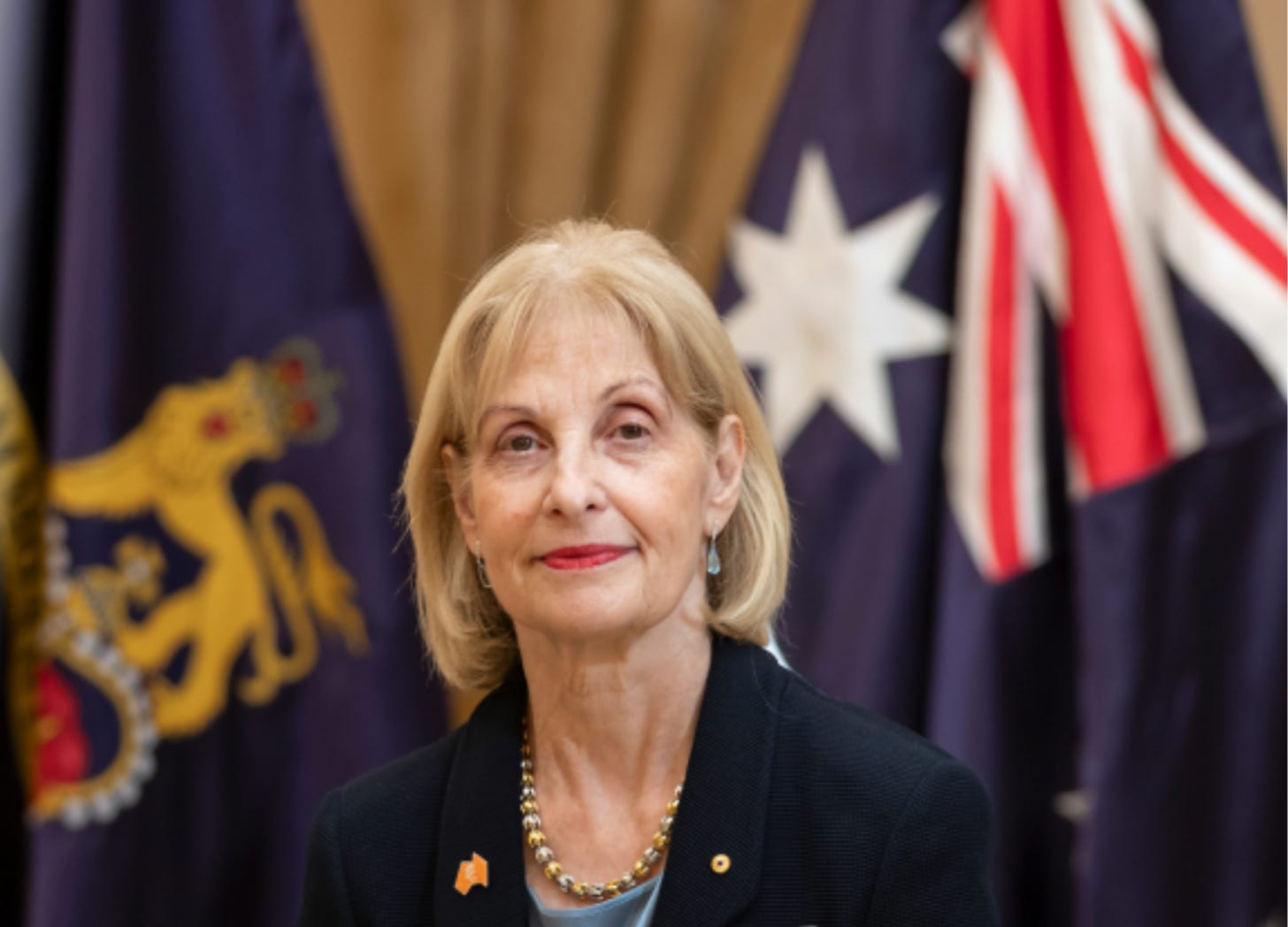
The federal public service adopted the IHRA definition in accordance with recommendations in the Plan to Combat Antisemitism released in December by career pro-Israel lobbyist and Special Envoy to Combat Antisemitism Jillian Segal. The IHRA definition has been widely criticised for conflating anti-Zionism and antisemitism.
The push to outlaw criticism of Israel is well underway. Support media that’s fighting back.
Frank and fearless?
Speaking to Deepcut on the condition of anonymity, a public servant with a high-level security clearance said staff were concerned these measures would hinder their professional responsibility to provide ‘frank and fearless’ advice, and could expose the public service to foreign interference by Israel.
“The new IHRA definition adoption could potentially lead to increased foreign interference if APS staff feel like there may be career repercussions if they report foreign interference from the State of Israel, such as suspicious behaviour we would otherwise usually report as potential espionage,” the public servant said.
“I feel afraid to bring this up to senior management as I feel there could be severe career implications or I might be accused of antisemitism,” they added. “I worry that others will feel the same and important things won’t be reported or there will be delays in reporting.”
Last year an Australian army officer of 19 years had their security clearance revoked after he was found to have greater loyalty to the state of Israel than Australia. The man, anonymised as HWMW, withheld information from ASIO investigators about firearms and self-defence training he undertook in Israel in 2016 and 2019 as part of his involvement with Community Service Group NSW, a Jewish community security organisation with deep ties to Israel. HWMW also admitted he would pass classified Australian intelligence to the Israel Defense Forces if he was asked.
Investigations such as the one which led to HWMW’s clearance being revoked may be difficult to initiate or assign to staff following the adoption of the IHRA definition, which lists “accusing Jewish citizens of being more loyal to Israel, or to the alleged priorities of Jews worldwide, than to the interests of their own nations” as an example of contemporary antisemitism.
In its 2022-23 State of the Service report, the APSC said that public trust in the public service is based on workers’ ability to “provide advice that is relevant and comprehensive, is not affected by fear of consequences, and does not withhold important facts or bad news”.
The recent notice to staff from the APSC does not provide advice to staff on managing these risks. Instead, it states that the APSC will be working with the Special Envoy as she develops “guidance on the IHRA definition for the Australian context, including how it will apply in APS workplaces”.
The APSC communication further outlines that the IHRA definition applies to online and hybrid environments, meaning internal messaging platforms such as Microsoft Teams could be inspected and used to discipline public servants for purported antisemitism.
The Community and Public Sector Union (CPSU) declined to comment on the adoption of the IHRA definition or whether they were consulted by the APSC regarding the announcement.

National anti-racism framework ignored
Members of the rank-and-file union group CPSU4Palestine told Deepcut the IHRA definition is “a tool used to threaten activists who are fighting for a better world”.
“Trust in our government has been harmed forever by its support for the genocide of Palestinians, and the IHRA definition obstructs the process of truth-telling which is needed to recover from this,” a CPSU4Palestine spokesperson told Deepcut.
The group also raised concern that the Australian Human Rights Commission’s National Anti-Racism Framework has been “collecting dust” on Anthony Albanese’s desk for 18 months. The framework recommends a holistic government response to racism, including mandatory workplace anti-racism training and resources provided by external organisations.
The government’s response to the Special Envoy’s antisemitism plan, however, came only six months after the release of Segal’s report. It states that immigration officers, including those with power to grant or deny visas and citizenships,will be the first to undertake the Special Envoy’s antisemitic awareness training.
Got a tip? Drop an email to tips@deepcutnews.com or send an anonymous Signal to @deepcut.25.
A very important story.