


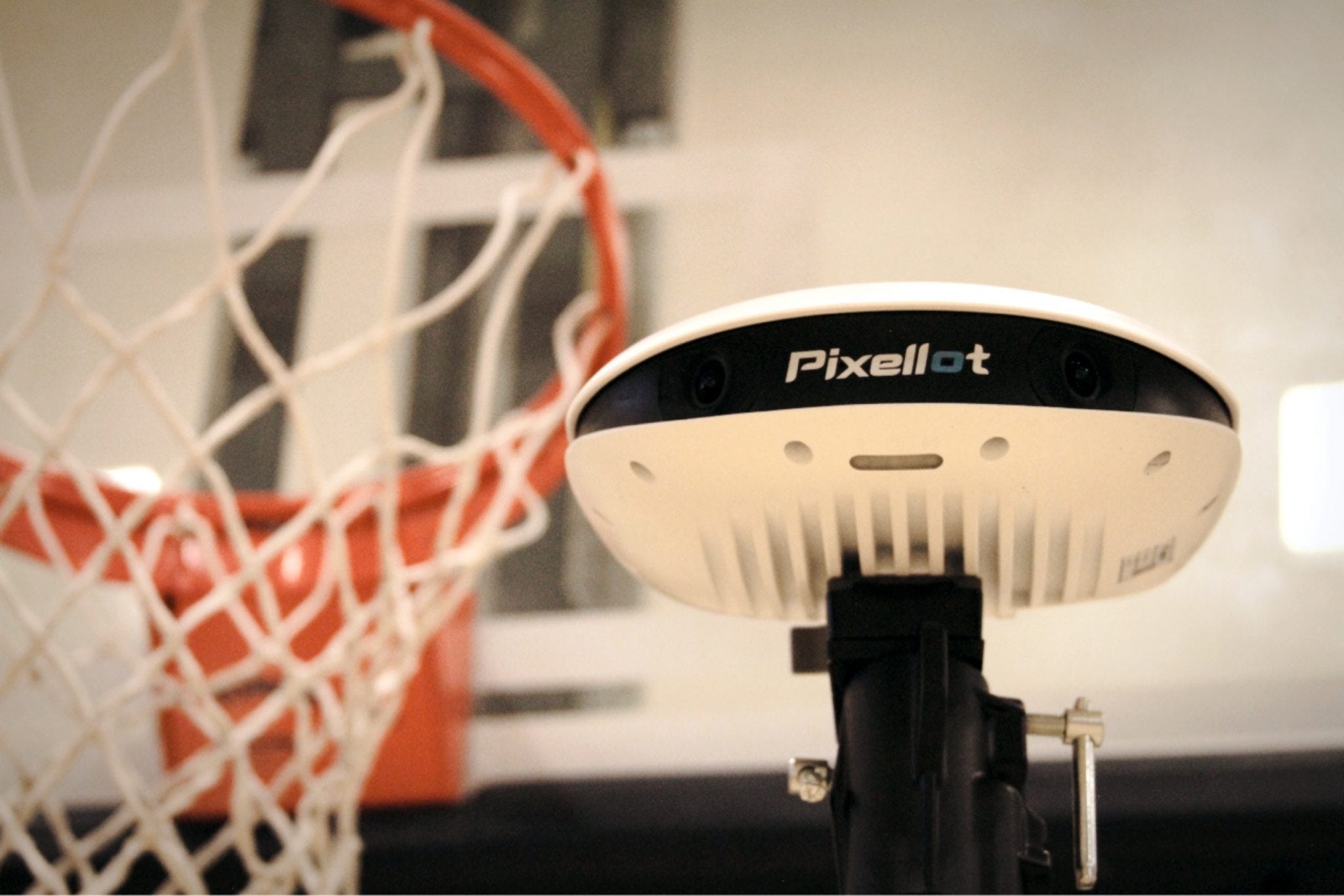
Basketball Australia is preparing to put thousands of children in front of AI-powered cameras, with a proposed national system set to automatically record junior games and turn footage into searchable highlights and performance data.
The decision has alarmed child-safety experts, who warn that basketball video can reveal far more than what happens on the court – such as a child’s face, team, venue and regular playing schedule.
Susan McLean, a cyber-safety and child-protection expert, labelled the technology an “absolute disgrace” and said informed consent should be the basis for filming children in sport.
“I have been inundated with irate and very concerned parents who wanted nothing to do with this and did not understand how (Basketball Australia) could be so blind to basic child safety,” McLean, who is also a former police officer, told Deepcut.
“The images can be used and abused – we know paedophiles love collecting images of kids. They can also be manipulated using AI.”
The Israeli link
The technology, supplied by Israeli-founded company Pixellot, is already being introduced at basketball venues around Australia. Basketball Australia has selected Pixellot as its preferred provider for a national rollout, although a final agreement has not yet been signed.
Pixellot’s connection to Israeli military intelligence adds another layer of scrutiny. Its co-founder and chief technology officer Gal Oz spent nine years in an elite research and development unit of the Israeli Defence Forces Intelligence Corps, according to the company’s biography.
Pixellot says Oz managed IDF developers working on computer vision and geographic information systems and worked with visual platforms capturing information from unmanned aerial vehicles and satellites.
There is no evidence Pixellot’s basketball cameras are being used by the Israeli military in Gaza – where Israeli forces have killed at least 21,000 children with the support of AI technology – or that its sporting system is a military surveillance tool.
But the company’s intelligence background comes amid international scrutiny of the use of AI, computer vision and surveillance technologies by Israeli authorities and its military.
It is understood Pixellot representatives flew to Melbourne last week to meet with Basketball Australia executives in a bid to get the contract signed off but returned to Israel without completion.
A digital trail to a child’s location
Dr Faith Gordon, an Associate Professor in Law at the Australian National University, said the potential privacy risk extended well beyond the image of a child.
“An AI camera may see a child playing basketball. But it may also be capturing a face, a uniform, a venue, a time, a routine and a pattern of movements,” Gordon said.
“For a family escaping domestic violence, those pieces of information can potentially become a roadmap.”
Gordon described the risk as “jigsaw identification”, where apparently ordinary details can be combined to establish a pattern of movements.
“One photograph might tell you very little,” she said. “But if someone can establish that a child plays for a particular club, plays on Tuesday evenings, wears a particular uniform and regularly appears at a particular venue, those pieces of information can potentially be combined to establish a pattern of movements.”
Dr Felicity Bell, a family law expert and senior lecturer at UNSW Law and Justice, agreed that sporting information could create risks where protective orders or other safety arrangements were in place.
Bell said there was also an important distinction between recording a game for coaching purposes and publishing footage online.
Who can see the footage?
Basketball Australia’s general manager of content and media Sean Cadd told Deepcut that participant privacy and child safeguarding were fundamental considerations.
Cadd said mobile phones, venue cameras and locally managed systems were already capturing up to 25 per cent of games nationally.
Under the proposed model, community game footage would not be publicly accessible, but log-in details would be available to players, coaches, parents and guardians, authorised association administrators and service personnel.
The platform would not use facial recognition, but rather, players would be recognised through jersey-number matching. Cadd said players could opt-out of being filmed altogether without providing a reason, and games involving participants who opted-out would not be recorded.
Privacy laws under review
The proposal comes as Australia considers privacy and online-safety reforms.
The Office of the Australian Information Commissioner is developing a Children’s Online Privacy Code aimed at strengthening protections for children’s personal information, while the federal government is also developing a digital duty of care requiring online services to identify and mitigate foreseeable harms.
Basketball Australia said further privacy functionality, including participant blurring, was planned for a future phase.
But Gordon said safety and privacy needed to be built into systems before they were deployed.
“We are no longer talking only about somebody taking a photograph,” she said.
“We are talking about systems that can automatically capture, store, analyse, organise and distribute enormous quantities of footage.”
An eSafety Commissioner spokesperson urged sporting clubs, coaches, volunteers and families to carefully consider privacy and safety when sharing photos or videos of children, including ensuring appropriate consent.
The spokesperson also warned that increasingly sophisticated AI-generated deepfakes could create risks for organisations, including junior sporting clubs, posting children’s images online.
Pixellot was sent detailed questions about its Australian rollout, including child safety, privacy, data access and retention, its military-intelligence links and proposed opt-out arrangements. The company did not respond.
Basketball Australia was also asked about Pixellot’s links to the IDF Intelligence Corps and broader questions about the company’s technology. It did not respond to these questions.

Un bloody believable!
Australian sporting bodies............
Honestly.............
Israeli tech is not innocuous. All the surveillance data from tracking and essentially hacking people’s daily routines, habits and comms like the massive Connecteam to Cellebrite!
Connecteam founders and their Tel Aviv workers all seem come out of the IOF - inevitably miltary tech.
When considering the level of harm Israeli tech has caused by testing their targetting algorithms based on data collected through deep levels of surveillance in Gaza and the Westbank! Why would anyone willingly buy from them.
Israeli tech = facial recognition, phone location surveillance, triangulation with friends and family = targetting and kill lists = dynamic pricing = things cost what the algorithms think you can afford and will pay and so on. All the data gathered to control or obliterate populations.
Furious the people making decisions at Basketball Australia want to pay money to Israeli genocidal tech to track kids playing sport. Thank you Deepcut for reporting on this.