


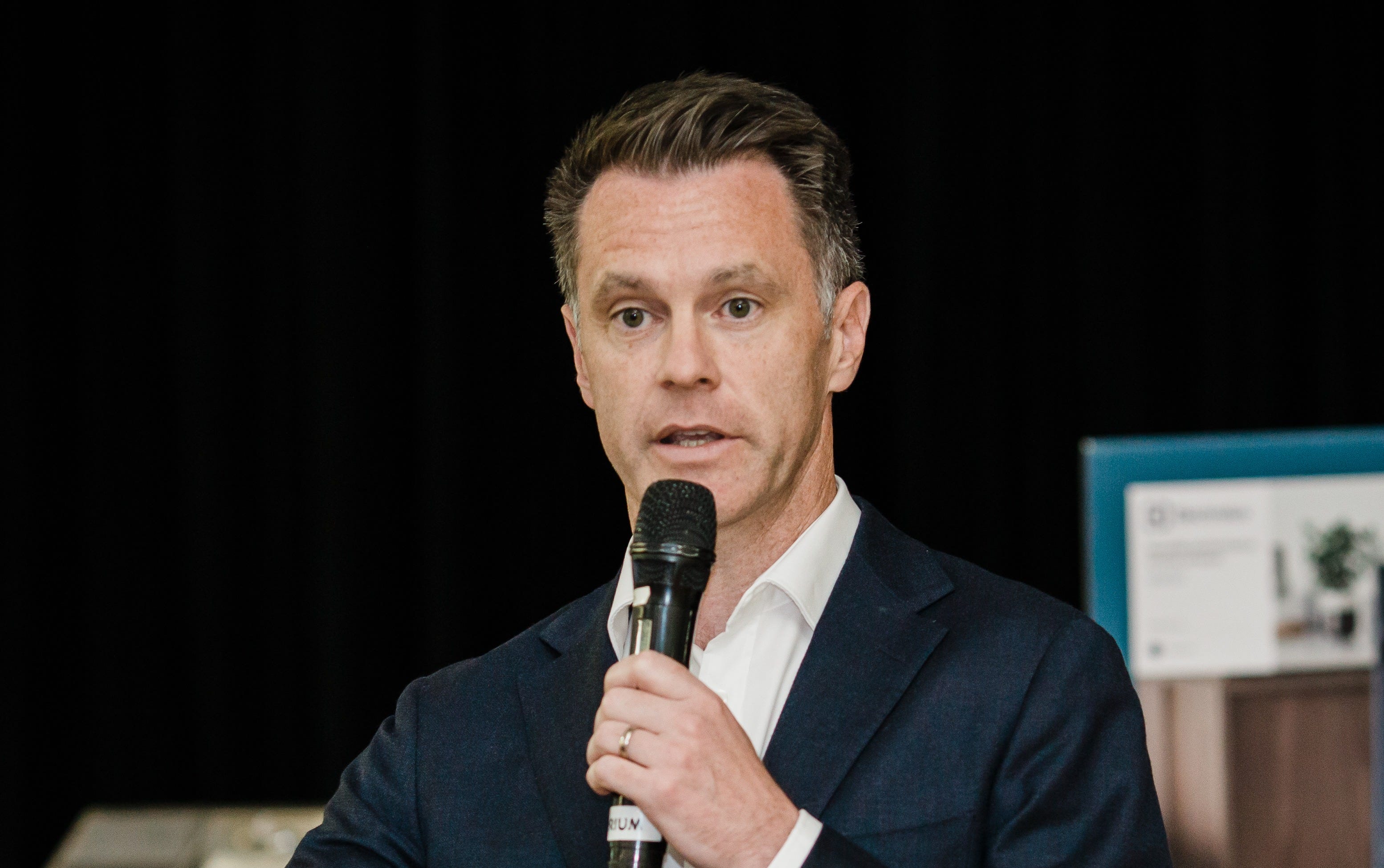
A NSW Local Court has rejected the prosecution’s push to further delay a subpoena issued to the NSW premier, as well as other ministers, in the Isaac Herzog protest case.
A hearing on Wednesday saw defence lawyers – acting on behalf of 17 protesters charged with criminal offences – press the prosecution to either produce the documents sought under the subpoenas or file applications opposing their production by 16 December.
“We have acted very promptly. The delay has only been on the side of the prosecution,” Nick Hanna, who represents four defendants, told the court.
“They have been on notice for four months that we would be making this application … this was not a surprise,” Hanna said.
Chris Minns, his police and tourism ministers and the NSW police commissioner were issued subpoenas earlier this month to provide evidence.
Defence lawyers say the evidence is relevant to its argument that the police operation against protesters was unlawful and that decisions about the response were made at a senior government level.
The prosecution opposed the 16 December deadline, saying it needed further time to consider whether the defence had established a legitimate forensic purpose for compelling the premier and ministers to give evidence.
Judge Viney suggested adjourning the matter to the final week of December, telling the prosecution: “I don’t think it’s unreasonable to give you four weeks to prepare.”
The parties agreed to adjourn the subpoena dispute until 21 December.
Cellebrite use under scrutiny
The hearing also touched on a separate defence application to exclude evidence extracted from the phone of defendant Princey Aydin using Cellebrite technology.
Cellebrite is a controversial Israeli spyware in use by NSW Police, allowing them to download a user’s entire phone data and store them indefinitely.
The company also has links to Israel’s genocide in Gaza. US researchers revealed in April 2025 that “Israel used Cellebrite tools to harvest data from the phones of thousands of Palestinians who were captured and kidnapped from Gaza”.’
Aydin’s defence challenged the circumstances in which police accessed and extracted information from their phone, including whether they had the authority to do so without a warrant.
“Aydin was arrested in a pre-dawn raid, during which police smashed in their door and seized their mobile phone,” Hanna said, adding the prosecution are “seeking to rely on some of the messages they sent after the protest”.
“One of the many legal arguments that we will be running on Aydin’s behalf is that the police use of Cellebrite technology was unlawful and so the data obtained from their phone should not be admitted into evidence,” he told Deepcut.
In August, the defence filed a subpoena to access documents regarding the use of Cellebrite by NSW Police to analyse Aydin’s phone, as well as contracts between the Israeli company and NSW Police.
A further subpoena was filed on 18 November for documents regarding NSW Police’s use of facial recognition technology to identify Aydin.
“The police have applied to set aside those parts of the subpoena and their application is now listed for hearing on 17 March 2027,” Hanna explained.
Prosecution claims public interest immunity
The prosecution additionally sought public interest immunity to prevent the disclosure of certain documents subpoenaed by the defence.
NSW Police can make such a claim when it believes disclosure would harm the public interest and compromise policing methods, operational security or reveal sensitive information.
The prosecution tendered confidential written submissions, affidavits and an exhibit to support the claim.
The defence opposed the court receiving the material confidentially, raising concerns about the fairness of determining the application without the defendants having access to the evidence relied upon by the prosecution.
The defence referred to authorities concerning the need for procedural fairness in public interest immunity proceedings, including the difficulties that arise where evidence is received by a court but withheld from a party to the proceedings.
Hanna indicated that the defence would not press its application to access the confidential submission if the defence were able to submit its own evidence, and the court made a ruling on the claim by 21 December.
The case continues.
Celebrite of genocidal Israel’s IDF? Of course! We have been infltrated by a foreign nation!
The UN says the genocide in Gaza won't stop as it's profitable. Palestine is a training field to test weapons & surveillance tech that are now sold world wide.
Those making billions?
Palantir, Lockheed Martin, Alphabet, Amazon, IBM, Caterpillar, Microsoft, MIT, Blackrock, insurers, real estate firms, and the banking industry.
Francesca Albanese
UN Special Rapporteur on the Occupied Palestinian Territories said, “I’m a UN pro bono official, I’m not even paid. Yet suddenly I’m sanctioned by America as a threat to the global economy. Why? Because I asked big tech to comply with international law and stop profiteering from genocide.”
The Imperial Boomerang effect = surveillance, repression, and AI violence (developed by Israel's IDF to control foreign populations) eventually "boomerang" back and are used against its own citizens (like ICE and Flock cameras).
Procedural fairness
Now there's a thought!
💜💚💜