


It took just three weeks in November 2024 for the Albanese government to bring the social media ban into law. But even as the government rushed the process – it gave the public only one day’s notice to submit to a Senate inquiry – the conclusion from experts was almost unanimous: the “blanket ban” should be rejected.
The Australian Human Rights Commission (AHRC) warned the ban would have “unintended consequences ... most directly on children”. Youth Affairs Council Victoria said the ban may cause harm to children by “restricting their right to access and participation”. For LGBTQ+ youth in particular, Minus18 wrote that “social media is more than a communication tool – it is a lifeline to safety, connection, and affirmation”. The Australian Child Rights Taskforce – a peak body of 100 organisations that is co-headed by UNICEF – submitted an open letter signed by 140 experts saying the ban “constitutes a severe limitation of children’s rights”.
Yet the government listened to none of the experts. There was one voice that mattered: News Corp.
News Corp campaigns for social media ban
“Academics and experts advised against the ban, but the Albanese government acted precipitously in the face of a lobbying campaign from the Murdoch press,” Dr Monique Ryan, the member for Kooyong, told Deepcut.
Ryan was among the MPs who opposed the ban, “because I felt the legislation was poorly targeted and unlikely to be effective”.
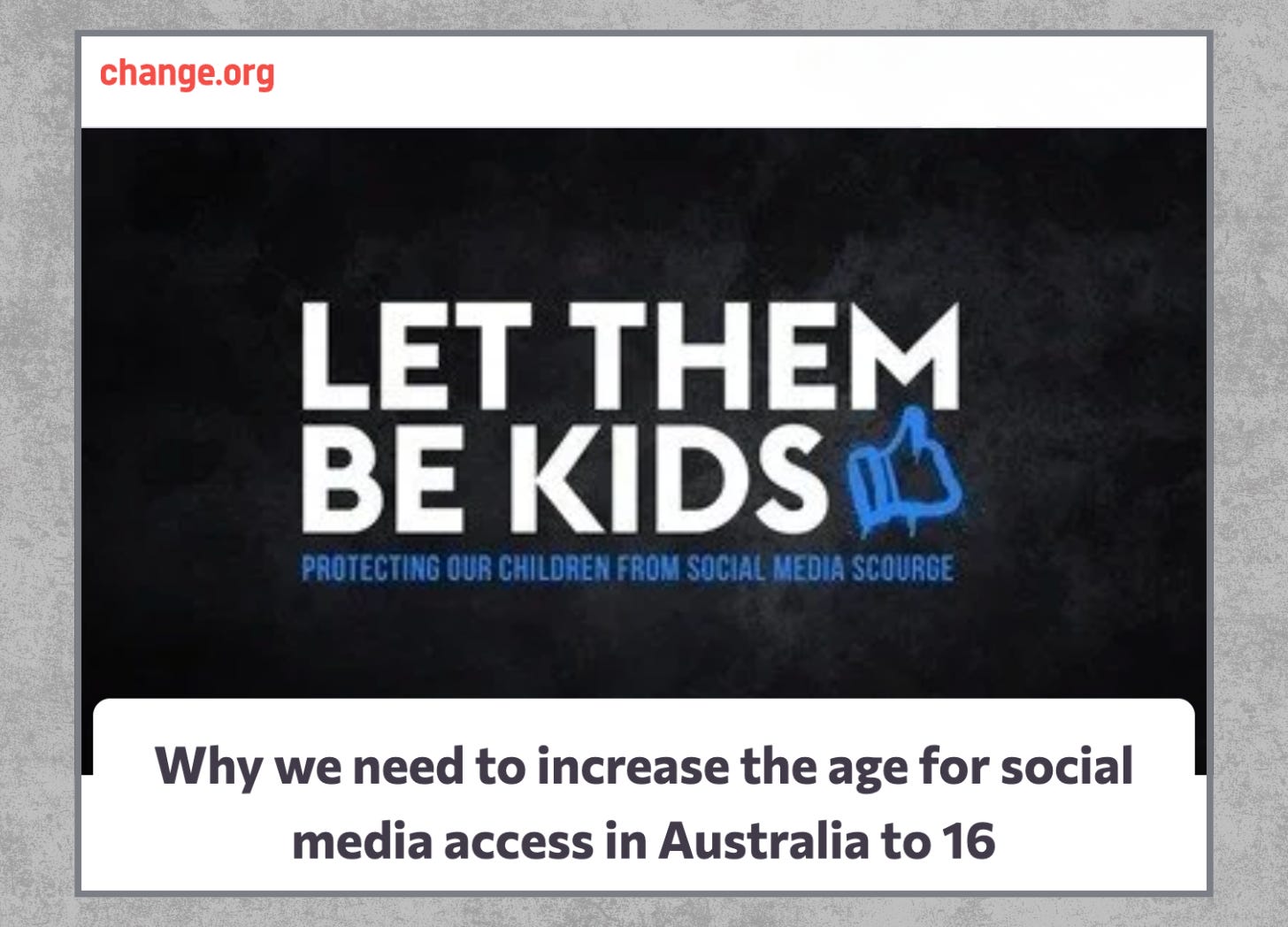
Ryan is referring to News Corp’s Let Them Be Kids campaign, which launched in May 2024 across its mastheads alongside a petition to ban kids under 16 from accessing social media. As Crikey reports, News Corp found a useful ally in a similar campaign backed by Nova Radio, titled 36 Months.
“News Corp’s campaign was highly emotive and plays on the legitimate fears that parents have when their children are in online spaces that they cannot see or control,” Sarah Hanson-Young, Greens Senator and communications spokesperson, told Deepcut.
News Corp’s animosity for tech giants
Rupert Murdoch has long railed against social media – a hostility driven by commercial and political interests. In a not-so-distant past, traditional media outlets occupied a powerful position in society as the gatekeepers of information. Tech giants have all but shattered that power, fragmenting the media landscape.
Not only have tech giants eroded News Corp’s dominance, they’ve eaten into its bottom line. In the last financial year, the company saw revenues in its global news media division fall by US$100m, or 4% compared to the previous year. News Corp blamed this fall, partly, on “lower advertising revenues and lower circulation and subscription revenues”.
The main culprit? Tech giants.
“News Corp competes directly with social media platforms for advertising dollars, so they seem to think anything that weakens the power of tech companies can benefit traditional media owners,” Dr Tai Neilson, senior lecturer in media at Macquarie University, said.
Enter the social media ban, which Neilson says is News Corp’s attempt “to claw back some of their lost advertising revenue”.
Labor’s election fear
But why would Labor so hastily appease a media company it has long regarded as an adversary?
“News Corp saw [a social media ban] as a chance to kill two birds with one stone: give Peter Dutton a platform going into the federal election and take on the big tech companies who are their major competitors when it comes to advertising revenue,” Hanson-Young said.
Labor sought to negate the former, and the timing could not have been more pressing. Polls in late 2024 had the prime minister in free fall. On November 10, Newspoll showed Dutton’s approval rating nudging ahead of Albanese’s for the first time. On November 21, the bill to ban kids from social media was introduced to parliament with only a 24-hour window for public input.
“It showed that the government wasn’t interested in allowing a democratic debate and, perhaps most of all, didn’t want to give the opposition an opportunity to pin them down during the election period,” Neilson said.
“The decision reflects a familiar pattern where governments privilege political optics and corporate influence over evidence.”

The cost: Australia’s kids
In its submission, Youth Affairs Council Victoria noted there was one voice missing from this vital conversation about online safety: “the voices of Australian young people”.
Ironically, amidst Murdoch’s animosity for social media and Labor’s fear of election polls, the welfare of children seemed to have fallen through the cracks.
“In a battle between the Murdoch empire and the billionaire tech companies, the interests of the community, and in particular young people, is never going to be the genuine objective,” Hanson-Young said.
The end result could be a law that does children more harm than good.
“Many of the young people we engage with utilise social media to find communities that are safe and supportive, as they often lack such communities in their local area,” the UN Youth Australia submission read.
“A complete ban for young people under 16 years of age will further isolate young people from safe communities and established online social networks.”
Nearly all reactionary social agendas are justified on protecting children or women, seeking to harness genuine social problems to support the interests of the ruling class.
In this case, I think that not only are the commercial interests of News Corp relevant but the broader agenda to stop the leftwing movement of younger people, some of it fueled by their exposure on social media to the horrors of the Zionist genocide in Gaza.