


By Sara Haddad
I was raised in a tiny Lebanese ‘village’ in Castle Hill, a suburb that was once semi-rural but is now a sprawling mini-metropolis in the middle of Sydney’s Bible belt.
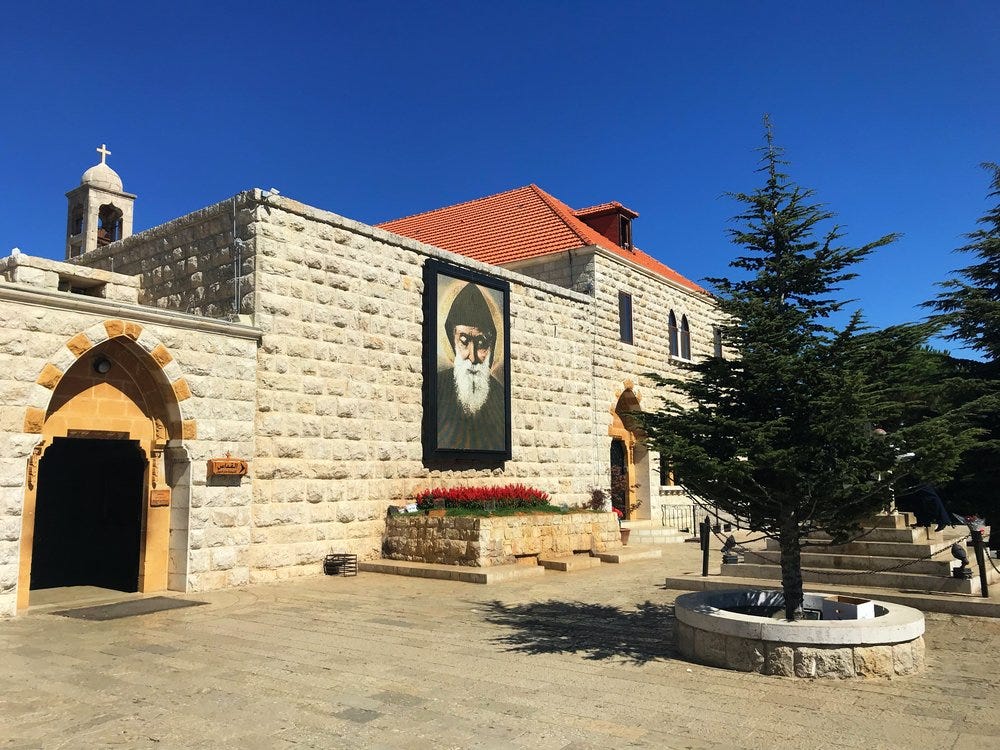
That’s the best way I can describe my upbringing – one of many children in a multi-family, multi-generational home, reared on the abundant fruits of the land that captured my family’s hearts because it reminded them of their mountain village in Lebanon. To the land they brought sustainable practices acquired over many generations. In the house they continued the traditions of an ancient culture and fostered an environment that encouraged equity and communal support. We even had our own chapel.
In 1967 – the year of my birth and the year of Al Naksa, ‘the setback’, with the Six-Day War – members of my extended clan began their considerable involvement in the issue of Palestine. For as long as I can remember, Palestine was always there: in discussions over coffee, in keffiyehs worn to keep out the cold, in exasperated insults fired at the TV as news reports relayed the latest of Israel’s innumerable atrocities in the region.
My family are Maronite Christians who hail, like most Lebanese Australians, from north Lebanon. My grandparents, born at the end of the 19th century and at the beginning of the 20th, were deeply devout.
In church my grandfather read Aramaic, widely considered by scholars to be the language spoken by Jesus. Some of their children, however, were politically motivated and intellectually curious. Two of my uncles, for example, were young enough to receive an education when they arrived in Australia in 1949, and later held academic positions at the University of Sydney.
Throughout the seventies and eighties, I remember many visiting intellectuals, many people from many countries and other faiths moving in and out of our house. And the question of Palestine was the single biggest political issue in that world.

So, when I began writing my novella, The Sunbird, in December 2023, almost two months into Israel’s genocide of Gaza, I did so as someone who had inherited a cause. As a child I wasn’t interested in the issue, but that didn’t mean I didn’t absorb everything that was going on around me. I learnt a valuable truth and I learnt it young: that what had been done to the Palestinian people was undeniably and terribly wrong. From there, I set my own path.
It is important to note that my Maronite Lebanese family were in many ways atypical, not least in their support of Palestine. The reasons for this are many and varied and easily warrant an essay on their own, but geographical distance between us and the wider diaspora certainly played its part. As did the political influence of at least a couple of important characters, in both the old country and the new.
It was almost unheard of for Lebanese Christians of my father’s generation to advocate for Palestinian liberation. In Lebanon itself, sectarianism determines allegiances and, to a substantial extent, these loyalties are reflected in the views and the activities of the diaspora.
It is much less rare, though still not common, for Lebanese Christians of my generation to support Palestine. Regardless of the generation, involvement seems to be far less determined by ethnicity than by leftist politics and a fierce commitment to social justice.
Before 16 May 1916, when the British and French divided the Arab territories of the Ottoman empire into distinct geographical areas under their control, Lebanese and Palestinians – and Syrians and Jordanians – shared one area of land known as Bilad-al-Sham, ‘the land to the north’. At roughly 800km long and 150km wide, this region equates to roughly half of Victoria. It’s not large.
Like all complex societies, the people who still share this land, despite those map lines, have many things in common – language, cuisine, social customs, to name a few – but they also differ in ways that manifest from village to village. Before colonisation restricted movement and separated people from their neighbours, the people of this land occupied one world – an intricate and diverse world woven over millennia of continued civilisation.
The quest for Greater Israel, an ambition long held, is now in overdrive. Twenty-nine months into its genocide of Gaza, Israel directly occupies 58% of the Strip. Ancient cities like Rafah are no more, reduced to rubble under which are buried the bodies of the slain, a blood-soaked wasteland earmarked for real estate development.
In the West Bank, ethnic cleansing continues unabated, and settler violence, encouraged by the government and the military, is at an all-time high. In East Jerusalem, the occupation has closed both the Al Aqsa Mosque and the Church of the Holy Sepulchre to worshippers. And in Lebanon, following Israel’s invasion of the south of the country, more than 1,000 people have been killed, countless villages have been destroyed, and one million people have been forcibly displaced.
Now Lebanon, like Palestine, is in a literal fight for survival. It is not hyperbolic to say that we are on the precipice of a cataclysmic shift. The land – all of it – is under immediate and serious threat. If ever there was a time to reclaim our past, to embrace the world that existed before colonisation succeeded in dividing us, it is now. If ever there was a time to put our differences aside and come together as one people, it is now.
Sara Haddad is a writer and editor who lives and works on Gadigal land. She is the author of the adult novella, The Sunbird, and the companion volume of the same name for children, which was recently released by University of Queensland Press. Both books can be purchased at all good bookshops, online and via the publisher’s website: https://www.uqp.com.au/books/the-sunbird
Got a tip? Drop an email to tips@deepcutnews.com or send an anonymous Signal to @deepcut.25.
It is now. Thank you Sara, for all your words 🙏🏽
What a beautiful way to write about something so heartbreaking