


Misinformation and disinformation about Sunday’s mass shooting in Bondi is already running riot, much of it advancing explicitly racist, sectarian and nationalist agendas.
The massacre, which has been classed as a terror incident by NSW Police, left 16 people dead (including one attacker) and 40 people injured.
While police have yet to identify a political motive for the attack, the prime minister revealed on Monday that one of the shooters, 24-year-old Naveed Akram, first became known to the Australian Security Intelligence Organisation (ASIO) in 2019. The agency at the time decided “there was no indication of any ongoing threat or threat of him engaging in violence”.
NSW Police Commissioner Mal Lanyon refused to be drawn into speculation of possible ideological links, saying he “cannot give a running commentary on the investigation” and that police “are determined to make sure that investigation is thorough”.
Misinformation industry runs riot
While authorities are keeping tight-lipped as the investigation continues, an avalanche of misinformation and disinformation pushing various divisive agendas is dominating social media spaces like X and bleeding into news coverage.
Naveed Akram, a Sydney-based Pakistani man who shares a name with one of the alleged shooters, was forced to publish a video declaring his innocence after the Jerusalem Post published photos taken from his Facebook page and falsely named him as one of the perpetrators.
“I cannot even go outside safely,” Akram said in the video. “This false propaganda could put my life in danger.”
Quoting unnamed “Israeli intelligence sources”, UK newspaper The Telegraph claimed without evidence that the Iranian government was a “prime suspect” behind the attack. The same unnamed “sources” also speculated – without providing evidence – that Hezbollah, Hamas and the Pakistan-based Lashkar-e-Taiba terrorist group may have been involved in the attack.
Drew Pavlou, a right-wing activist, falsely claimed that footage of fireworks at a Carols by Candlelight celebration in Padstow, western Sydney, depicted “Islamists set[ting] off celebratory fireworks in Bankstown”.
Social media accounts with large followings have falsely claimed Akram was “an IDF soldier that served in Gaza and returned to Australia”, that Google searches of ‘Naveed Akram’ spiked in Israel hours before the shooting, and asserted without evidence that the attack was a “false flag” carried out by pro-Donald Trump actors, Mossad, or the Israeli government.
‘The Daily’ – an AI-generated website created on Sunday – published an ‘exclusive interview’ attributing the actions of Ahmed al Ahmed, a 43-year-old fruit shop owner who tackled one of the alleged shooters, to ‘Edward Crabtree’, a nonexistent 43-year-old IT professional.
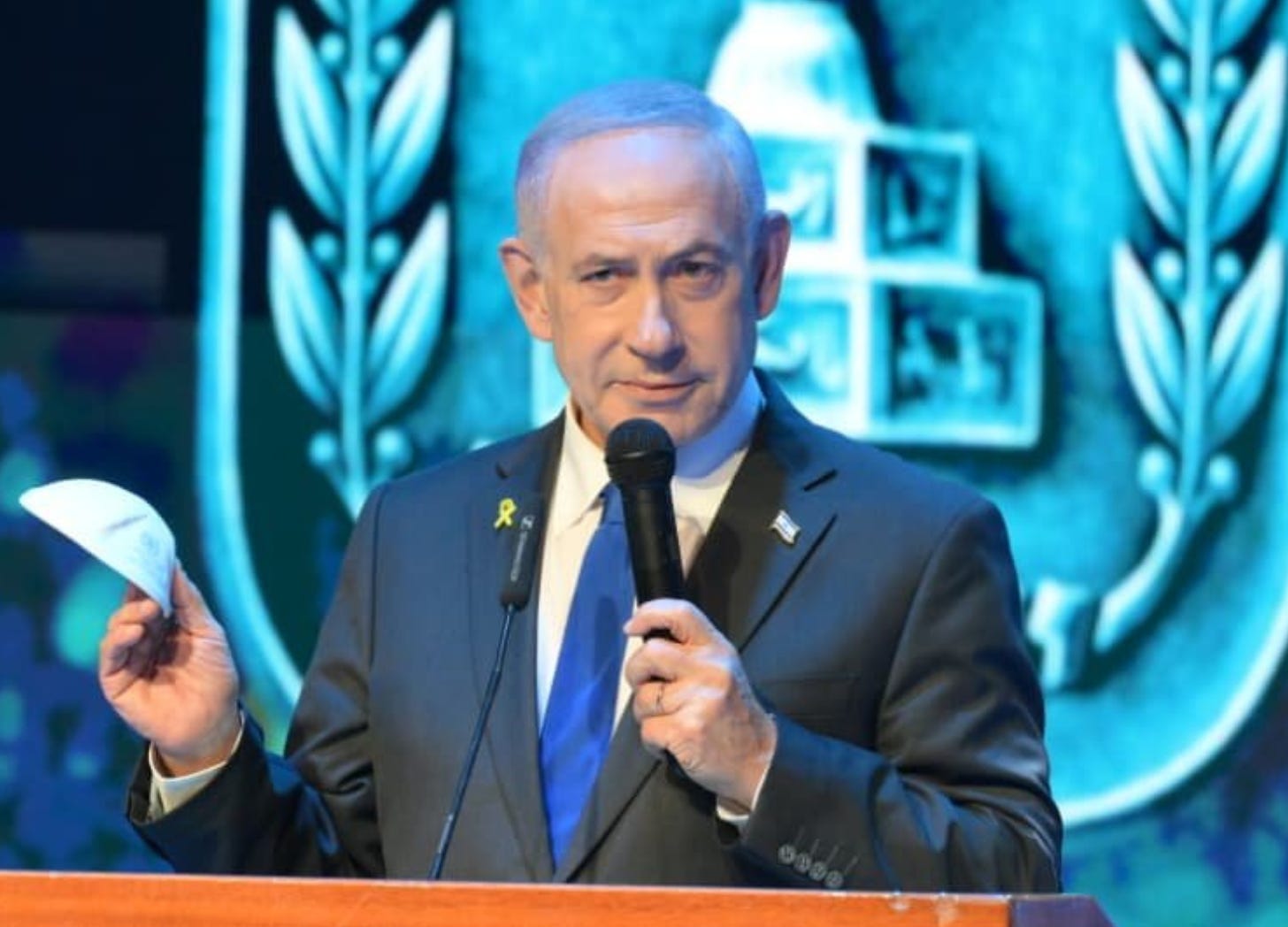
Ahmed’s identity has also become the subject of false narratives. Netanyahu falsely claimed that footage of Ahmed tackling and disarming one of the gunmen depicted “a Jew who pounces on one of the murderers”, calling his actions “Jewish heroism at its best”. Laura Loomer, a far-right political activist in the United States, has claimed without evidence that Ahmed is “a Lebanese or Coptic Christian”. His relative, Mustafa Asad, told Al Araby TV that Ahmed is Syrian, from the predominantly Sunni Muslim region of Idlib in northwest Syria.
Notley, who heads a Western Sydney University research project gauging media literacy in adults, said Australia needs to be doing more to combat misleading online content.
“Whenever there’s a catastrophe like this now, we’re bombarded with misinformation from bad actors,” she says. “These actors only exist because there’s a business model that supports them. We need regulation that stops social media platforms and search engines from profiting from misinformation and scams like this.”
Special Envoy blames Palestine marches
Israeli politicians, far-right personalities and Australia’s Special Envoy to Combat Antisemitism, Jillian Segal, have been quick to assign blame.
In a statement published on Sunday, Segal explicitly linked the massacre to the pro-Palestine movement.
“This did not come without warning. In Australia, it began on 9 October 2023 at the Sydney Opera House,” Segal said. “We then watched a march across the Sydney Harbour Bridge waving terrorist flags and glorifying extremist leaders. Now death has reached Bondi Beach.”
Noura Mansour, national director of Democracy in Colour, said Segal’s conflating of the attack and the Palestine marches had “put a target on the backs of Palestinians and people in the Palestine movement”.
“Segal drew a direct link between Sunday’s massacre and university students organising to protest against a genocide. That can put people in danger,” Mansour said.
Israeli Prime Minister Benjamin Netanyahu – who is wanted by the International Criminal Court on alleged war crimes charges – made similar unfounded claims, reiterating statements he made in August that Australia’s decision to recognise the State of Palestine “was promoting and encouraging antisemitism in Australia”.
“Your government did nothing to stop the spread of antisemitism in Australia,” Netanyahu said. “You did nothing to curb the cancer cells that were growing inside your country. You took no action. You let the disease spread and the result is the horrific attacks on Jews we saw today.”
Mansour criticised Netanyahu’s comments, saying Israel was “trying to pressure the Australian government into reversing course on recognising Palestine and sanctioning its ministers”.
Media literacy scholar Professor Tanya Notley cautioned media outlets against platforming “hateful content”.
“People commonly exploit situations like this for political gain; to push people to believe their ideology or feel the kind of hatred they want people to feel,” Notley said.
“I don’t think we need to hear that kind of rhetoric, even if it’s from the political leader of another country. If what they’re saying is hateful and inflaming divisions, then that’s not what we need right now.”
Jewish community ‘devastated’
Citing an “outpouring of love and support from the Palestine solidarity movement,” academic and writer Dr Jordana Silverstein called Netanyahu and Segal’s claims “outrageous slurs”.
“We’re living in a highly fragmented and violent society,” Silverstein says. “People who are calling for an end to a genocide are not the cause of this.”
While Jewish Australians were feeling “grief, horror, anger and devastation” in the wake of the massacre, Silverstein noted that many also felt a renewed resolve to pursue “forms of justice and community that bring people together”.
“For myself and many people in the community, there’s a sense that more than ever we need to be working collectively,” Silverstein said. “Not just siloed off, but fighting the racism that so many of us across so many communities experience and not allow ourselves to be used in the service of spreading anti-Palestinian racism and Islamophobia.”

These sad events create a band wagon and all jump on it for their own political ends.