


This column is part of a new series, Rigged Economy. This section will provide critical analyses that explore the systemic causes of economic inequality in Australia.
The cost-of-living crisis is getting worse. Inflation is up 3.8%, driven by a 37% increase in electricity prices and 11% increase in childcare – all in one year. The obvious link here that mainstream pundits won’t point out is privatisation – governments selling off publicly-owned assets and services to for-profit corporations.
Rather than unpacking the structural causes of the crisis, most “economists” are simply warning of further interest rate hikes – which will heap more pain on struggling households.
What should be on the agenda is nationalising essential services – bringing them back under public control and out of the hands of profit-hungry corporations. And we should start with electricity and childcare.
The current crisis has been decades in the making, and the massive wave of privatisation commenced by Labor in the 1990s – when the government sold off the Commonwealth Bank, Qantas, CSL and other publicly-owned assets – is a key part of the story.
Publicly-owned essential services, when we had them, maximised quality and affordability. Today, for-profit corporations maximise profit, drive up prices and cut back on quality. To understand its devastating impacts, look no further than electricity and childcare.
Electricity bills feeding profits
Last year, the Australia Institute found that the second largest private electricity retailer in Australia, AGL, was making $755 of profit per customer per year. Origin, Australia’s largest retailer, made $595 in profit per customer. In the same year, Origin’s electricity retail arm recorded a mammoth 172% increase in profit, while AGL recorded a 189% increase in profit. Here’s the kicker. For every $100 of your electricity bill, just $12 is actually the cost of generating electricity.
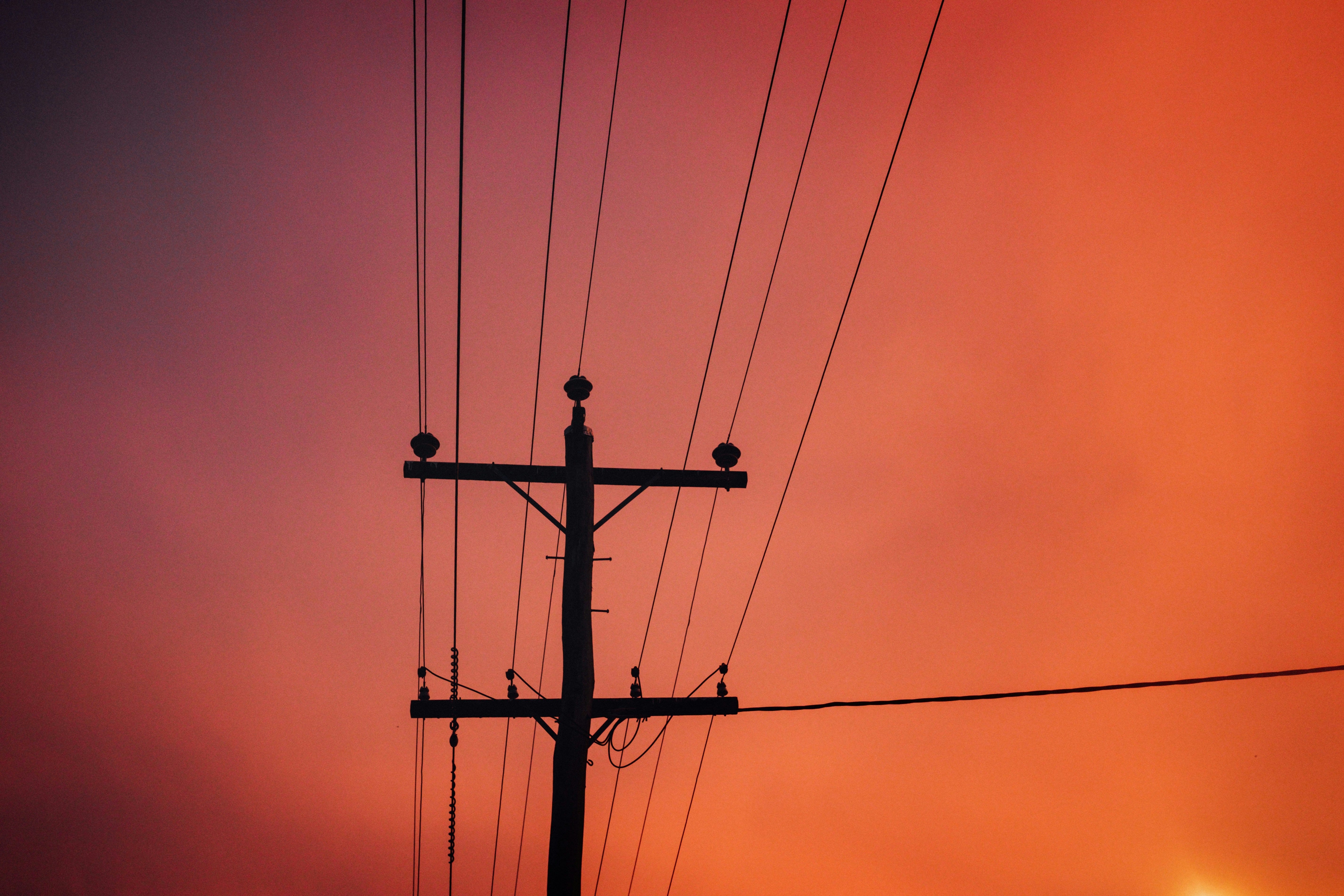
At every point in the electricity system for-profit corporations are taking a cut. The average profit per customer for electricity transmission and distribution networks (the polls and wires), also largely privatised, is $855 a year. Meanwhile, private generators regularly game the national electricity market to drive up wholesale prices.
How did this happen? In 1998, the Coalition government created the National Electricity Market – a framework to establish an artificial, private market for electricity. From there, state Labor and Liberal governments began a decades-long process of selling off electricity assets including the Victorian Liberal’s privatisation of retail, distribution and networks from 1995 to 1998, and Queensland Labor’s privatisation of electricity retail in 2006.
Even those networks and generators that remained in public hands were restructured and forced to act like for-profit corporations under rules introduced by Labor in the 1990s. From 2009 – when states began fully deregulating electricity prices – to today, electricity prices have increased at nearly three times the rate of inflation. Three times!
Since privatisation, sales staff employed in the electricity sector exploded by 396%, while the number of electricians, labourers and trades people in the electricity sector increased by only 21%. We are literally paying electricity companies to hire sales staff to advertise the exact same product back at us – which we all need anyway. Think about this next time you see advertising from an electricity company.
In this context, government electricity rebates, while better than nothing, function as a band-aid solution, allowing big corporations to carry on making massive profits.
The childcare rort
Childcare was also privatised in the 1990s when the Labor government opened up childcare subsidies to for-profit providers. Prior to privatisation, experts described our childcare system as the envy of international experts. Now it’s the opposite.
Over the last decade alone, 95% of all new childcare centres have been for-profit, and as a result 75% of the long day care sector is now for-profit. US corporations and private equity, in particular, see Australian toddlers as a massive profit opportunity. That’s not a sentence that should fill anyone with confidence.
Every year the federal government pays out about $15bn of childcare subsidies. But in effect what the government is doing is not subsidising childcare – it is subsidising, with your tax dollars, a highly exploitative child profit industry. Let’s break it down.
Looking at three of the largest publicly traded private childcare corporations, the average profit per child was $6,094 last year. With roughly 605,000 kids in private childcare, that means last year alone private childcare corporations made roughly $3.8 billion in profit.
In addition, private childcare landlords made $2.7 billion in rent, simply for owning the land in which childcare centres operate, making rent the second biggest cost for childcare operators.
This means that in total, private corporations make a whopping $6.3 billion in profit from childcare in Australia every year, nearly half of the $15 billion in federal investment in childcare. In fact, every time the federal government increases public subsidies, for-profit childcare centres raise their fees and make bigger profits.

It doesn’t have to be like this
Privatisation sees corporations put profit ahead of everything, including safety. Reporting by the ABC into sexual abuse and assault of kids in childcare found that most of the abuse they uncovered occurred in for-profit centres, “where cost-cutting, high staff turnover, and routinely breached or gamed child-to-staff ratios leave supervision dangerously thin”.
Meanwhile, privatised electricity network company AusGrid was found to have cut the number of safety inspectors by more than half after a private consultancy firm found it was cheaper to cover the compensation costs of permanent disabilities caused by faults in the grid.
Privatisation demonstrates how Labor, the Coalition and the corporate sector have rigged the economy against us. But it doesn’t have to be this way.
We could absolutely have an affordable publicly-owned electricity system, run in the interests of the people, not corporate profit. And there’s no reason why we couldn’t have an entirely public, well-funded, high-quality and free childcare system.
Regaining public, democratic control over key services is crucial if we’re to truly address the cost-of-living crisis. But no neoliberal ‘economist’ offering ‘insights’ in a mainstream outlet will tell you that. The demands will have to come from us, the public, to take back control and put an end to the rort we’re all paying for.

“For every $100 of your electricity bill, just $12 is actually the cost of generating electricity.” 😳
Returning any of the public assets back to public control will not happen in our life times (a pipe dream). Unless it is losing money and then the government will buy it back at a ridicules high price just like it was sold to them at a ridicules low price.
We still tout the people who gave away our assets as great economic managers mainly prime ministers and premiers of different states.
All these great economic managers where just looking after the big end of town and of course themselves.
The people where never a thought to these great economic managers.