


By Laura Banks
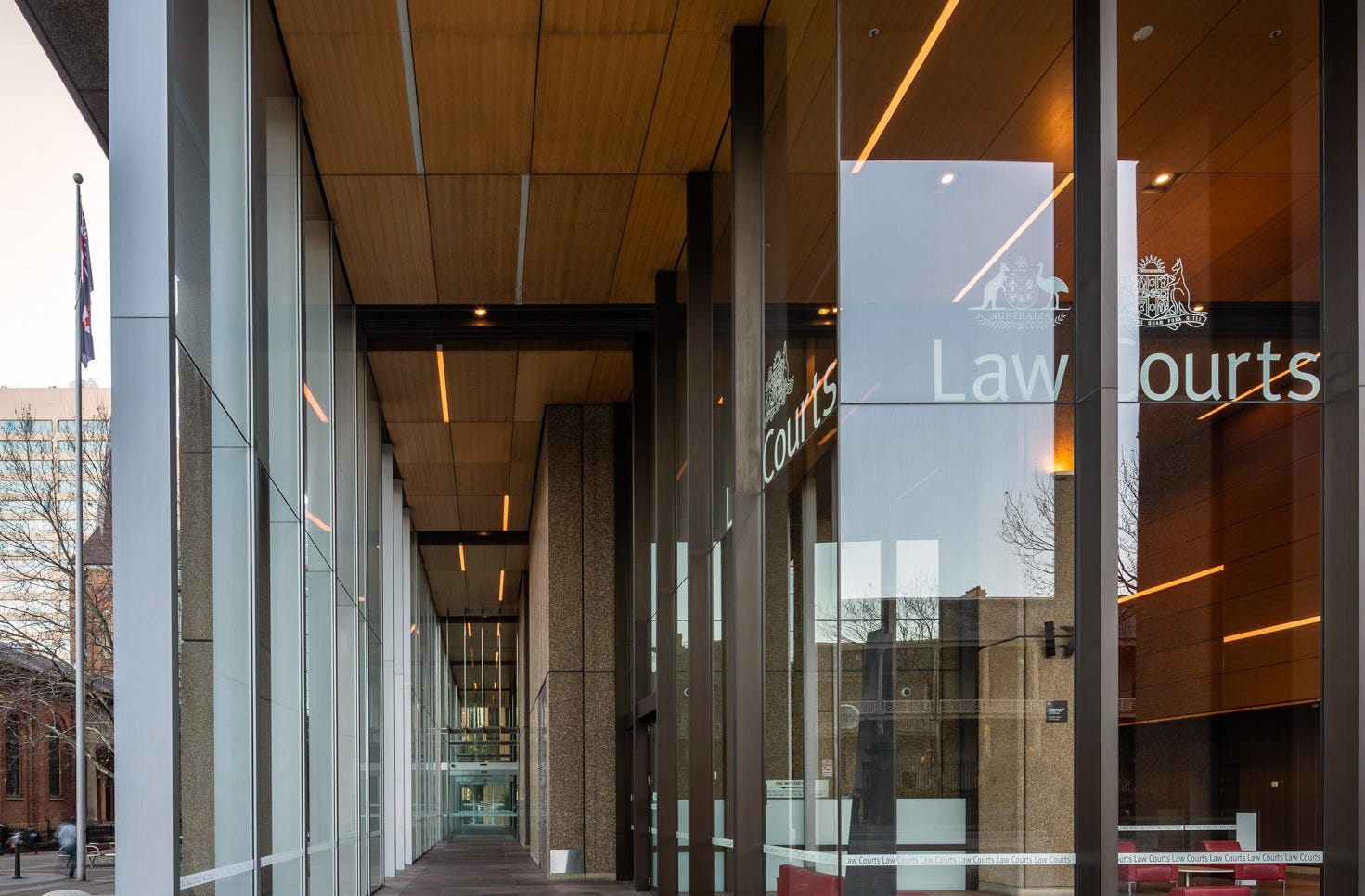
A NSW Supreme Court judge has rejected a bid to place a young Sydney man under a terrorism supervision order, finding prosecutors wrongly conflated hostility towards Israel with hatred of Jewish people in assessing whether he posed a future terrorism risk.
The state’s attempt to portray Mohommed Farhat, who vandalised property in Sydney’s eastern suburbs in 2024, as a future terror threat was rejected after Justice Desmond Fagan delivered an extraordinary criticism of the prosecution’s definition of antisemitism and its interpretation of material found on Farhat’s phone.
In a decision delivered on July 30, Fagan found the evidence fell well short of the statutory threshold, concluding the offending was motivated by promised payment rather than ideology.
Throughout the week-long hearing, Fagan repeatedly distinguished criticism of Israel from hatred of Jewish people, lectured the court on the history of West Asia and rejected the prosecution’s interpretation of private messages, saying expressions of hostility towards Israel did not automatically amount to antisemitism.
“They are not the same thing,” Fagan said.
‘Jews are not monolithic’
The 22-year-old caused tens of thousands of dollars in damage when he defaced cars and property with slogans including “F*k Israel” and “PKK coming”. He pleaded guilty to the offences in the Local Court and was sentenced to one year and eight months in prison.
In seeking an extended supervision order, prosecutor Patricia McDonald SC argued Farhat’s actions and material extracted from his phone demonstrated an extremist pathway. She relied on messages discussing Hezbollah, the killing of its leader Hassan Nasrallah, Israeli military operations in Lebanon and anger over events affecting southern Lebanon.
Justice Fagan rejected that characterisation, finding the exchanges reflected young men discussing a conflict impacting their families and community, rather than evidence of antisemitism or future terrorism. The material did reflect hostility towards Israel, Fagan said, but that did not automatically amount to hostility towards Jewish people.
“You are treating all Jews as monolithic,” Fagan told McDonald.
“It’s quite wrong to treat all Jews as supporting Israel, because they don’t. But you treat a statement of hostility to Israel as a statement of hostility to the Jewish people, which it is not.”
Distinguishing Israel from antisemitism
McDonald argued that Farhat’s attendance at a pro-Palestine march was evidence of nefarious intent.
“You do realise that hundreds of thousands of Australian people have attended protests against Israel’s bombing and destruction of Gaza,” Fagan replied.
“You do realise that the Pew Research Centre in the United States, a reputable polling organisation, has in June of this year released a poll showing that 79 per cent of Australians have an unfavourable view of Israel and … it may possibly be inferred that that would have to do with Israel’s destruction of the Gazan people.”
The prosecutor submitted that targeting areas with large Jewish populations transformed the offending from political protest into antisemitic conduct.
Fagan challenged that, urging the state to distinguish between the political content of a message and the unlawful way it was expressed. A person publicly criticising Israel’s actions, even outside a synagogue, would be exercising political expression, he said, adding that the criminality arose from the destruction of property, not from the political views expressed.
Fagan said the magistrate had earlier been wrongly persuaded by the prosecutor to categorise “F*k Israel” as antisemitic, and the state of Israel was not “coextensive with Jewish people”.
“The slogan is a curse against a foreign state. It does not convey hatred of or prejudice against Jewish people as a whole or against any Jewish person or people by reason of being Jewish,” Fagan said in his decision.
“Many Jewish people worldwide, including in Australia, are outspokenly and vehemently opposed to and critical of the state of Israel.”
A legal warning against fixed meanings
The court’s decision has implications far beyond Farhat’s case and enters a debate about antisemitism that has intensified since October 2023. Fagan insisted that courts examine language in its factual, political and historical context before attributing hateful intent, and in doing so, rejected a fixed interpretation of antisemitism.
Federal and state governments endorsed a controversial International Holocaust Remembrance Alliance (IHRA) definition of antisemitism following the publication of Special Envoy for Antisemitism Jillian Segal’s Antisemitism Plan. Segal – who previously headed pro-Israel lobby group ECAJ – recommended the definition be adopted by “all levels of government, public institutions and regulatory bodies”.
The ongoing Royal Commission into Antisemitism and Social Cohesion has also adopted this interpretation.
The IHRA definition states, in part, that “antisemitism is a certain perception of Jews, which may be expressed as hatred toward Jews”. It also includes examples suggesting some forms of criticism of Israel may be considered antisemitic, a feature that has fuelled ongoing debate.
University of Technology Sydney’s Dr Elyse Methven said Fagan’s observations were significant because they came amid growing efforts to treat disputed political language as having a single, set meaning.
“Courts must pay close attention to context and meaning rather than relying on assumptions about what particular political expressions are presumed to represent,” the senior criminal law lecturer told Deepcut.
“Justice Fagan’s observations are an important reminder that legal decision-makers must avoid overly simplistic attempts to conflate criticism of Israel with antisemitism or hatred of people of the Jewish faith.”
Methven, whose research has examined the regulation of offensive language and public order offences, said the task of interpreting words as hateful was complex.
“The simplistic reduction of a phrase as inherently hateful is inconsistent with how language works. Any legal decision-maker should have regard to relevant contextual features,” she said.
This is interesting because Justice Fagan made some unfortunate remarks about Muslims in 2019 in some terrorism cases which I analysed a few years ago—he also presided over some biased and problematic reasoning where he essentially accepted that Isis propaganda is the same as Islam, that Muslims should repudiate parts of the Quran, and that Muslims raised in Islam in relevant evidence of terrorist motive.
(My article here: https://www.crimejusticejournal.com/article/view/2686)
He may have had time to think about those things.
But saying that, he has made good points here.
Three cheers for Justice Fagan. Sounds like he's read up on the history - which many people in positions of power should do. I've always thought that anyone who supports Zionism couldn't possibly have read the history. They've probably just swallowed Zionist propaganda. The name Chris Minns comes to mind...