


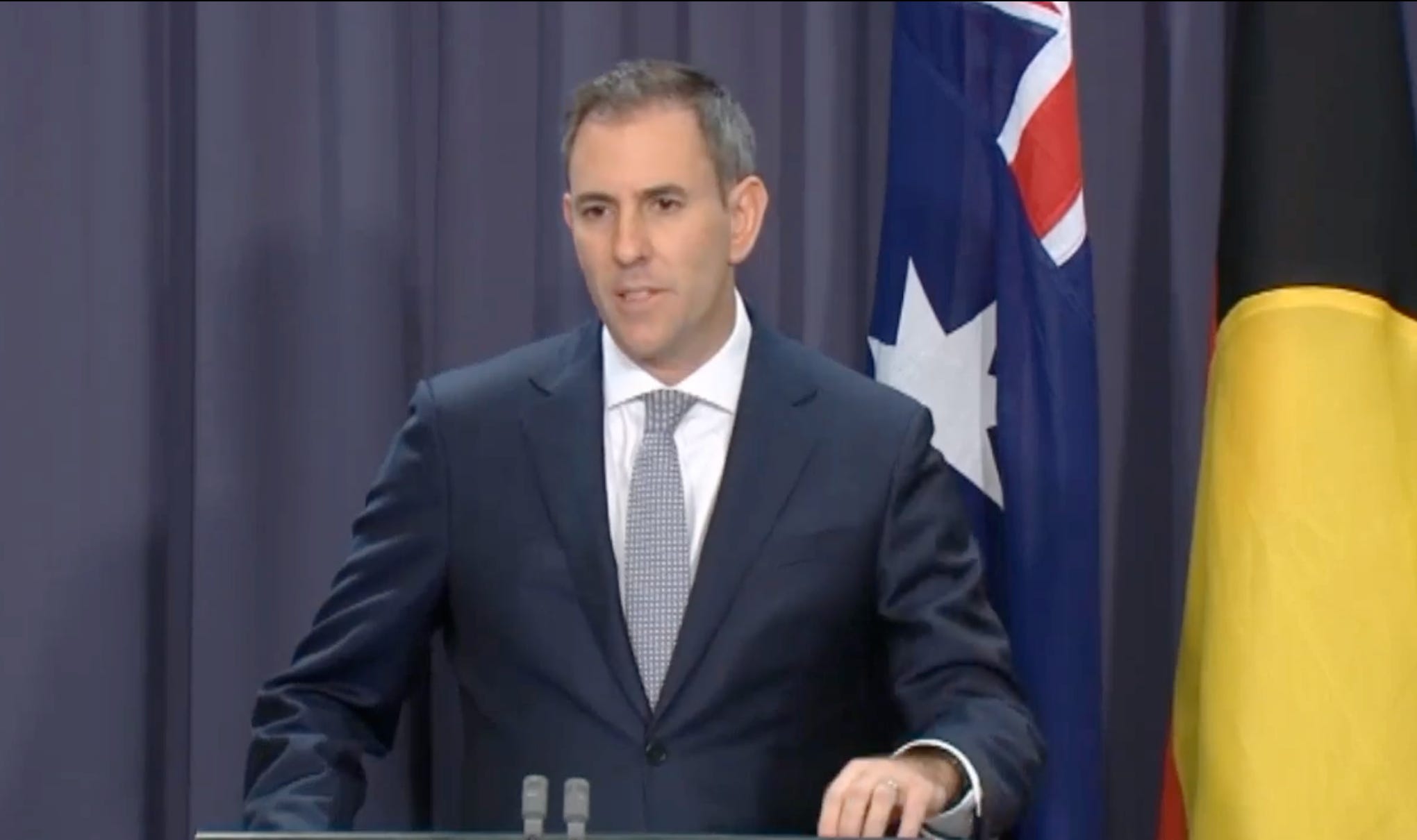
I write this sitting in a budget lock up, divorced from the outside world and wondering if, by the time I am reconnected with the world, Keir Starmer is still the British PM.
That the UK Labour Party is now discovering the delight of the ‘it’s on’ spill vibes of the Australian Labor Party is due to one thing that the ALP is having to deal with, and in this budget it still has not shown a full commit to address.
Earlier this week, UK Labour lost more than 1,400 seats in local elections while the right-wing, pro-racism Reform Party picked up that many.
There was no real secret to why this happened. Starmer decided to follow a right-wing path of punching down on migrants and trans people all in an effort to take away ground from Reform. And voters decided to ditch the softcore Labour version of hatred and embrace the full hardcore version of Reform.
We have seen the same here in Australia, although for now it is voters only deciding One Nation’s full horror show is better than the Liberal Party’s ‘lighter’ version.
It’s a dynamic that has long been around politics, though it was always a two-party thing. Labor here tried for ages to fight on the same territory that John Howard and his descendants wanted – budget surplus, asylum seekers, tough on terrorism, protestors etc. And voters for the most part said thanks, but we’ll go with the true haters rather than the Labor-lite version.
Fortunately for the ALP, Scott Morrison was so inept that they got back in and the Libs found the only human less able to be prime minister than Morrison in Peter Dutton and huzzah here we are with 94 seats in the House of Reps.
Since its election in 2022, the Albanese government has mostly done as little as possible. It made decent changes on industrial relations in its first term, but that was more about the union movement not accepting the dud changes they got from the Rudd government after campaigning to get rid of WorkChoices.
But other than that? Pfft.
One staffer once told me that the government was bold when it brought in the social media laws because it was taking on big tech. And really, come on. Taking on a policy pushed by News Corp and other commercial media outlets is hardly being brave.
And all the while the government rested on its 94 seats, it ignored just how low its actual primary vote was.

Compulsory voting and the preferential system have spared the ALP (and to a lesser extent thus far, the Libs) from the fate of the Conservative and Labour parties in the UK and even the Democrats in the US, but there is no such thing as a safe seat – indeed safe seats have been more at risk from being lost to independents than marginal ones.
Before I went into lock up, I was listening to Sky News and the host was saying that voters were turning to One Nation and others because governments break promises. And yes reader, I did laugh.
No one cares about governments breaking promises, unless they liked the promise.
Changing the capital gains tax discount to what it used to be (with an added 30% minimum rate) and removing negative gearing except for new buildings is a broken promise, but one that I suspect will actually be popular.
The housing market was so destroyed from speculators and investors that even they knew the system was stuffed (given their kids have told them they have no hope of every buying a home).
Not fixing broken systems is what drives voters to independents.
One of the many skills of Donald Trump is that he does not care about the old rules of ‘tough budgetary choices’. He just does what he wants – sure those choices are terrible and result in deaths, but it kills off the excuse not just for him, but others.
The government will still want to talk about making hard choices.
Ok, but the government chose to cut the NDIS by $16bn in 2029-30 – equal to around a 10% cut in real terms – and yet chose not to bring in a 25% tax on gas exports that would raise $17bn a year.
Instead, it chose to keep the Petroleum Resource Rent Tax which will see revenue fall to just $1.25bn in 2029-30.
So, they didn’t break a promise to gas companies, did break one to property investors and sort of did what people expected would be done to those with a disability.
And so now we have a government saying those with disabilities need to be kicked off the NDIS because gas companies need their profits.
Is that going to keep voters from straying to One Nation (voters who are in favour a gas tax, even if Pauline currently is not)?
Most people know someone on the NDIS, and few would think they are rorting it. The problem, of course, is that the NDIS is a Productivity Commission idea, which believes the private sector delivers better efficiency than the public sector.
It never does. It always leads to profiteering and worse service and yet when you are beholden to neo-liberalism, what need have you for reality?
But that type of thinking is really what has driven people away from the duopoly. The belief that small government is better, that the system really is fair and you just need to ‘aspire’.
Because people know with such things what happens is the shonks rort the system and get away with it, while those with disabilities need to endure the cuts because ‘spending is out of control’.
This budget was not a terrible one. The changes to the capital gains discount are ones I have been advocating for well over a decade.
But the ambition was not overarching – it was focussed and it meant that the biggest winners were the most profitable companies in Australia and the biggest losers were those struggling with disabilities.
The Labor Party finally saw the need to actually do things, but it remains wedded to the view that fiscal responsibility and hard choices are needed.
It is a narrative that owes itself to the past and Labor is in danger of seeing voters leave it behind.
Got a tip? Send an email to tips@deepcutnews.com or send an anonymous Signal to @deepcut.25.
I'm an NDIS participant. The media laid the groundwork for this budget. The Murdoch press and the Australian financial review have been doing HIT jobs on the NDIS for a while, misrepresenting data about how participants spend their money.
I rely on personal care support every day. But I don't use big private corporations for the support. I use independent workers who invoice me directly and they provide a very good service having experience in disability support for many years who also work for disability organisations to supplement their income.
Yes there is some rorting and fraud taking place, but in my experience most participants do the right thing knowing that Australian taxpayers are paying for this scheme and it only takes an accident or a disease for someone to end up in my circumstance. I'm thankful for the NDIS for allowing me to live independently and work thanks to very dedicated and reliable support workers.
Unfortunately too often the sensational stories get in the way of facts. I will be following closely to see where the cuts take place and what changes will be coming down the line.