


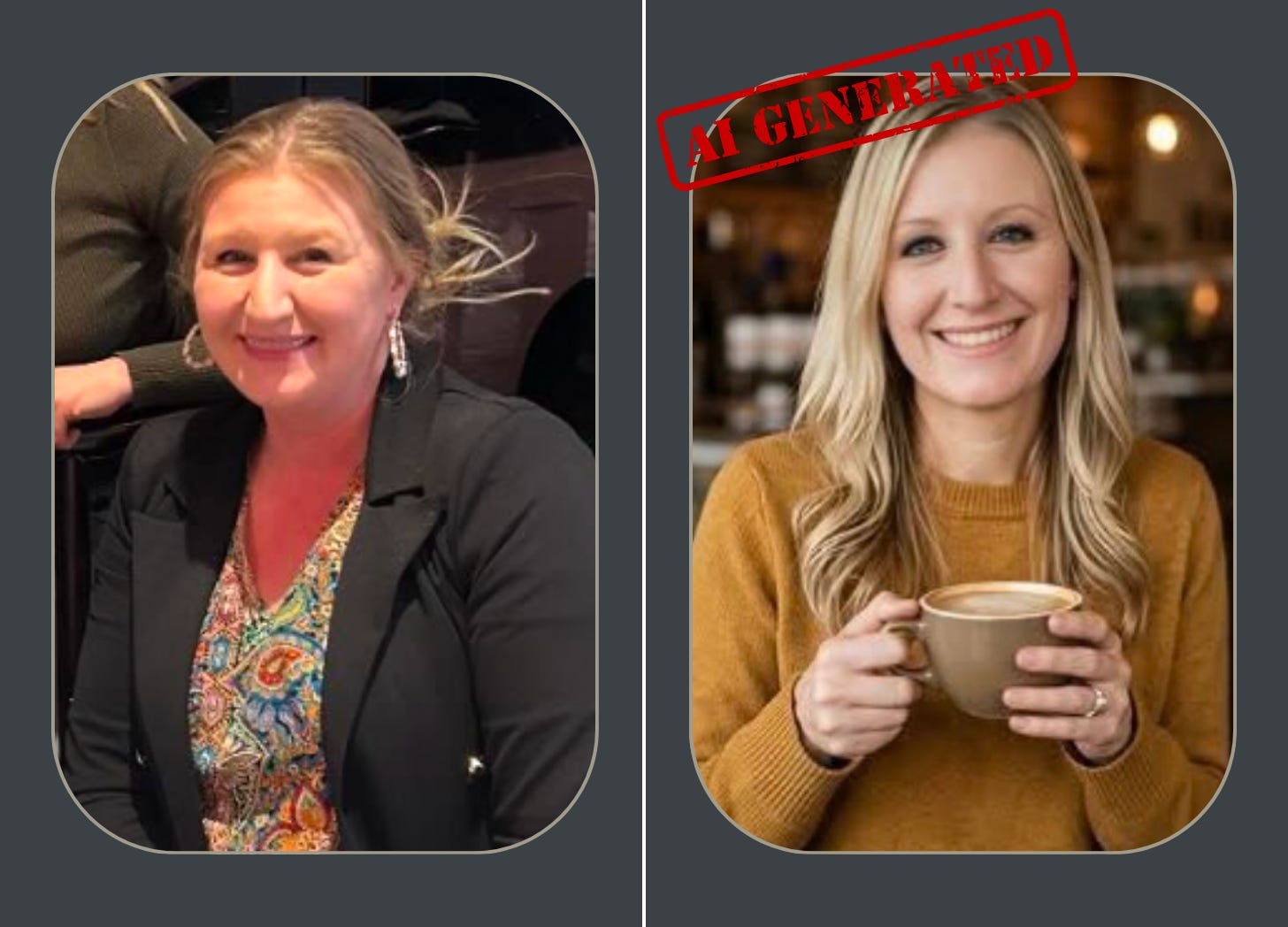
A candidate in a Victorian council by-election used AI portraits in their promotional material, a Deepcut investigation has found, raising concerns of AI manipulation in election campaigns.
Louise Black, a former member of the Victorian Liberal Party, contested in the City of Kingston, which covers the suburbs of Mordialloc and Parkdale in Melbourne’s south-east.
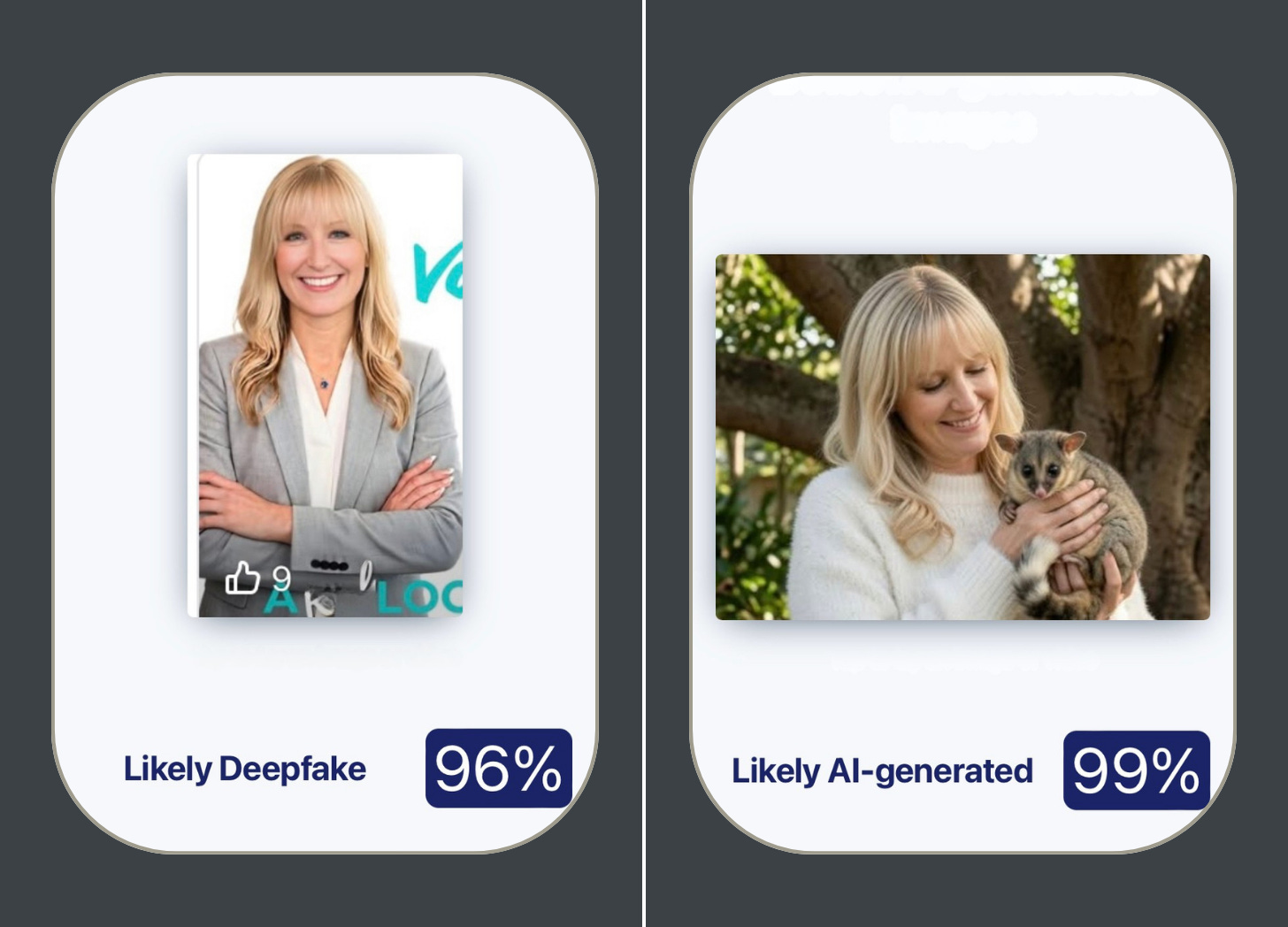
An analysis of Black’s Facebook campaign page revealed a set of images that do not visually align with past photos.
A test by Deepcut using AI detection software found the images were likely generative AI or edited using AI, with a confidence level between 96 and 99 per cent. By contrast, a 2024 photo of Black taken from Instagram was judged to be only 1 per cent likely to have been altered or generated by AI.
“Physical attractiveness has been shown by extensive research to have a clear positive impact on electoral success,” Rodrigo Praino, professor of politics and public policy at Flinders University, told Deepcut.
“This is particularly true in the case of low information electoral contests, that is, when voters typically do not have very large amounts of information on the candidates, their policies and their records.”
With a turnout of just over 79 per cent, Black finished in third place on first preferences with 14.75 per cent of the vote.
Following the declaration of results on August 14, Black – alongside fellow candidate Glenn Dumbrell – called for a “full recount of all ballot papers”, claiming “serious procedural irregularities” in the count. The VEC said it suspected vote tampering and referred the matter to the Victorian Civil and Administrative Tribunal.
Neo-Nazi Telegram chats
This is the second time Black has contested Kingston’s Melaleuca ward. After losing the previous election in November 2024, anti-fascist researchers alleged that Black had posted over 25,000 messages under various usernames in neo-Nazi Telegram chats.
In one chat, Black allegedly asks a National Socialist Network (NSN) member for “poster ideas” for “my candidates (SIC) election campaign”.
The candidate in question was Liberal candidate Robbie Beaton, who was contesting the federal Victorian seat of Isaacs in 2022 against then attorney-general, Labor’s Mark Dreyfus. In asking for poster ideas, Black tells the chat, “Try not to be insanely antisemitic”. One user responds, “Bare minimum anti-Semitism”. Dreyfus is Jewish.
Beaton was eventually found to have provided false information about his address to the Australian Electoral Commission – claiming to have resided in the seat of Isaacs when his actual address was elsewhere in Camberwell – and was slapped with a $1,000 bond for two years. Beaton was not revealed to be in the same Telegram chat.
AI images permitted
Electoral rules have yet to catch up with AI use – a potential worry ahead of Victoria’s state elections in November. When asked whether AI-generated candidate imagery was permitted in campaign material, a VEC spokesperson responded:
“The Local Government Act 2020 does not specify how a candidate must present themselves in their identifying imagery and does not prohibit the use of generative AI to create images. For this reason, how a candidate wishes to use imagery to portray themselves is not regulated by the VEC.”
The lack of AI regulation comes amid growing voter concern over AI misinformation. An ANU study on AI and electoral integrity noted that “those who were more familiar with AI were also more likely to be concerned about its potential to spread misinformation”.
“Nearly half of Australians reported that false information about candidates and parties was distributed online, and more than four in ten believed that AI would make elections less fair,” it read.
Impact on voter trust unclear
According to Prof Nicholas Biddle, the study’s lead author, most people already assume “there is a substantial amount of use of AI”.
“The most important thing is disclosure and making clear when AI is being used and when it’s not being used and under what scenario,” Biddle – who heads the School of Politics and International Relations at the Australian National University – told Deepcut.
But Praino says it remains to be seen whether voters will immediately turn off candidates using AI.
“In the short term I think we are seeing a lack of trust in the public, but long term it is harder to tell,” he told Deepcut.
“There is a lot of awareness about AI in the community. Voters are very aware now that just because a photo is out there, it doesn’t mean it is true. In that sense, an increased awareness could see a positive effect over the longer term. We will have to wait and see.”
Nevertheless, public expectations for governments to regulate AI are high, according to Biddle.
“There’s very strong evidence that the general public has a desire for government to play both a leadership role and a legislative role in managing the use of AI in general, but also in regards to elections,” he said.
Louise Black was contacted for comment.
