


Even before the strikes on Iran began, it was clear that Israel had drawn Donald Trump into a war he could not control, against an opponent he did not understand. Secretary of State Marco Rubio’s slip of Israeli stage-managing left no room for doubt.
But this is more than merely an exercise in appeasing a rogue state. While the pro-Israel lobby has captured US decision-making – as political scientist Prof. John Mearsheimer has long argued – in Trump’s case, it has done so by wrapping Israeli interests around a neoconservative vision of American global power.
That vision is expansionist, belligerent and nostalgic for a colonial era of imperial domination. It’s a furious rejection of the global shift to multipolarity and its prerequisite condition that all great nations, including the US, share power. As renowned economist Prof. Jeffrey Sachs stated on Sunday, the US is not in the game of “co-responsibility with anybody”.
Chinese geopolitical analyst Prof. Jiang Xueqin made similar observations this week, noting that current US actions spoke of a declining empire lashing out, unable to accept the inevitable shifts in global power dynamics that are eroding its dominance.
In true Trump style, the bullying has not been directed at great power rivals like China and Russia, but at weaker states. By targeting smaller powers like Venezuela, Cuba and Iran, the US is hoping to remind the world of its ability to project its military might whenever and wherever it pleases.
But all the world can see with its ill-fated foray into Iran are holes being punctured in America’s armour.
Signs of weakness
The ease with which US bases are being hit
Iran says it has hit 27 US bases in the region, some – like in Bahrain, Kuwait, Qatar and the UAE – repeatedly. The US says seven of its troops have been killed – a number believed to be understated by analysts such as Xueqin, given the volume and precision of the Iranian strikes. Small powers worldwide readily signed up to a US presence on their soil, Australia included, thinking such bases afforded protection and security guarantees. What the current Gulf Arab example shows is that such protection is never assured.
Impotence at defending the Strait of Hormuz
‘Impotence’ was a word used by seasoned US analyst, Prof. Marc Lynch of George Washington University. That Iran – a nation under US-led sanctions for over four decades – can so easily cripple a vital shipping route has stunned Gulf Arab states who have spent billions on US military hardware, and aligned themselves to Washington precisely to prevent such a scenario.
Adding to that ‘impotence’ was Trump’s irrational Truth Social post last week when he said that the US navy would escort ships through the Strait of Hormuz, putting US warships in direct range of Iranian drones and missiles. The Islamic Revolutionary Guards Corp (IRGC) mocked Trump’s post, saying they were “awaiting their presence”. Trump has since ratcheted up his threats, warning the US would hit Iran “TWENTY TIMES HARDER” if it didn’t allow ships passage through the strait.Loss of expensive, sophisticated hardware
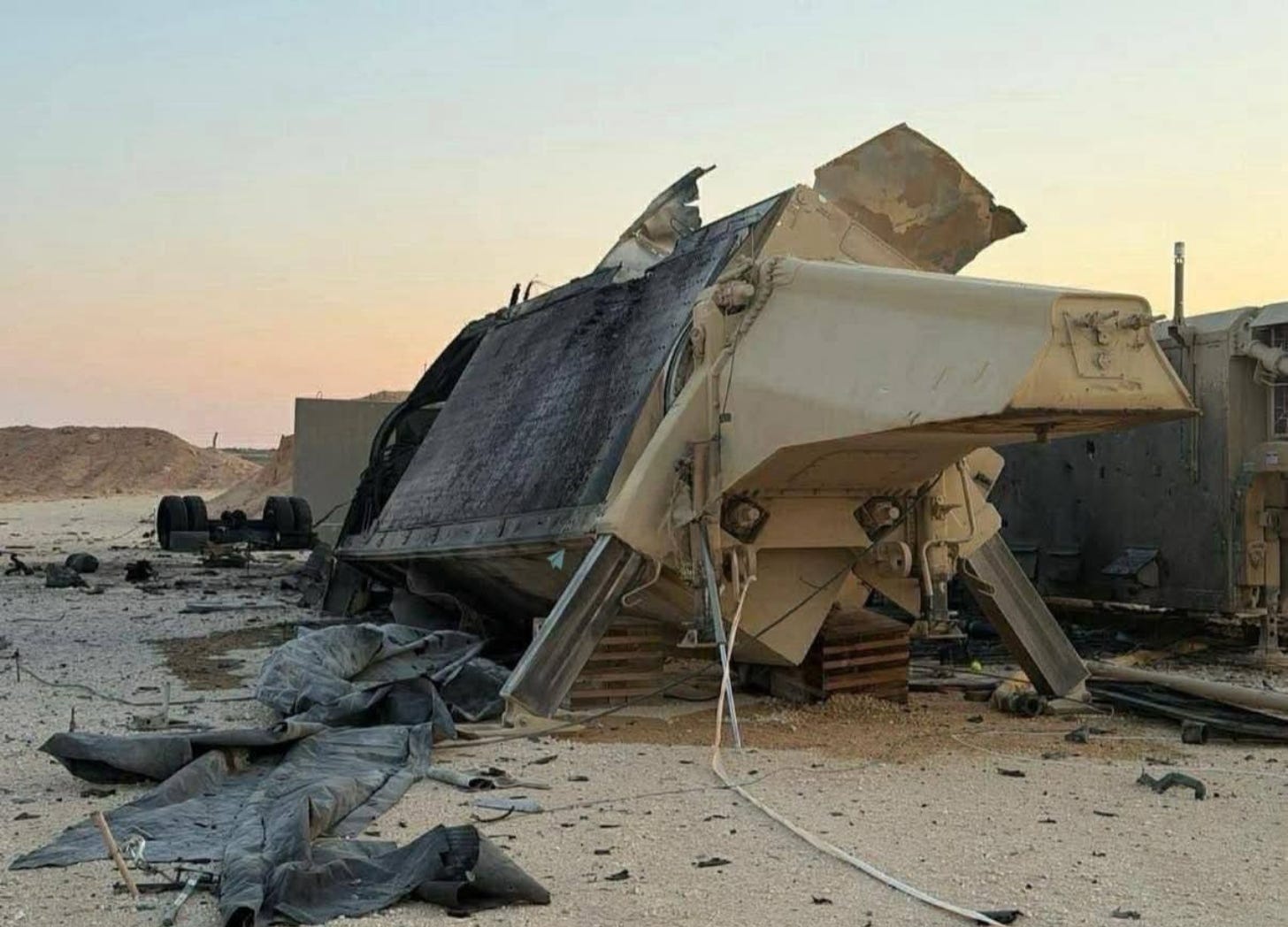
China and Russia are no doubt taking stock of Iran’s speedy destruction of advanced US radars and anti-air systems. Reports say the US lost at least US$2bn in hardware in the initial days of the war, including THAAD radars, a separate $1bn radar in Qatar, F15 fighter jets and MQ-9 drones. This doesn’t account for damage sustained at the US Fifth Fleet headquarters in Bahrain, as well as other damage to its bases across the region.
Hi-tech vs low-cost production capabilities
The Iran and Ukraine wars are testing America’s attrition capacity. The Ukraine war already exposed US production shortfalls, and attempts to ramp up production of Patriot missiles in 2023 and 2024, for example, still only resulted in 25% of the Pentagon’s needs. The outsourcing of manufacturing over recent decades, as pointed out by Xueqin, has eroded the US’s industrial base, hobbling its production output despite an obscene US$1.43 trillion defense budget favouring hi-tech gear. Russia and Iran, with far smaller military budgets, mass-produce cheap drones and munitions, which are proving effective in both arenas.
Turning to Ukraine and Australia for help, and walking back sanctions on Russia
Within a week of suffering Iranian drone attacks, the US sought help from the very country Trump has been berating for the past year – Ukraine. Adding to that humiliation was the forced retreat Trump made in a phone call with Vladimir Putin vis-a-vis sanctions on Russian oil, to help with soaring energy prices. The deployment of Australia’s E-7A Wedgetail aircraft – as well as 85 personnel – is also an interesting choice. The Wedgetail is known for its “long-range reconnaissance capabilities”. Could the US have requested Australian assistance because the Iranians knocked out the radars the US and Israel relied on?
Australia’s deployment and international law
Lara Khider, acting executive director of the Australian Centre for International Justice, says there are “risks” of Australia’s deployment “becoming a party to the conflict”, particularly given the war on Iran is a breach of international law.
“The broader legal context is clear: the UN Charter prohibits the use of force except in self-defence against an actual or imminent armed attack, or with Security Council authorisation; treating attacks on Iran as lawful ‘self-defence’ despite the absence of an actual or imminent attack is a clear violation of the prohibition of the use of force,” she told Deepcut.
“Even deployments framed as ‘defensive’, such as surveillance, refuelling, or intelligence sharing, may in certain circumstances contribute to a State’s participation in hostilities or raise questions of international responsibility.
“It is possible that Australia’s contributions could amount to participation in hostilities under international humanitarian law, rendering Australia a party to the conflict and exposing it to responsibility for breaches of international law, including the prohibition on the use of force,” she said.
Greens Senator David Shoebridge criticised the deployment in a statement, saying it went against Australia’s national interest.
“This request for Australian troops may well have been sent from the Gulf, but it originated in Washington,” he said.
“Every military asset Labor sends to the Gulf frees up US and Israeli assets to continue to the illegal attacks on Iran.”
Iran update
Human toll:
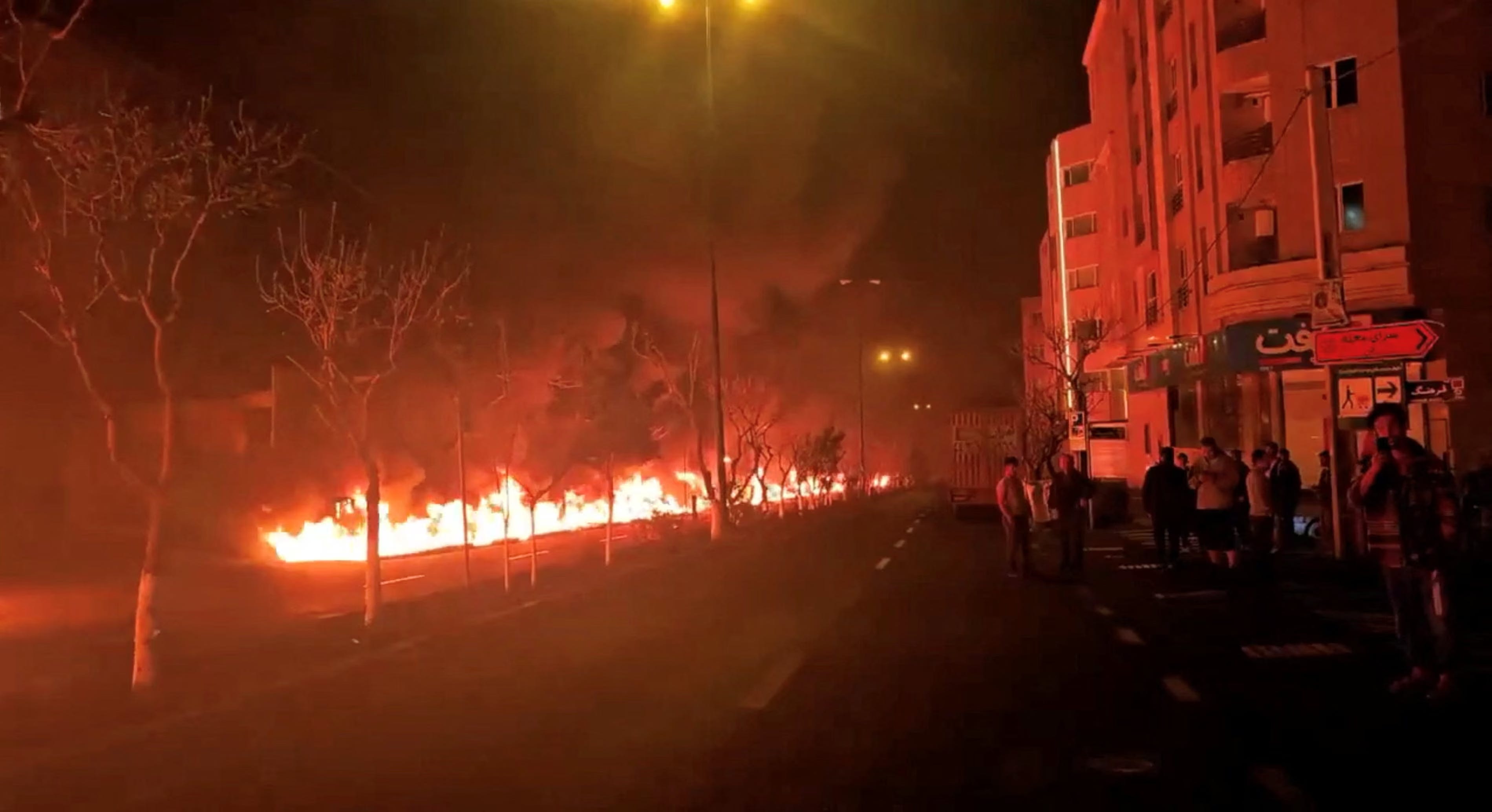
Israel and the US have killed at least 1,332 Iranians, according to the Iranian Red Crescent. However, that figure has not been updated since Friday. In regards to material damage, the Iranian Red Crescent said as of yesterday that 13,785 civilian structures had been damaged in airstrikes, including 65 schools.
In Israel, 11 people have been reported killed and at least 2,142 sent to hospitals since the war began. It must be noted that Israel imposes strict censorship of Iranian missile damage, prohibiting the recording of strikes.
Economic toll:
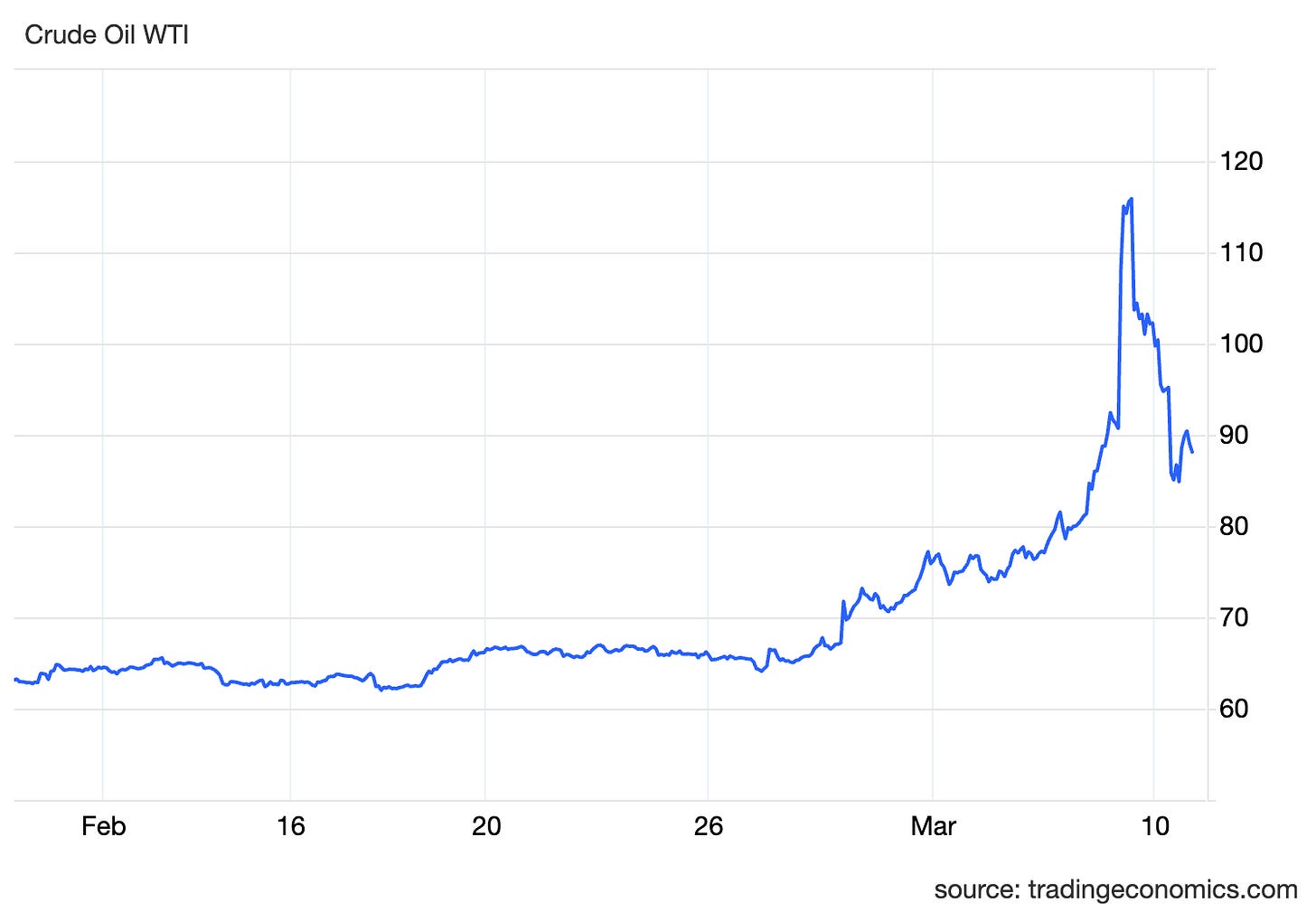
Oil price in USD as at March 10 As of writing, crude oil dropped to $88 a barrel after surging to almost $120. The retreat is owed to Trump’s statements that the war could end “soon” and was “very complete, pretty much”. This conflicts, however, with earlier statements from the Trump administration that the war could drag on for weeks, suggesting Trump made the remarks to temporarily cool oil prices with no clear end to the war in sight.
Environmental toll:
Black rain fell on Tehran following the Israeli bombing of the city’s oil depots last weekend. WHO head, Tedros Adhanom Ghebreyesus, said the attack “risks contaminating food, water and air – hazards that can have severe health impacts especially on children, older people, and people with pre-existing medical conditions”. Axios reports the Israeli attack “went far beyond what the US expected when Israel notified it in advance”.
Lebanon update
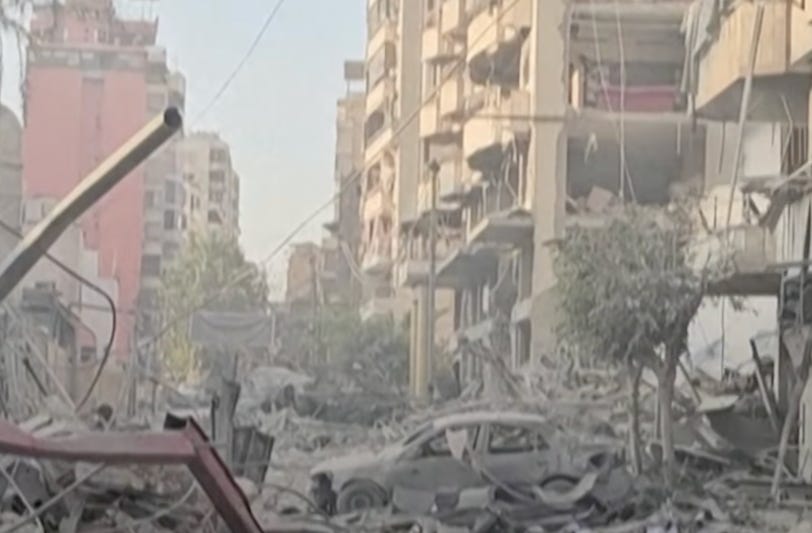
Human toll:
Political feuds:
Angered by Hezbollah’s entry into the war, Lebanese President Joseph Aoun expressed readiness to engage in “direct negotiations” with Israel and disarm Hezbollah, which received the support of US-backed Syrian leader Ahmad al-Sharaa. This came after Prime Minister Nawaf Salam banned Hezbollah’s military activities last week. The Lebanese government is playing a weak hand, however, without the means to enforce these measures. Lebanese army commander Gen. Rodolphe Haykal has resisted calls to disarm Hezbollah, citing concerns over an internal rupture.
The Trump administration and Israel also reportedly gave a “deeply cool” response to Aoun’s request for negotiations.
Long war:
Israel is preparing for a prolonged campaign in Lebanon, mobilising 100,000 reservists. The ground incursion began last week, with Israel confirming the deaths of two soldiers and Hezbollah claiming to have destroyed three Merkava tanks.
Israeli analyst Amos Harel argues a long campaign in Lebanon would allow Hezbollah to regain its image as resisting an occupying force, serving Netanyahu’s goal of ensuring “ongoing military friction”. I argue that beneath this surface-level political objective is a deeply-held Israeli desire to, should the opportunity present itself, colonise south Lebanon. From an Israeli viewpoint, there is no better opportunity than now.
New book coming out
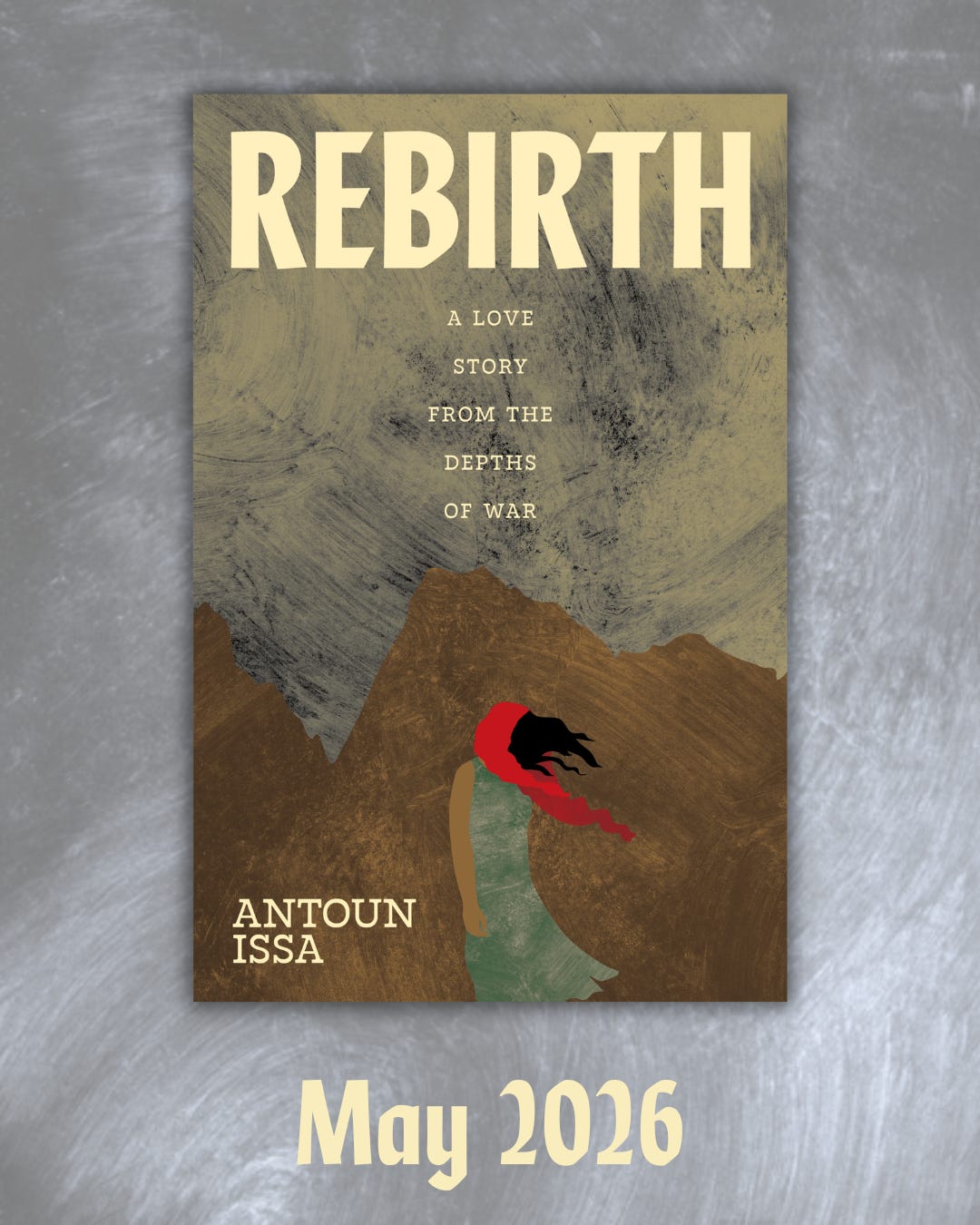
Speaking of war and misery, my book Rebirth: A Love Story from the Depths of War, is finally done and will be out in May (pre-order is available here). It’s been two years in the making and draws on my mother’s experiences living on the frontlines in the first two years of the Lebanese Civil War. It weaves love, tragedy and forced migration with a window into Lebanese history.
There will be book launches in Melbourne and Sydney and a number of speaking events, which I will share over coming weeks.
The first will be at Manly Writers Festival on Saturday, March 21 at 2.30pm. Details here. If you’re planning on attending, please say hi!
Living for my morning deep cuts read!
If we are to be associated with war criminals by sending "The deployment of Australia’s E-7A Wedgetail aircraft – as well as 85 personnel" I hope we extracted a good price out of the Americans and others despots which it is illegal to mention, especially the UAE as we have a number of high profile drug runners and other sorts running around the UAE pay back could be for UAE to arrest and goal them.
The gives the Australian government to perfect opportunity to put a tax on all LNG ships leaving Australia say $5 mill each. The opportunities are there for Australia to take advantage of the situation to benefit all Australians.
A mercenary attitude for sure but we are playing with madmen to start with..