


Big Four consulting firm Deloitte has been handed a $2.1m contract to provide “management advisory services” to the Illicit Tobacco and E-Cigarette (ITEC) Commissioner despite a decades-long relationship with the tobacco industry and its contribution to campaigns against plain-packaging laws.
Few details are known about the arrangement which was procured by the Department of Home Affairs and entered into force on 1 July 2026.
The description on the AusTender website is given as “Specialist Service procurement” with no further detail and no mention of ITEC. The contract is expected to run until 30 June 2027, with the possibility it may extend to June 2028.
Deepcut contacted Deloitte to confirm whether the publicly-listed contract was for services to be provided to the ITEC Commissioner but was told by a spokesperson the firm was “unable to assist with this enquiry”. A spokesperson for the Department of Home Affairs confirmed the contract was initiated by the ITEC Commissioner’s office for “specialist services from a consultancy firm”.
Greens finance and public service spokesperson Barbara Pocock said that given Deloitte’s history with the tobacco industry and the lack of information, there were questions to answer over whether the arrangement represents a conflict of interest.
“If the government is knowingly hiring the tobacco industry’s friends to advise on the tobacco industry’s interests, this isn’t clean advice,” Senator Pocock told Deepcut.
“The Commissioner is supposed to crack down on unethical tobacco behaviour. Australian taxpayers deserve to know what the government is paying Deloitte big bucks for. Is it to play both sides?” she added.
Deloitte’s long relationship with tobacco
The ITEC Commission was set up by the Albanese government in July 2024 to address the massive tobacco black market.
It is unclear whether the government considered Deloitte’s storied relationship with the tobacco industry before handing the firm taxpayer money to advise ITEC.
A search of the tobacco industry archives maintained by the University of California San Francisco – a collection of millions of internal industry documents spanning over half a century – returns over 15,000 references to Deloitte.
Many of these refer to multiple hits within the same email chains, but they demonstrate how Deloitte’s relationship with the global tobacco industry extends back to at least the 1980s, if not further.
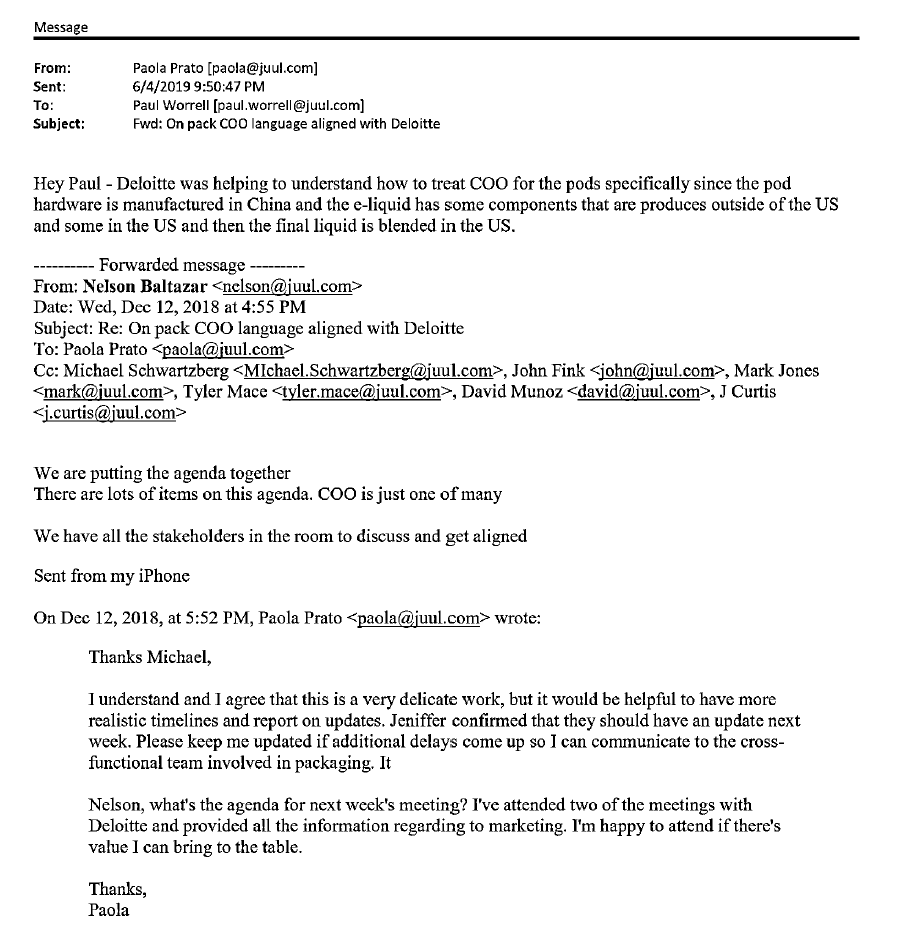
Neither is this relationship purely historical. More recent emails from 2019 show Deloitte provided tax and marketing advice to e-cigarette company Juul.
In Australia, the consulting firm has helped the tobacco industry design materials used in industry campaigns to lobby against the introduction of plain-packaging laws, including a report for British American Tobacco in 2011. Its work was criticised at the time by academics and Customs and Border Protection which described its methods as “misleading”.
Deloitte today consults for companies working within the Chinese tobacco monopoly system – the origin for most of the illegal tobacco brought into Australia.
Deloitte did not respond to questions from Deepcut regarding its work for the tobacco industry that includes relationships with Philip Morris International and RJ Reynolds.
The government’s shadowy selection process
The tobacco industry denied the science linking smoking to cancer for decades, running an organised campaign of deceit intended to distort research and attack scientists.
Some of these campaigns were given codenames, such as Operation Berkshire which sought to emphasise “controversy” over findings linking smoking with cancer. This activity has been cited as evidence of a pattern of behaviour that continued for decades, including in 1994 when several tobacco executives coordinated to give false evidence before the US Congress denying nicotine was addictive.
Australia is a party to the World Health Organisation Framework Convention on Tobacco Control, which requires signatories to protect public health policies “from commercial and other vested interests of the tobacco industry in accordance with national law”.
The Australian government issues advice to officials regarding these obligations that stresses limited engagement with the tobacco industry, management of conflicts of interest and transparency in decision-making.
In a follow up request, Deepcut sought to clarify the nature of ITEC’s contract with Deloitte but received no detail about how the firm was assessed, how any conflict of interest would be managed or confirmation that it was made to disclose its past work with the tobacco industry before it was awarded the contract, including with Chinese companies.
The home affairs spokesperson told Deepcut that Deloitte personnel engaged by ITEC did not contravene the WHO framework.
“This includes specialist input on data analytics, business processes, communications products, and project delivery as required,” they said.
“Personnel do not provide policy advice to the ITEC Commissioner or Australian Government. Responsibility for policy development, advice to government and decision-making remains with public officials.”
Senator Pocock said the arrangement may represent a conflict of interest, adding she would pursue the matter at Senate estimates.
“Big Tobacco has always put profit and addiction ahead of public health. That’s why we need to know whether it is advising on the rules that govern it,” Pocock said.
Nothing shocks me anymore. Govt departments have been compromised by and for industries who want to profit from harm. Thanks for exposing this Royce