


Nothing is worse for people than when the political class start agreeing on the narrative. It’s almost always wrong, almost certain to ignore the real underlying problem, but it inevitably means poorer people are about to be screwed and the comfortable class of media, politicians and business will carry on as before.
It’s ingrained within the commentary and articles written by those in the Press Gallery who get an op-ed. It’s the foundation of questions to politicians.
It colours the analysis (such as it is) of economic data and any utterances by the Reserve Bank, as happened yesterday when it raised rates for the fifth time this year in what can only be described as a form of class war.
We saw this agreement after the budget when talk among the very serious people in the Press Gallery was that the NDIS cuts ‘had to be done’.
Why?
Well, errr … fraud … err… you know, the NDIS is growing unsustainably.
Ah yes now we get to it – sustainable. Spending has to be sustainable.
We see it with the most recent talk about inflation. You have seen it. It is impossible to avoid now.
That congealed wisdom throughout the media and polity redolent of a blocked toilet: spending needs to be reined in. Government spending is causing inflation and we would have much lower interest rates if only the government spent less.
The more adventurous will attempt with a grasping indolence so marked of members of my profession (or is it former – now that the Press Gallery executive have decided I am no longer fit to be a member) of comparing what is happening here with that overseas.
Gosh look at France! They are rioting. We need to start cutting spending now before it is too late!
Please.
First off yes, let’s look at France and all advanced economies.
We are a low taxing and low spending nation.
If you can’t agree to that, then just admit you are an ideological gronk who cares so little for facts that you would lie to the public, or you are a gullible fool too scared to stand apart from the herd.
If we raised as much revenue as the average of the OECD we would raise $100bn more. If we raised as much as Canada we would raise an extra $141bn.
What does that mean? With an extra $141bn, the government could double spending on:
the PBS
public schools
the Disability Support Pension
jobseeker
the child care subsidy
support for carers
spending on healthcare to the states
And still have $1.7bn left over.
So no, we are not a big taxing nation. Nor are we a big spending one. Nor do we have much debt, and neither is our budget in such a terrible state.
But hey inflation is rising and we spend more now than we did in the past so it must be the cause. We can only cut spending, we can’t raise more tax. Gas companies gotta eat, don’t ya know! The narrative says so.
There is a reason why the government spends more now than in the past. We have a NDIS now and (stay with me here, because it does get complex) that costs more than when we didn’t have a NDIS and so we now spend more than in the past when we didn’t care so much about people with disabilities:
Take that away and things are basically where they always are – low spending and with governments, oppositions and the media pretending that we have universal healthcare with no out of pocket expenses and a great well-funded public education system and … gee what other lies do we tell ourselves to convince everyone not to raise more tax on companies … Our train system works well? (Oh, but don’t worry we are cutting NDIS, because … narrative).
Thankfully, we have an independent institution to give a stamp of approval to the narrative. The Reserve Bank said government spending is increasing inflation (or at least insinuated it). They are independent, they cannot be wrong!
Well, sorry, but they often are.
They also don’t care about the things you might think they do.

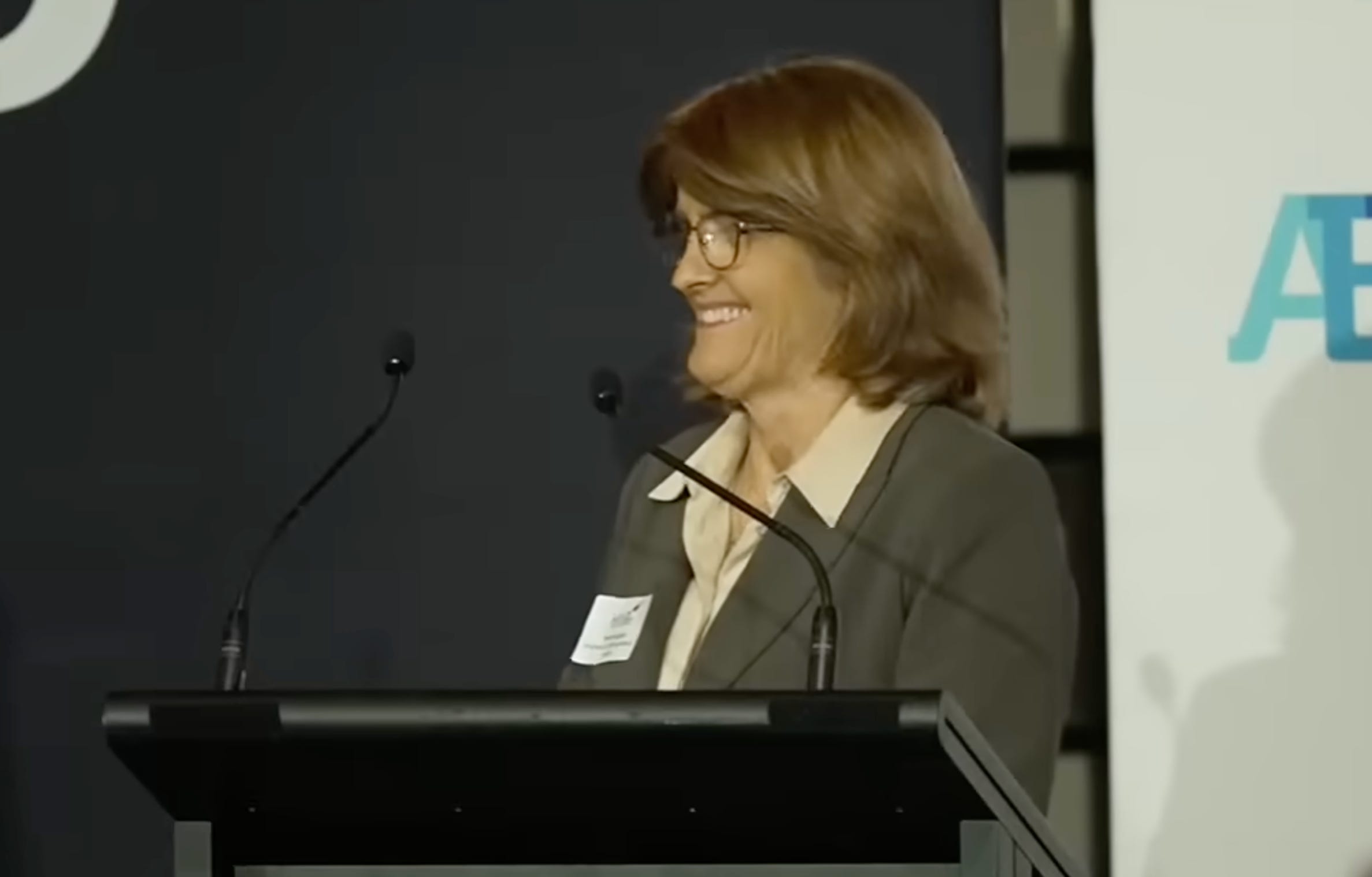
I wrote this elsewhere, but it bears repeating. Last week, Greens Senator Nick McKim asked the Reserve Bank governor if she was worried about the fact unemployment at the start of the year was 4.1% and now it is 4.7%.
Such a pace of increase is getting very close to recession-like territory.
You might think that would worry someone who is paid to run an organisation whose mandate is “the maintenance of full employment in Australia”.
But no.
She replied: “We’re not worried about the pace of increase in the unemployment rate at this stage. We do forecast that it has to gradually move up.”
At that point, she dolled out her usual porridge to the plebs to not worry, this doesn’t mean you’ll lose your job, just that more people will be waiting to get a job for longer (and hopefully not die while they wait).
She also said that “the unemployment rate, in order to ease some of these capacity pressures, probably will be rising a bit further, and that’s what will be in our forecast.”
Those capacity pressures? Datacentres. Yep, the mad rush to build things that don’t turn a profit, won’t deliver any profits to Australia, but are already being used to axe workers is, in the view of the RBA, causing inflation to rise.
And so, we need more people to be on jobseeker to ensure we can keep building these work-killing sheds.
And we should cut government spending.
Because even if the RBA is right and the cause of inflation is that too many people in Australia have a job, then never do we hear talk of the need to slow down construction of datacentres.
The narrative is too strong.
They are the future, they will deliver benefits … soon … one day, yes undefined, but Christ, Nvidia wouldn’t be investing so much money into Meta so that it can then buy stuff from Nvidia if it wasn’t a sure thing, right? Right?
Oh yes, the agreed narrative.
Perfect for explaining why public services need to be cut, perfect for explaining why we need to allow construction of things that will take way you job, perfect for blaming workers and those struggling to get by.
Perfect for those with power and wealth, and perfect to help them to keep it.
But here’s the thing about narratives – we can challenge them. We can change them. We can stop being screwed.
Thanks Greg that had to be said
Thank you, Greg Jericho. I appreciate your analysis based on facts. I'll keep a copy of this and refer to it and let others know of Deepcut and articles there like this. Michael Mobbs, Chippendale, NSW