

By Dr Bushra Othman
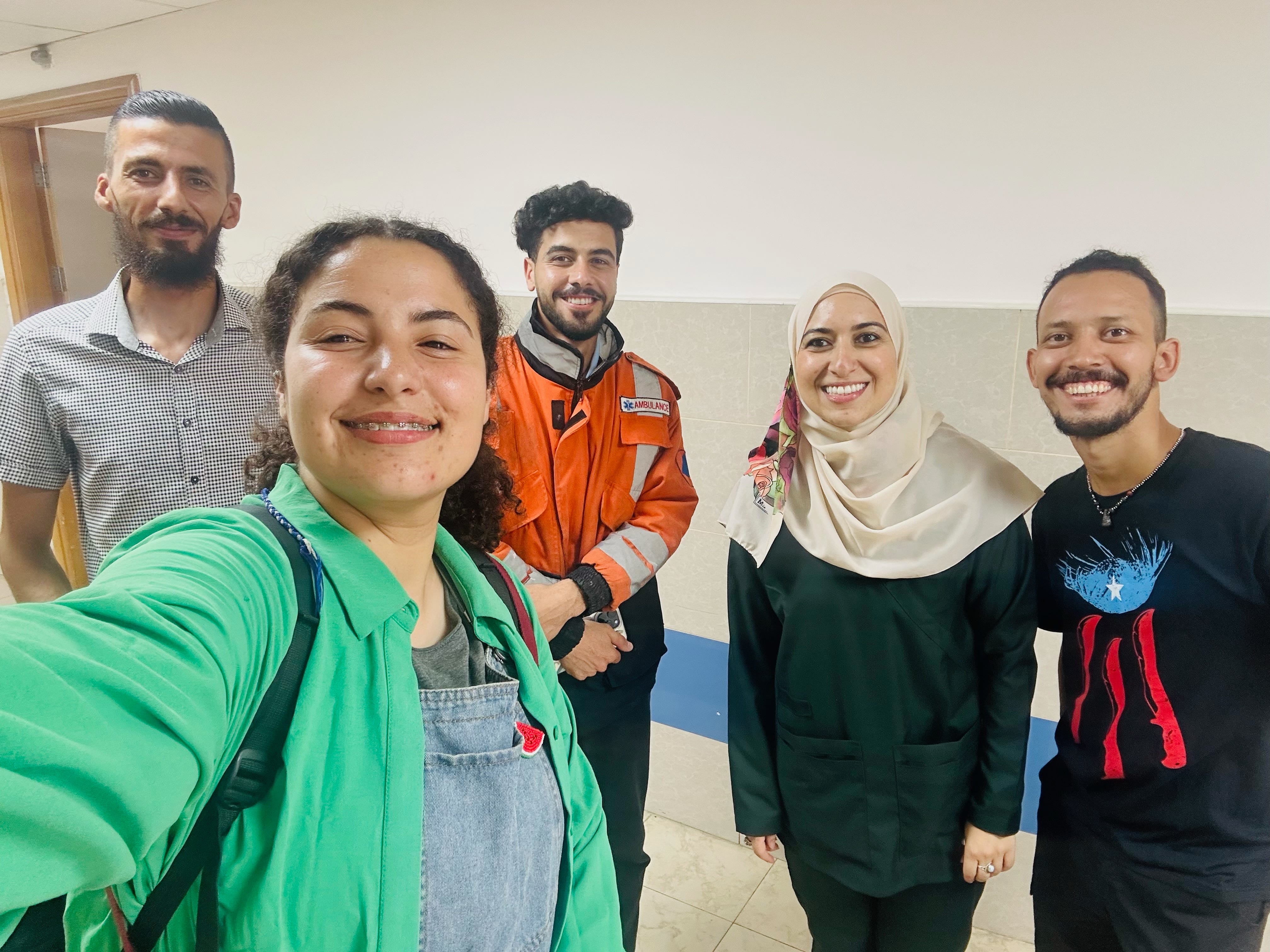
It has been almost two-and-a-half years since I first set foot in Gaza on my first medical mission. Thursday, 13 June 2024, is a date forever etched into my memory.
After three weeks at Al-Aqsa Hospital in Deir al-Balah, where my Palestinian heritage and my calling as a surgeon converged, my understanding of the world shifted irrevocably, and with it, my sense of purpose. Before I left Gaza I asked my friends and colleagues what they thought I could do to help them.
Tell them about Gaza. Do not forget us.
You can help change things from the outside.
I had formed deep bonds with my colleagues, my patients, the journalists and the displaced children living with their families on hospital grounds. In those three weeks, I had become entrenched in the ecosystem of the beautiful community that existed at Al-Aqsa Hospital.
I held some optimism, albeit somewhat naively, that things could change if more people truly knew what was happening. But Palestinians have been telling the world for 78 years what it means to live under Israel’s brutal occupation, and despite the atrocities in Gaza being the most live-streamed genocide of our time, the moral outcry from governments and legal institutions and the community at large was profoundly lacking. This is a wound that fractures the soul.
After I left Gaza in July 2024, the situation continued to deteriorate. My 16-year-old patient Malaak, lying on a thin mattress in a corner of the ward, with her bilateral leg fractures strapped to external metal fixation devices, and her proximal jejunostomy (stoma) that was pouring out bowel content, was bone-thin and desperately needed nutrition. Her younger brother was always by her side, tending to her wounds and dressings. Malaak died from starvation, because Israel made it impossible to get proper nutrition through the borders into Gaza.
I remember I held my breath and tried to suppress the panic when, in early August 2024, I received news that the Israeli army was encroaching upon Al-Aqsa Hospital. The locals knew what that meant, when the army tanks and soldiers would descend upon a healthcare facility.
I had spent countless hours in various parts of Al-Aqsa Hospital listening to the stories of what happened to my colleagues at Al-Shifa Hospital and at the Indonesian Hospital; how they were besieged for over 40 days and if someone left the hospital premises wearing scrubs that the snipers would shoot them; that doctors and nurses were being contacted by name and told to present themselves to the army only to be interrogated, tortured and abducted; that for many days the staff were surviving by drinking saline and glucose meant for patients and eating the occasional tuna can. Until now, some of these healthcare workers are still being held hostage by Israel, while others have died.
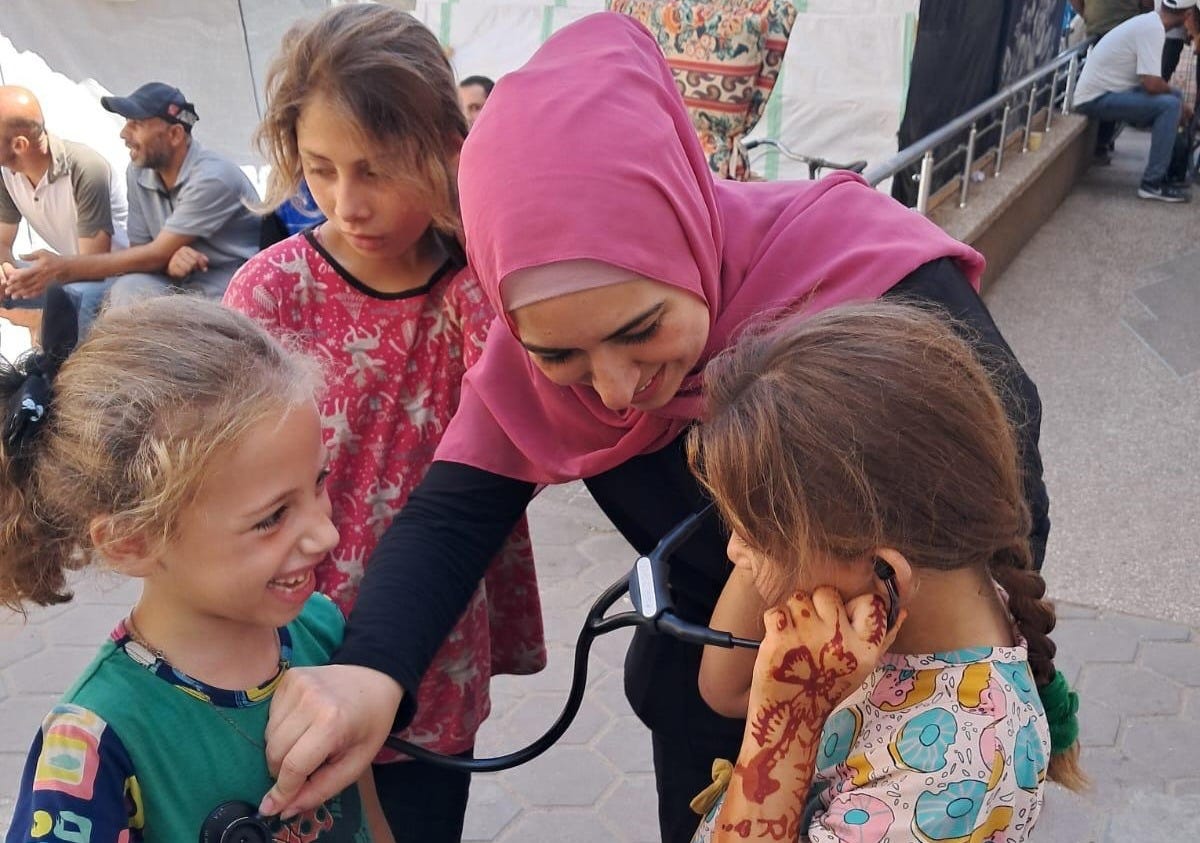
The mass casualties were so frequent that one doctor would be tasked with labelling the bodies of the unidentified people, majhool, reaching into the hundreds. People were having their surgeries in the hospital kitchen, or on the corridor floor, due to the sheer number of casualties. There was limited communication. Colleagues would leave the hospital to head home (either to a tent, or the remnants of their houses) and those who would be working at the hospital would receive their colleagues’ bodies in the emergency department, either torn to shreds by a missile strike or gunned down by a quadcopter.
Worse yet was the arrival of a medic’s father or sister or spouse or child. In Gaza, the Janazah (funeral) prayer has been carried out on a continuous loop for the last 1,000+ days and counting.
It begs the question: what kind of military power would carry out such egregious acts? The purpose is chilling and clear: if you want to decimate the ability of people to heal and survive, then wipe out their healthcare system and eradicate their workforce.
Upon my return to Al-Aqsa Hospital in December 2024, Israel had intensified its military assault across Gaza. At the same time, it tightened its chokehold on the entry of medical aid and humanitarian personnel. Between 50 and 60 per cent of doctors and nurses seeking to enter Gaza on medical missions were denied permission. That I received approval from the Israeli COGAT office was unexpected, particularly as state-sanctioned discrimination had become unmistakable. Medics holding Palestinian identity documents were categorically denied entry, and Palestinian heritage itself had become a barrier to providing care.
Many of my international colleagues, desperate to return to their patients and colleagues, were forced to challenge these refusals in Israeli courts before they could re-enter Gaza. No healthcare worker should have to litigate for the right to treat the sick and wounded. At the heart of medicine is a simple, universal principle: every human being is entitled to healthcare. It is not a privilege to be granted or withheld according to nationality, ethnicity, or geography; it is a fundamental human right, protected under international law. Yet nowhere has the abandonment of this principle been more stark than in Gaza. The gap between what the world professes to uphold and what it permits to occur could not be more glaring.
When I returned to Gaza on my third medical mission in June 2025, I was not prepared for what I witnessed. One year on I am still processing my experience. The majority of my time was spent at Al-Shifa Hospital in Gaza City, with some work at Al-Quds Hospital. Daily scenes of barbaric Israeli violence against Palestinians. The scenes of dismembered teenage girls and women on the emergency floors when a missile strike hit the seaside Al-Baqa café. The men and children being gunned down at so called ‘aid distribution sites’. Treating colleagues and their family members as patients after they survived bombings or missile strikes.
The intended outcome of Israel’s enforced starvation quickly became obvious. I was mostly surviving on protein bars and plain rice, while Gazans had even less. These conditions had been deliberately engineered to demoralise the population and heighten their desperation, attempting to force them to fracture the strong bonds within their community. But the people of Gaza hold tight onto their faith and each other. Israel can never conquer a people who embody honour, dignity and courage, even with a genocide.
*The Weight of Witness: The experiences of Australian and New Zealand medics in Gaza is a new book that includes testimonies by 40 ANZ healthcare workers who have volunteered on medical missions to Gaza, and some who have been denied entry. All of them bear witness to the genocide of the people of Gaza. Many within our profession have faced censorship, doxxing, litigation, loss of income and more, all for advocating for Palestinians. The hypocrisy of censoring and sanctioning the truth tellers and not the perpetrators is a corruption at the very core of what it means to be a healthcare worker. And so I return to these words: Tell them about Gaza. Do not forget us.
Upcoming Melbourne event
Deepcut editor Antoun Issa will be discussing the book with Dr Bushra Othman and Dr Saya Aziz on Wednesday, 11 November at the Wheeler Centre in Melbourne. The event commences at 6.30pm – purchase tickets here.
These very beautiful and brave people. The horror of this massive tragedy rolls on while our Australian Government barely recognises what is happening. They will be damned for their inaction and lack of moral clarity. It shouldn’t be difficult to stand up for international law, strong human values, and then stand with other countries, condemn Israel and apply sanctions. I am not interested in any discussion that simply doesn’t recognise the genocide. We can see what is happening