


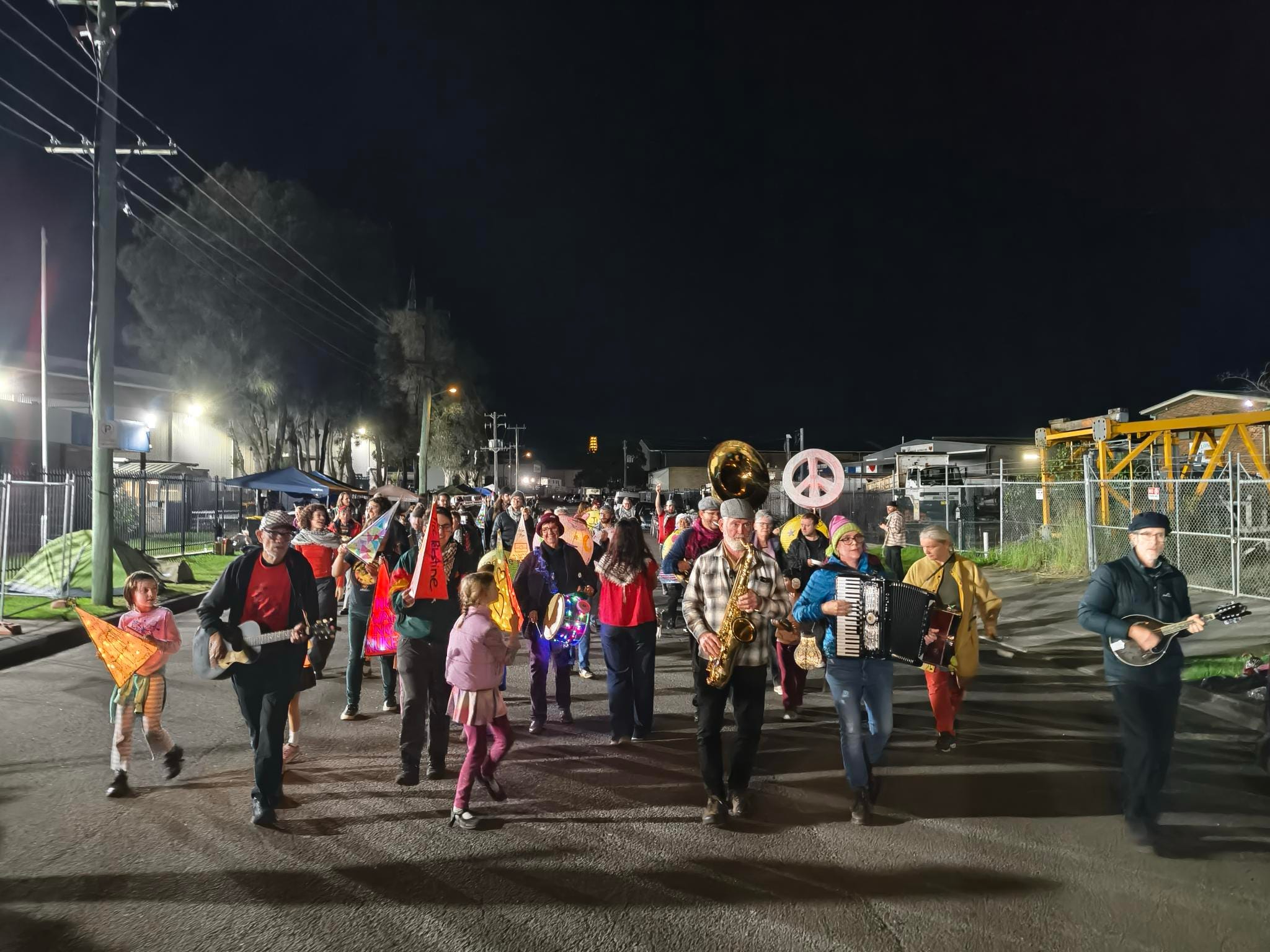
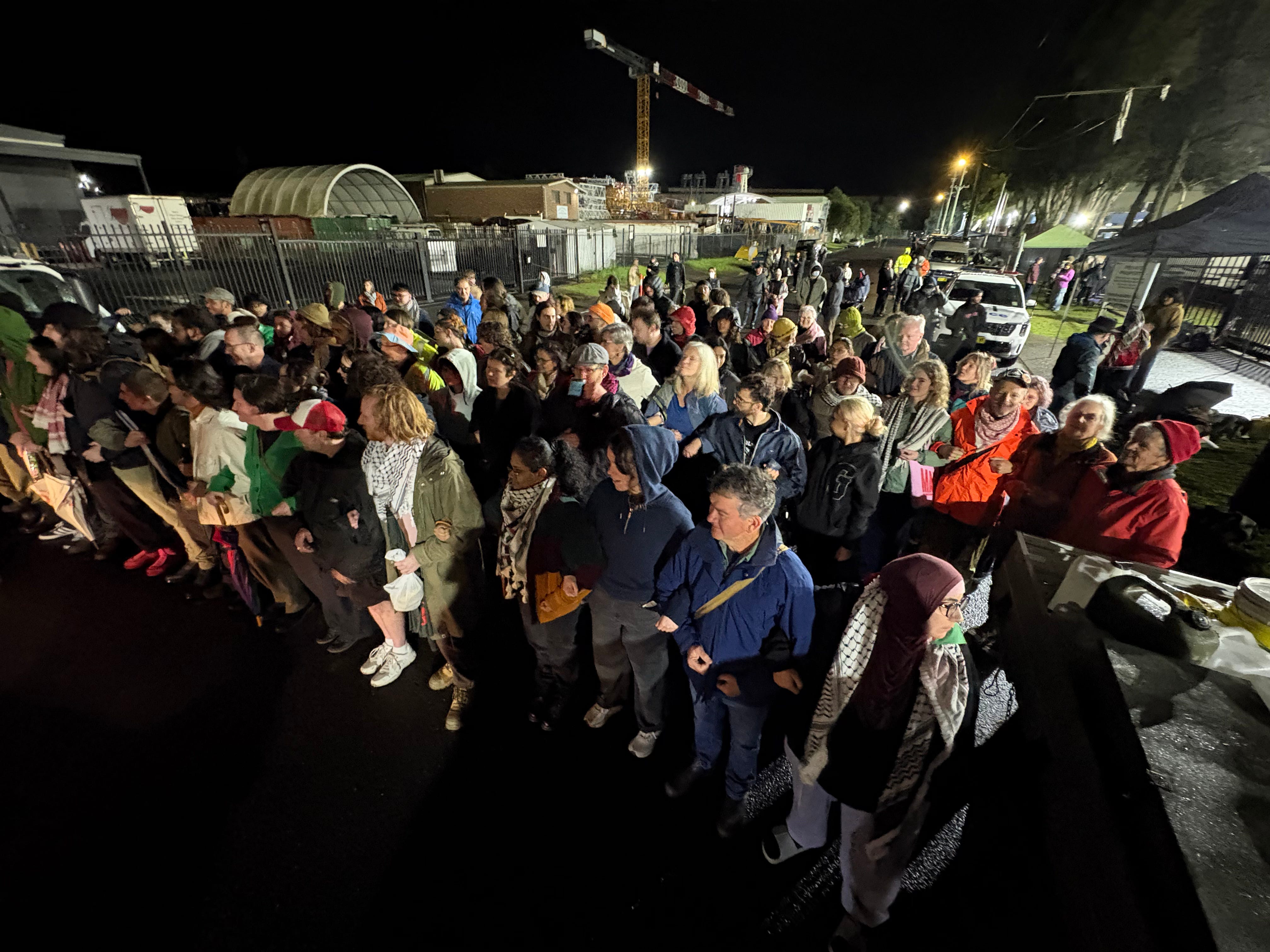
It was a wet, miserable Sunday night. An announcement had gone out to meet at a nondescript factory on June 14 in the Wollongong suburb of Unanderra. Roughly 300 turned out – a mix of local residents and activists from Sydney. It’s their 10th picket in two years targeting a factory belonging to Bisalloy Steel – one of several manufacturing companies in Australia that form part of a global arms supply chain sustaining Israel’s wars and atrocities.
“It has been two and a half years since the genocide in Gaza began, and the company’s owners and investors are well aware of where their products are going,” says Safaa Rayan, a spokesperson for the Wollongong Friends of Palestine (WFOP) – a group of local residents formed out of a shared outrage over Israel’s actions in Gaza.
An immediate glance at its website shows a benign operation – Bisalloy Steel manufactures, as its name suggests, steel products for a variety of industries. But so much of Australia’s material support for Israel is just that – obscure, hidden, scattered.
A scroll down its page reveals one of the sectors Bisalloy supports – defence.
Australian steel for Israel’s wars
The company prides itself on being “Australia’s only manufacturer of high-tensile and abrasion-resistant quenched and tempered steel plate” – essential for military use as it helps “protect against the ballistic projectiles seen in hostile, extreme environments”, as Bisalloy’s website states. One of its products is military-grade armour steel – suitable for armoured personnel carriers, light armoured vehicles and infantry fighting vehicles, among other military applications.
A key client that was impressed by Bisalloy’s armour steel was Rafael Advanced Defence Systems – a major Israeli state-owned defence company.
“The performance of Bisalloy and its BISALLOY® Armour steel range during our testing and evaluation program was highly impressive,” Ido Spitzer, then Rafael Australia’s General Manager, said in 2018 upon signing a contract at the time worth $900,000.
Prior to October 2023, Bisalloy was open about its connections to the Israeli military, Greens Senator David Shoebridge says.
“Before the genocide started, companies like Bisalloy were putting out glossy brochures about their trade with the Israeli military industry. This included sending armoured steel to companies like Plasan, which also supply parts to the settler militias,” Shoebridge, who attended the Wollongong picket, says.
“Following the genocide there has been a desperate attempt by both the Albanese government and these weapons suppliers to muddy the waters. That was designed to hide the truth so that the two-way arms trade can continue behind closed doors,” he says.
Defending the relationship amid scrutiny
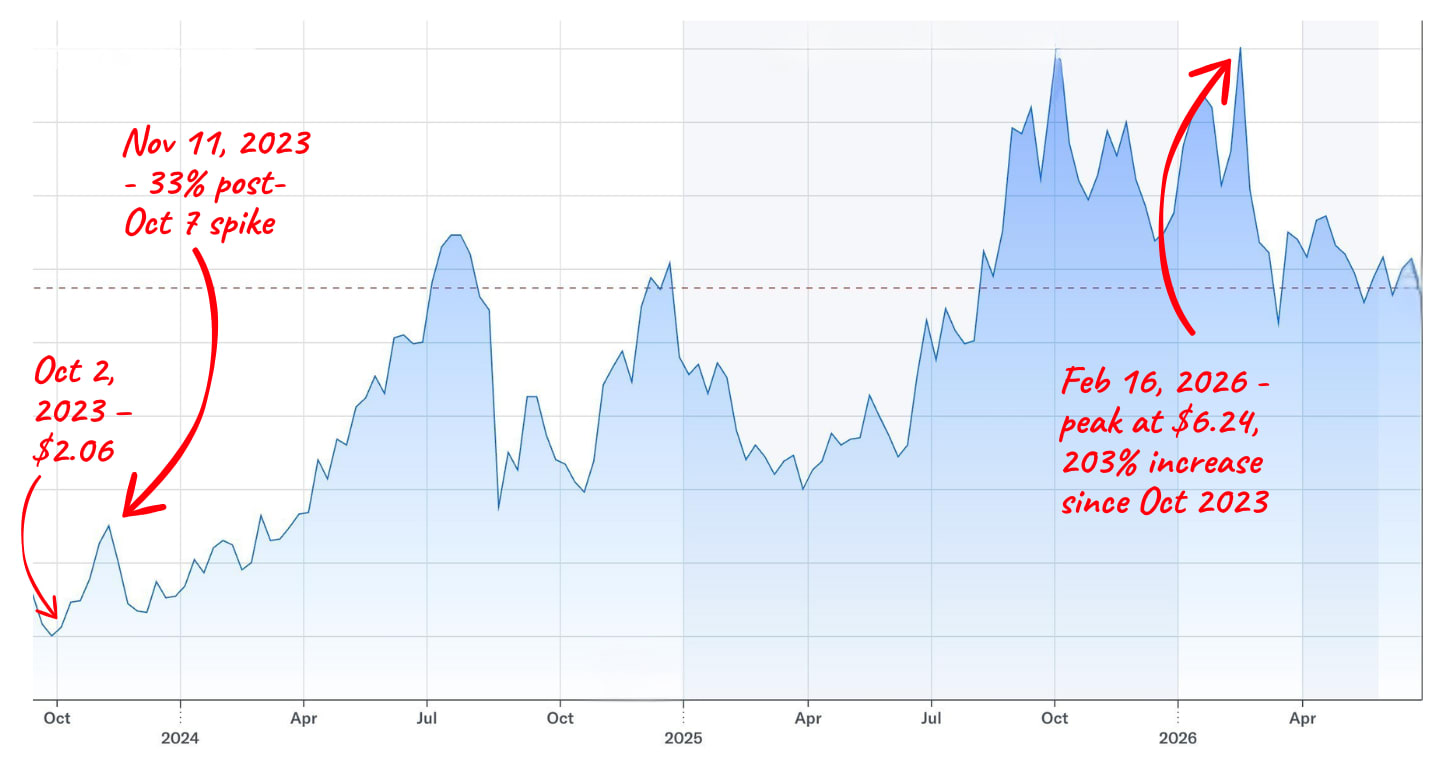
Bisalloy’s share price has skyrocketed 122% since the Gaza war began in October 2023 (from $2.06 on Oct 2, 2023 to $4.57 on June 28, 2026), despite the company saying in 2024 that exports to Israel made up only 0.6-1.9% of its revenue. WFOP claims that the revenue figure does not include “products with end-use applications in Israel, exported through intermediary companies or countries”.
Bisalloy’s chairman, David Balkin, defended the company’s relationship with Israel, criticising the protesters for disrupting operations. Protests have forced the company to move its past two annual general meetings online.
“… our business continues to be targeted by protesters who want to stop Australian trade with Israel and who seek to end our 20-plus-year business relationship with several leading Israeli companies,” he said in November 2025.
But the company is coming under closer scrutiny, and not just from protesters. On June 25, the Federal Court required that the Australian government disclose “any decision, and any reasons for any decision, to grant a permission” to Bisalloy to export “items listed on the Defence and Strategic Goods List 2024 (Cth)”. The due date for the “list of documents” is July 17.
Pro-Israel lobby links
WFOP’s Rayan says Bisalloy’s refusal to end its contracts with Israeli companies “seems more ideological than financially driven”.
Balkin is a prominent figure in Australian pro-Israel circles, having served as president of the Jewish Communal Appeal (JCA) in the late 2000s.
In 2011, he and current-antisemitism envoy Jillian Segal stepped down from JCA’s executive committee, but both remain as honorary life governors. Prior to being appointed as antisemitism envoy, Segal served as president of the Executive Council of Australian Jewry (ECAJ) – Australia’s top pro-Israel lobby group – from 2019 to 2023.
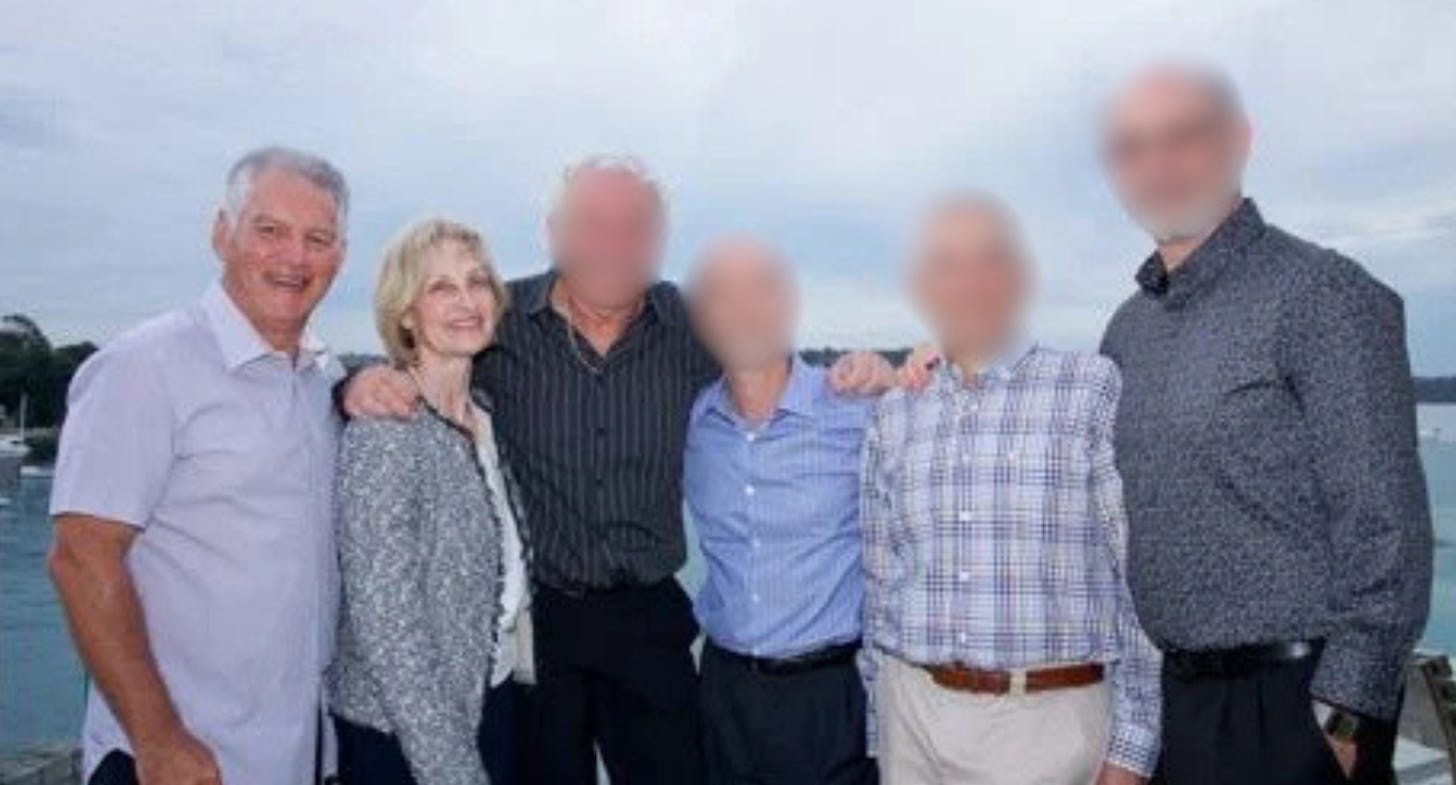
According to Michael West Media (MWM), Balkin is the largest shareholder in Bisalloy, followed by Peter Smaller – executive chairperson of Southern Steel Group and former president of Jewish National Fund Australia (JNF).
MWM reports both JCA and JNF as “fundamentally pro-Israel organisations”, and notes that former Prime Minister Malcolm Turnbull and pro-Israel Liberal Senator Dave Sharma hold shares in Bisalloy.
Labor letting it ride for fear of the US
Shoebridge has been sharply critical of the Albanese government’s refusal to end the arms trade with Israel, despite a recent poll showing eight-in-ten Australians hold a negative view of the rogue state.
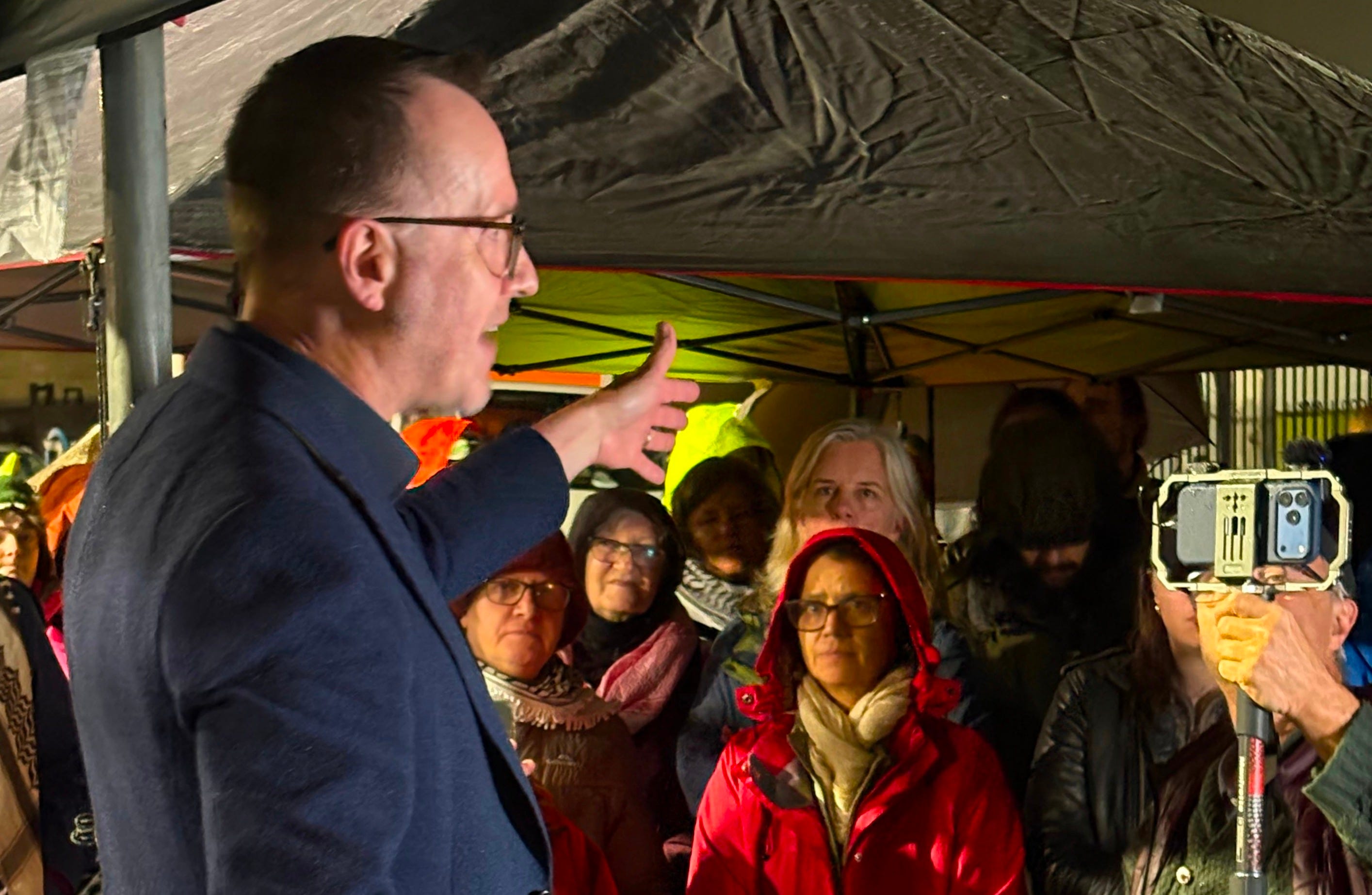
According to the Greens senator, Labor is resisting public pressure for fear of the US.
“The main thing stopping the Albanese government from taking a stance against the genocide in Gaza is their fear of the US. For the US, Israel is an essential projection of US military, economic and diplomatic force in [West Asia] and every US ally knows this,” he says.
Instead of creating distance from an erratic and increasingly authoritarian US under Donald Trump, Labor has tethered Australia to the US military industrial complex through AUKUS, which Shoebridge sees as contrary to the national interest.
“The Labor Party has gone all in on AUKUS, gone all in on integration of the US and Australian industrial base, and pushed to make our entire military interoperable with the US. This makes us incredibly vulnerable to US push back.”
That push back would likely come if Australia acted against Israel, such as by prohibiting companies like Bisalloy from supplying Israeli firms – and, ultimately, the Israeli military.
Shoebridge believes this stems from a lack of courage within the Albanese government to stand up to both the US and Israel.
“Labor knows what to do, there is no knowledge gap here, what we have is a principles gap. There is a choice here between pushing back on a genocide or cosying up to the US, and the last four years tells us that Labor will pick the US every single time.”
Government inaction, however, seems only to be stirring determined Wollongong residents to continue the struggle.
“We are building ground for the fight against AUKUS,” says Jet Hunt, a local resident and WFOP member.
“We don’t want our town to materially support genocide, violence and war – not in Palestine, not in Lebanon, not anywhere.”
Got a tip? Send an email to tips@deepcutnews.com or send an anonymous Signal to @deepcut.25.
How many of us would have no idea about this? Investors in this company who are profiting from the weapons used to slaughter thousands and destroy Gaza and now parts of Lebanon, clearly have no conscience or shame.