


Welcome to our regular weekly wrap to ensure you’re properly informed of the news that matters (with some analysis).
Iran and Lebanon wars
By Antoun
Is Trump preparing to lose the war in Iran? His comments this week that the US could end the war within two to three weeks without reopening the Strait of Hormuz signals nothing short of defeat. Iran is seeking to impose a new reality in the strait whereby it extracts transit fees from ships. An abrupt US retreat would effectively cede the strait to Iranian control, leaving Iran more empowered than where it was before the war. Other nations that Trump says should “fend for themselves” in securing oil and gas shipments through the strait are unlikely to go to war with Iran – the numerous diplomatic overtures to Tehran this month suggest deals are more likely instead.
Spinning a ‘victory’ narrative to end the war. Trump will never frame this defeat as such, and will seek to manufacture a narrative that allows him to declare “mission accomplished”. We’re already seeing hints in the language used, with US Secretary of War Pete Hegseth declaring on Tuesday that “regime change has occurred” in Iran.
Fact check: Regime change has not occurred. The US and Israel killed Ayatollah Ali Khamenei as well as a slew of top officials, but that has only paved the way for a fresh crop of leaders. If anything, the Iranian regime appears even more firmly entrenched. But Trump needs to sell a win, and killing the ayatollah might be the spin that gets him out of a mess of his own making.
Not a great week for Israel. Israeli Defense Minister Israel Katz repeated Israel’s intention to occupy south Lebanon, as Benjamin Netanyahu ordered an expansion of the invasion. But deeper Israeli incursions have been met with fierce resistance from Hezbollah fighters. Four Israeli soldiers were killed this week, bringing the Israeli death toll to 10 since their offensive into Lebanon began.
Guerrilla warfare: From what can be gathered, the invasion so far appears to be reminiscent of past Israeli attempts to control south Lebanon. A large army rolls in with traditional hardware only to be plucked off by mobile and hidden guerrilla fighters. This is essentially how the four soldiers were killed. As described by an Israeli outlet, the Israeli forces walked into a Hezbollah ambush. Even as Netanyahu promises to persist with the Lebanon invasion should the Iran war end, it is difficult to see how renewed occupation will differ from the past. The intensity of Hezbollah’s current attacks serves as a reminder to Israel that – as during the 1978-2000 Israeli occupation of south Lebanon – its forces will unlikely see peace while they remain on Lebanese soil.
Iranian missile superiority? Iranian missile barrages have decreased since the beginning of the war, but it continues to demonstrate the ability to hit key targets in Israel. This week they struck two: an oil refinery in Haifa and a chemical plant in Ramat Hovav, southern Israel.
Israeli support for war drops. A poll conducted a month into the war shows a 15-point drop in Israeli public support, compared to the first week of the war. Although still high at 78% support, it is the first indicator that Iranian attacks on Israel are having an impact on the public mood. Remember that the Israeli military imposes tight censorship on reports of damage, largely to keep its domestic population fed a narrative of strength and invincibility.
Most American Jews oppose war: Sixty percent of American Jews oppose the war, according to a J Street poll. More importantly, 70% said they opposed unconditional US military and financial assistance to Israel.
Fracture with Europe widens. A side-story to this war has been the unusual assertiveness demonstrated by Europe in its rejection of the US war. Just this week, Spain, Italy and France refused US use of their bases in the war, while Poland rejected a US request to relocate Patriot missiles to West Asia amid reports of diminishing air defence stocks. Trump hasn’t hid his contempt for Europe in his almost-daily attacks on NATO and/or specific European powers. Among his rants this week was a warning that the US may walk away from its commitment to defend NATO allies.
UAE’s push for more war. The UAE, Israel’s closest ally in the region, has borne much of Iran’s fury since the initial Israeli/US attacks that sparked the war. Iran has fired more than 2,300 drones and missiles at the UAE, with US$120bn wiped from UAE markets. It perhaps explains why the UAE is pressing Trump to continue the war, with a UAE minister saying “coexistence with the Iranian regime” is impossible.
Quick take: The war has exposed the UAE as a mirage of opulence masking its fragile reality. Outside of its petro-wealth, the UAE has sought to position itself as a global logistics hub and tourist destination. Both of these sectors depends on open shipping lanes, airports and a reassurance of safety – all of which have been disrupted by Iran. Should Trump walk away with Iran in control of the Strait of Hormuz, the UAE will be left in a much weaker position than prior to the war.
Iraqi threats of retaliation against Kuwait. Kuwait, Saudi Arabia and Bahrain have also been pushing Trump to go harder on Iran. Kuwait has faced extensive Iranian attacks on US bases and energy infrastructure, including its largest oil refinery. In response to US threats of a ground invasion of Iran, Iraqi Shia militias have warned it will “respond in kind”, hinting at a possible invasion of Kuwait.
Quick take: Fear is likely driving Kuwait’s push for the US and Israel to weaken Iran. By virtue of its small size and location, Kuwait has been made particularly vulnerable by this war. It is heavily reliant on food imports through the Strait of Hormuz, and in the first weeks of the war saw a 30% increase in the price of meat and fish. Kuwait not only borders Iraq, it is also a short 23km from Iranian territory. An Iraqi ground incursion supported by Iranian forces is not beyond the realm of possibility. Such a scenario would likely trigger a Saudi response and a dramatic, bloody escalation in the conflict.
Stats of note:
Thirteen US bases have been made “uninhabitable” by Iran’s retaliatory strikes (source: NYT)
The Israeli Air Force has carried out more than 800 strikes on Iran, dropping 16,000 bombs (source: Israeli Air Force)
More than 90,000 residential units in Iran have been hit by US/Israeli airstrikes, as well as 307 health facilities and 760 schools (source: Iranian Red Crescent)
Four million people in the Arab world could be forced into poverty due to the economic losses sustained from the war, which could amount to US$200bn of economic growth (source: UN)

Democracy in Australia
By Alex
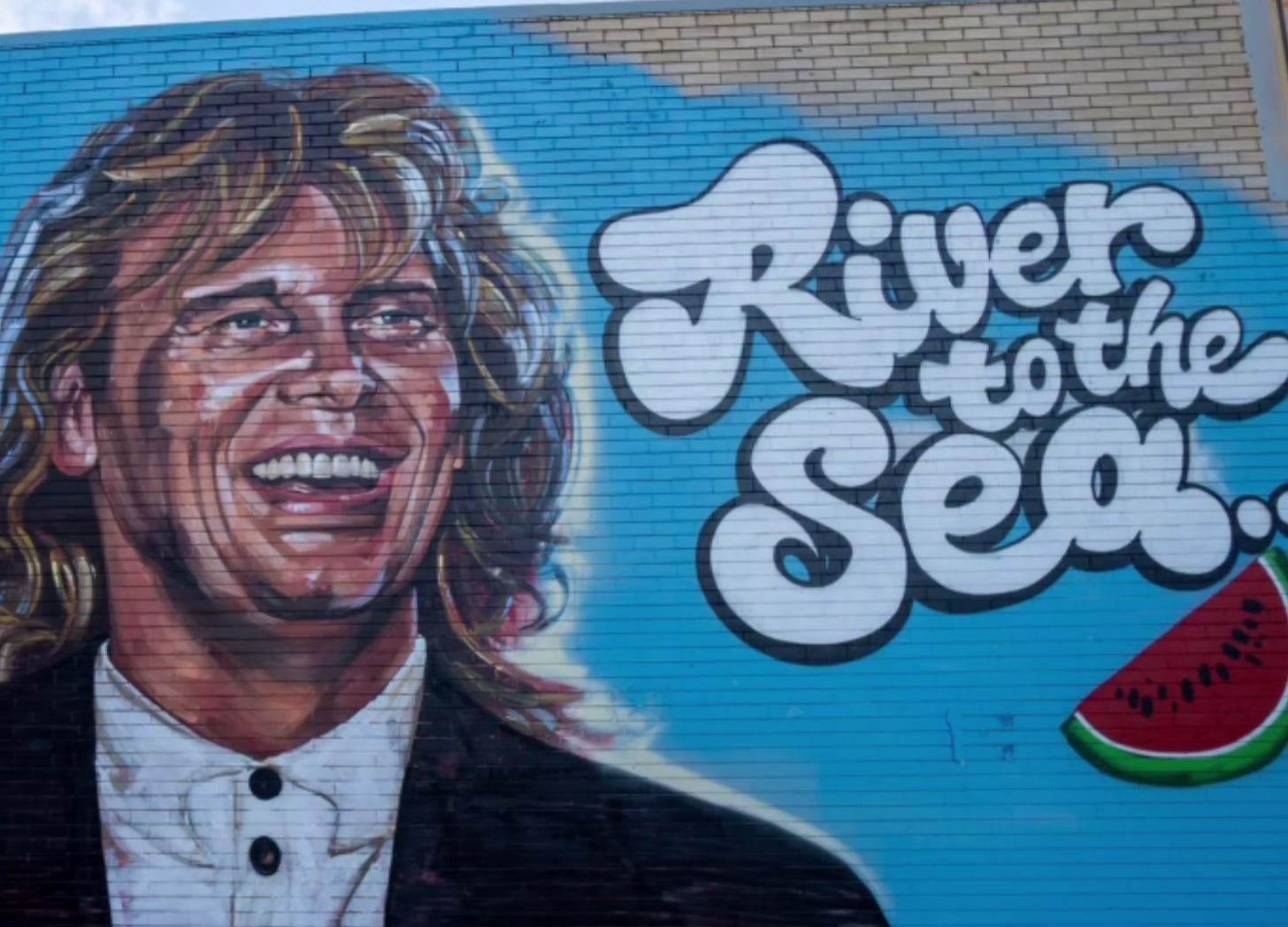
Queensland police target artists. Queensland police are investigating several Brisbane-based artists under new laws banning the display or publication of the phrase ‘from the river to the sea’. Artist James Hillier was contacted by police on Sunday regarding an artwork he published on social media depicting 18-year-old activist Bonnie Carter, who was herself arrested in March for wearing a shirt with the banned phrase. Artist Emilia Cilento was also forced to remove online artwork using the phrase after being contacted by police.
Meanwhile, a Brisbane mural by Sydney-based street artist Scott Marsh depicting singer John Farnham was vandalised this week, with lyrics from Farnham’s song ‘Two Strong Hearts’ that closely mimic the banned phrase painted over. “When artists are being threatened with years in jail time for painting pictures you know we are headed down a very dark road,” Marsh said on social media.Opposition to imposed ‘antisemitism’ training. Academics at the University of Sydney have accused management of censoring staff who express concern about compulsory new ‘antisemitism’ training. Posts along those lines by senior lecturers Nick Riemer and David Brophy in the university’s internal staff messaging platform, Viva Engage, were removed within minutes by an anonymous moderator, with both academics receiving warnings that they may be in breach of the platform’s terms of use. The university has brought in the mandatory training in line with recommendations handed down by the antisemitism special envoy, Jillian Segal. On Tuesday, Riemer also expressed concern that Dr. Michael Abrahams-Sprod, a coordinator for pro-Israel group the Australian Academic Alliance Against Antisemitism, has been appointed as special advisor to vice-chancellor Mark Scott.
Quick take: Universities have become one of the most contested battlegrounds in the fight between free speech advocates and the pro-Israel lobby, and nowhere has the fight been more protracted than at the University of Sydney. Riemer is one of two USyd academics defending a class action lawsuit in the Federal Court alleging racial discrimination over his criticisms of Zionism and Israel – a suit that more than 50 Jewish staff and students have condemned as “part of concerted and coordinated efforts to silence critics of Israel across Australia’s university campuses”.
Hearing date set for NSW officer accused of assaulting former Greens candidate. Senior Constable Christopher Davis, the officer accused of assaulting Hannah Thomas, will not face a hearing until 2027. Davis pleaded not guilty to two charges stemming from the arrest of Thomas and four others at an anti-genocide protest in Belmore last June. Thomas was hospitalised following her arrest and has since had three rounds of surgery on her right eye. “So many officers within NSW Police have engaged in sickening brutality,” Thomas wrote on social media on Tuesday. “Yet they’re still on the streets, policing protests with an ever-expanding arsenal of weapons and the green light from the Minns Government to keep up the good work.”
New legal nonprofit to defend civil liberties. The Civil Liberties Defence Centre pledges to support people facing lawfare attacks for their “support of human rights in the Middle East”. The centre vows to “provide legal advice, assistance and representation to disadvantaged people facing legal issues due to the exercise of their civil rights in Australia” and advocate for greater legal protections for freedom of speech and civil liberties. The CLDC’s inaugural fundraising dinner is scheduled for May.
Got a tip? Drop an email to tips@deepcutnews.com or send an anonymous Signal to @deepcut.25.