


By Stephen Lawrence – Labor MLC in the NSW parliament
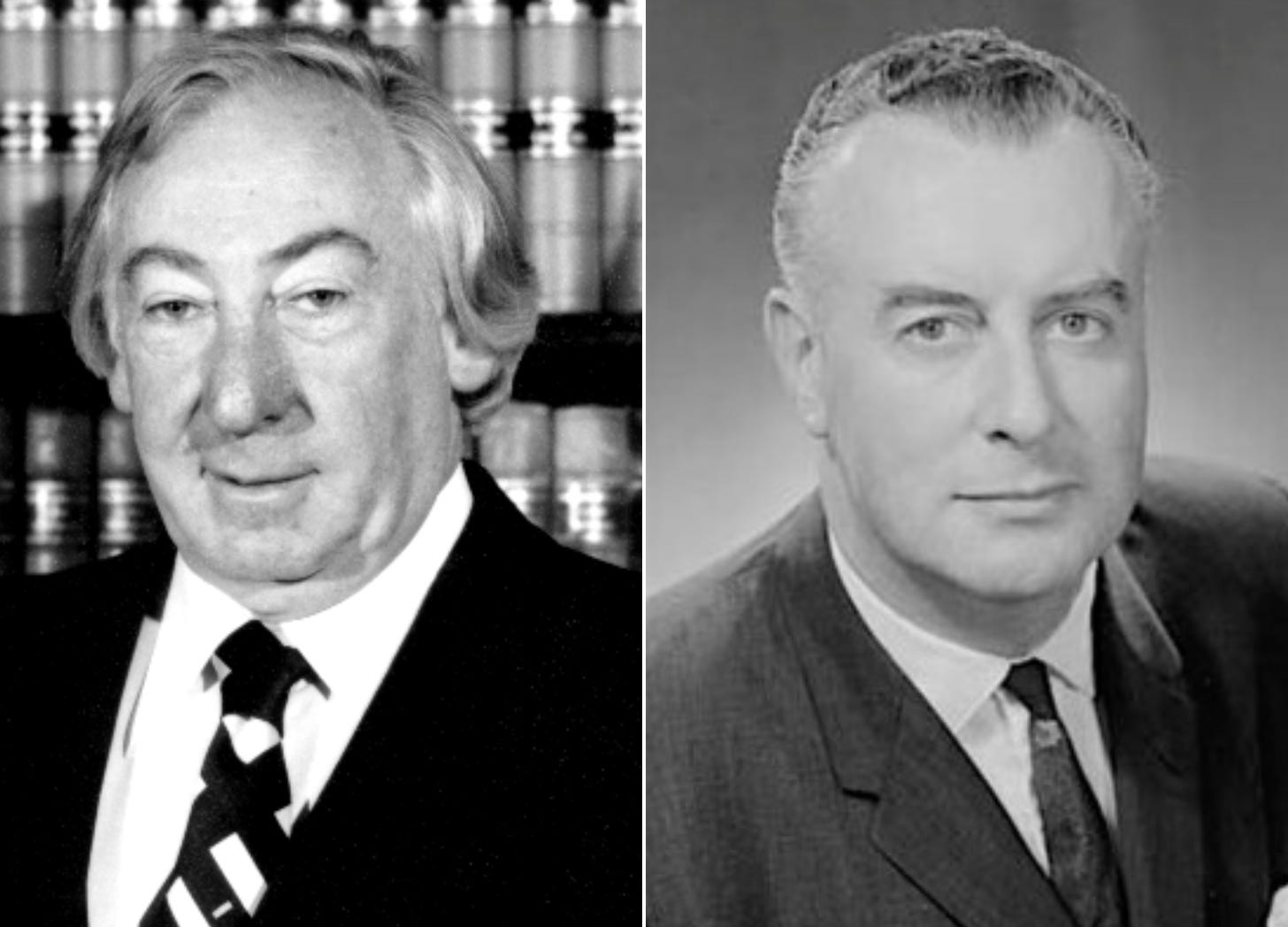
The late Lionel Murphy must have understood how fleeting the opportunity of public office is. Perhaps that’s a big reason why, controversially, Gough Whitlam appointed his radical attorney-general to a conservative High Court in 1975.
In 1977, towards the end of a judgment about contracts, Murphy – in words that were unnecessary to decide the case and therefore not legally binding – declared, “elections of federal Parliament provided for in the Constitution require freedom of speech and other communication”.
In 1992, Justice Murphy’s nascent ‘implied freedom of political communication’ was adopted by a majority of the High Court and was recently used to strike down the NSW Public Assembly Restriction Declaration (PARD) law.
The PARD law was aimed at stopping protests in the wake of the Bondi massacre and was intended to prevent any sizeable assembly, as the state Police Minister Yasmin Catley said in her speech on the bill, “picnics and groups of friends as well as quiet and ordered vigils that do not breach the LEPRA threshold will still be able to be held“.
PARD’s stated rationale was that ‘social cohesion’ would be harmed by protests post Bondi.
The court rejected this, because the “conception of civic life and social cohesion is at odds with the system of representative and responsible government for which the Constitution provides“.
When I contributed to the parliamentary debate around PARD, I predicted that violence might ensue and sought to prospectively apportion responsibility for this away from our police, who are obliged to enforce politician-made-law.
“It is us, not the police, who will decide by passing this bill to up the ante; to remove the pressure valve of protest; to create a pressure cooker; and to tell the community that summer should be a time for barbecues, a time with family, and not a time of protest and politics – a dystopian vision, if ever I heard one. But our hardworking police will have to enforce it, and I wish them all the best of luck. This could go so wrong.“
And so wrong it did go.
It is beyond debatable that the PARD law caused the violence at Sydney Town Hall on February 9.
The protest organisers had signalled their intention to march to State Parliament after the planned protest and had lodged a ‘Form 1’, that by law starts the process of police or court approval.
The PARD law however required police to reject the application and prevented the usual process that can end, if necessary, in a binding court decision.
I attended the protest and remained inside a speaker’s area. I had the opportunity to observe what was happening and the information flowing between protestors and key participants and speakers.
I recall feeling a distinct sense of unreality as I watched a tram glide down George Street, just separated from a packed crowd of thousands by a thin line of police determined not to close the street or allow a protest march away from Town Hall.

Toward the end of the protest some people indicated they would defy police and insist on marching to parliament.
One could be critical of this decision; though as it happens it was an authorised public procession, as police, relying on the invalid PARD, had not obtained a contrary court order.
Some MPs attempted to negotiate with police and Greens MLC Sue Higginson called Police Commissioner Mal Lanyon from the protest to warn violence was imminent and asking that he facilitate a peaceful march to Parliament.
Mal Lanyon has said he told Ms. Higginson that he was intent on enforcing both the PARD and the Major Event Declaration.
The Commissioner has spoken publicly on what happened next, “what we saw was a large number of people coming out to George Street at the end of the protest and march on police”.
This would not have occurred if the PARD law had not wrongly told police the procession was unlawful and if the usual orderly legal process had not been prevented from occurring.
Of course, once a trigger is pulled during a mass protest, human responses are engaged and a permissive environment can be created for wanton violence, including from police.
Indeed, this is why I and others have warned repeatedly in recent years of the dangers of restricting mass protests, the obligation on the state to peacefully facilitate them and the risk of a repeat of the disastrous 1978 Mardi Gras police riot.
The four Labor MPs who attended the protest, including Cameron Murphy, son of Lionel, were quickly labelled ‘rebel Labor MPs’ by the mainstream media, presumably because the premier disapproved of our attendance.
Political leaders of course come and go, as do political parties.
The most enduring political party in Australia however is the Labor Party, both the party of reform and itself in a constant state of flux and change.
The court’s dismissal of the PARD law should be a moment of pause and reflection for the Labor Party.
In the wake of Town Hall I was inundated, as were my colleagues, with supportive messages from Labor’s rank and file, across factions, branches and trade unions.
The common theme was respect and appreciation and a shared belief in enduring core Labor values; collective struggle and a commitment to human rights and dignity.
Their messages reminded me of the importance of these enduring Labor values, and why they are crucial in this moment.
The PARD law debacle highlights two versions of Labor: the Labor of Gough Whitlam and Lionel Murphy – the two men most responsible for the creation of the implied freedom of political communication – and a Labor that capitulates to raw rightwing power. It is an imperfect dichotomy of course, but those versions of Labor do compete, have always competed and the outcome profoundly matters in Australia.
The lesson from what we are seeing unfold in the United Kingdom, with Labour nosediving in the polls, must be learned. An abject abandonment of principle, particularly in these times, might doom our party.
Got a tip? Send an email to tips@deepcutnews.com or send an anonymous Signal to @deepcut.25.
Failure to uphold citizen rights and protect our citizens from harm overseas will doom the Labor party. Minns and Albanese have lost my vote and those of many I know.
You should not be to hard on Minns he was only doing his masters business.