


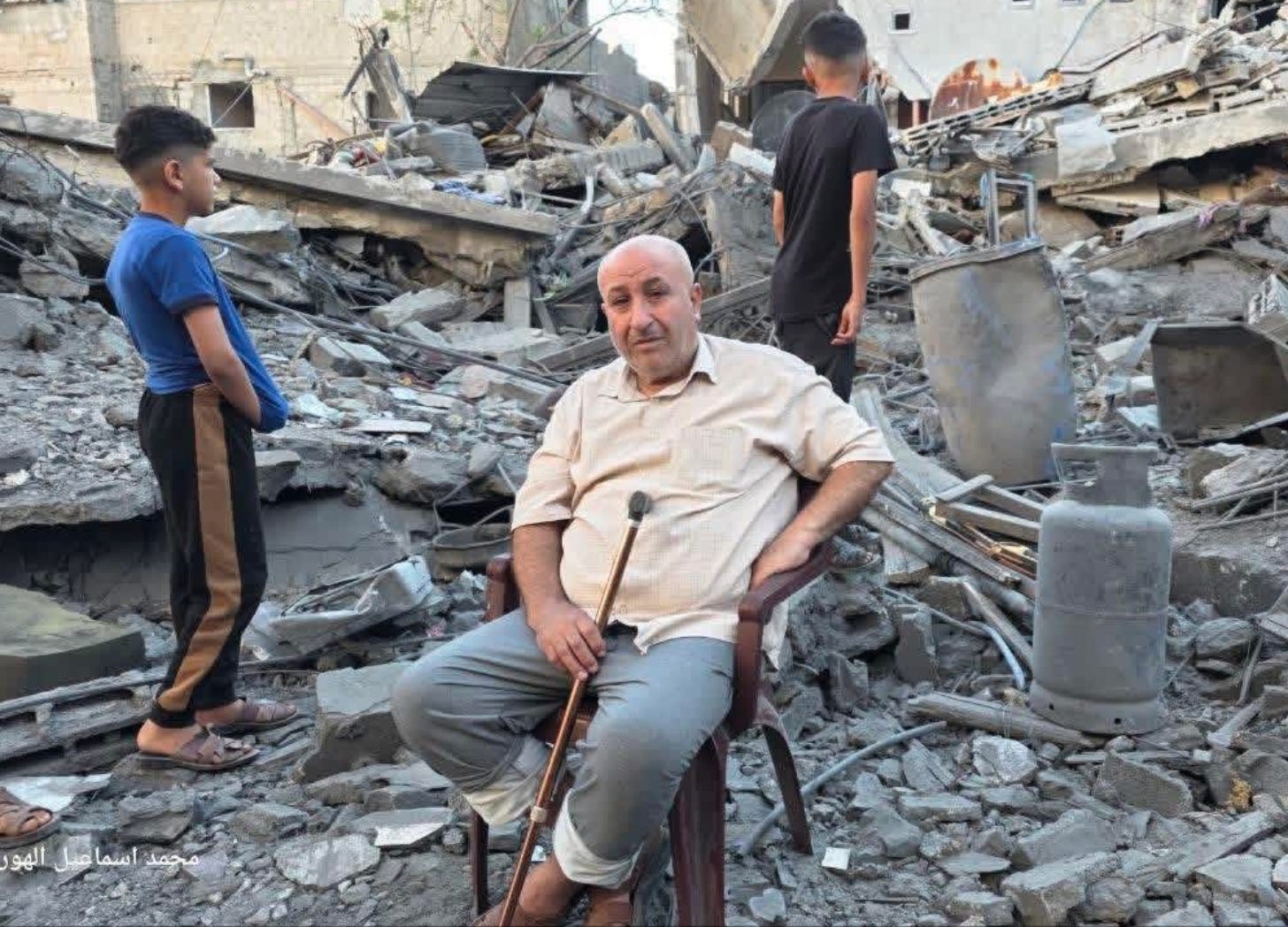
Shaimaa Marwan Eid is a Palestinian journalist and human-story writer based in Gaza. She has been published in Declassified UK and Brave New Europe. You can donate to Shaimaa’s Chuffed campaign to help treat her father’s cancer diagnosis here.
The residents of the Gaza Strip had barely begun to recover from months of war and displacement when late-night Israeli calls once again disrupted their lives, ordering the evacuation of homes and entire residential complexes ahead of planned airstrikes.
Within minutes, dozens of families were forced to leave what remained of their homes, reliving scenes of displacement that have become deeply ingrained in the collective memory of Gaza’s residents throughout the war.
The streets quickly turned into new routes of displacement, as families carried their children and a few essential belongings in search of safety. However, with displacement camps already crowded with hundreds of thousands of displaced people, finding a safe place has become extremely difficult.
In the Nuseirat refugee camp in central Gaza, 42-year-old Saida Al-Basyouni was preparing to go to sleep with her family when news of the evacuation arrived.
She says that an Israeli intelligence officer called one of her neighbors and ordered him to evacuate his home and the entire surrounding residential block ahead of an airstrike.
Recalling those moments in a voice still marked by confusion, she said, “It felt as though we had returned to the first days of the war. We rushed into the street with our children and neighbors, and the only thing on our minds was saving our lives. We did not think about clothes, belongings, or anything else.”
She added that families remained in the streets for more than an hour late at night, gripped by anxiety and anticipation. “We were expecting the strike at any moment, and the children were crying in fear. Then suddenly, a massive explosion shook the entire area. The occupation targeted our neighbors’ home, the home of the Al-Taweel family, and several nearby houses were damaged by the force of the blast.”
She said that what surprised her most was that these operations continue despite discussions of de-escalation and international efforts aimed at maintaining the ceasefire.
She asked, “Where are the mediators and the countries that sponsored the agreement? Why is the occupation not being compelled to stop these violations?”
But what has remained most vivid in her memory was not the sound of the explosion, but the question asked by her young daughter, Najla. She said, “She looked at me while crying and asked, ‘Mama, has the war returned? Will the bombing start again?’ I did not know how to answer her.”
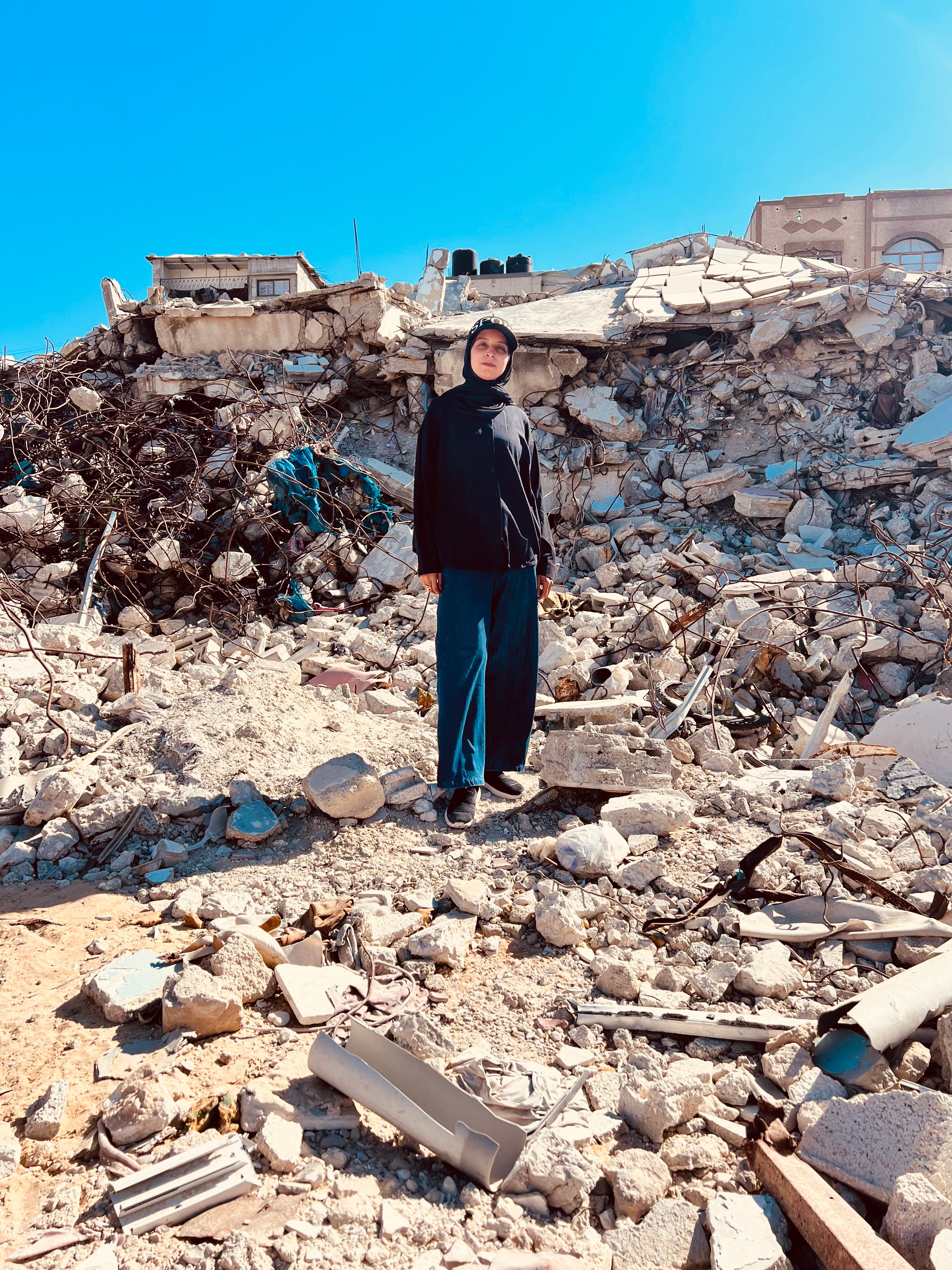
In Al-Shati refugee camp, west of Gaza City, similar scenes unfolded, but under even more difficult circumstances. The camp is one of the most densely populated areas in Gaza, with tightly packed homes built on narrow plots of land, meaning that the targeting of a single house can cause extensive damage to surrounding buildings.
Ramez Abdelfaatah, a 25-year-old resident of the camp, says that late-night phone calls have become a constant source of fear for residents, even after the ceasefire was announced.
“We have become afraid to sleep,” he says. “At any moment, a call may come ordering the evacuation of a house or an entire residential block. No one knows when it will happen or where the next target will be.”
Al-Amassi recalls a night when residents of the area were forced to leave their homes after a sudden call was received by one of the neighboring families.
“After months of war, we had begun to feel a sense of reassurance, but these calls brought tension back into our lives. As soon as we heard about the evacuation order, everyone rushed into the streets. The elderly, the sick, and children suffered the most.”
He notes that his 65-year-old mother suffers from heart disease, making every evacuation a direct threat to her life.
“My mother cannot run like everyone else. The moment she hears about an evacuation order, she becomes extremely distressed, which affects her health. In those moments, all I can think about is her and my young child, and how to get them to a safe place.”
He describes the moment of the strike as being like an earthquake hitting the area.
“The explosion was enormous. The ground shook beneath our feet, and shrapnel and dust were scattered everywhere. Even homes that were not targeted were damaged by the force of the blast.”
Evacuation orders were not limited to residential neighborhoods. They also extended to the Al-Mawasi area west of Khan Younis, which the Israeli military has long presented as a safe zone for displaced civilians.
There, Neama Al-Astal lives in a tent her family set up after losing their home during the war. She says Israeli forces ordered residents to evacuate the area surrounding a food warehouse before it was targeted.
“We were always told that Al-Mawasi was a safe area and that we should move there,” she says. “But if it is being targeted as well, where are we supposed to go?”
She continues, “We do not live in houses that we can lock and leave behind. We live in fabric tents. When the warning came, all we could do was run. We were not given enough time to evacuate the area or move our belongings.”
About ten minutes after the evacuation, the strike took place.
“The area caught fire, and many tents around the warehouse were damaged,” Al-Astal says. “Some families lost everything they owned for the second or third time since the beginning of the war.”
In recent weeks, evacuation orders in Gaza have generally fallen into two main categories. The first involves the evacuation of entire residential neighborhoods ahead of airstrikes targeting one or more homes within them, as has occurred in refugee camps across central and northern Gaza. The second involves the evacuation of areas adjacent to what is known as the “Yellow Line,” as part of efforts to expand the boundaries of that zone.
Residents say these orders have reignited fear and anxiety among civilians, particularly in areas close to military separation lines, where people live in a constant state of anticipation, fearing that a new warning could force them to flee once again.
Between late-night forced evacuation orders and bags kept packed and ready at the doors of homes, Gaza’s residents today live with the return of a familiar fear. For many of them, the dilemma is no longer only about the place they are being forced to leave, but also about where they can go in a territory where safe spaces are shrinking day by day.
Listen to the latest episode of Deepthink, where Antoun Issa discusses his new book, Rebirth: A Love Story from the Depths of War, with Readings Books. The wide-ranging conversation delves into Beirut’s history, enduring Arab resistance, and interpreting Kahlil Gibran and the purpose of life.
International law and the united nations have no power and are tone deaf to organisations that go beyond the pale in with no consequences' for their actions. If we are to believe Michael West media these same organisation are bleeding the Australian government of huge amounts approx $198 million for security grants which goes to the ECAJ then we don't know where after that. Again a law unto themselves but the good part we are paying for it from our taxes so it is alright according to the government.