


By Bernadette Zaydan – an Australian lawyer with a diverse practice in human rights, commercial, public and regulatory law. Since October 7, 2023, she has represented numerous clients facing trumped-up police charges, often arising from anti-genocide advocacy. She is particularly passionate about the intersection of law and human rights.
In Australia’s justice system, a core tenet is the presumption of innocence. But in the last two years, police have been undermining this fundamental principle, inflicting lasting personal and professional damage on innocent people whose only crime is disagreeing with government policy.
We must remember: a criminal charge is not a conviction, it is an allegation to be tested in our courts.
That test must meet the element of the offence at the requisite level beyond reasonable doubt. That is a high standard.
Using criminal checks to punish the innocent
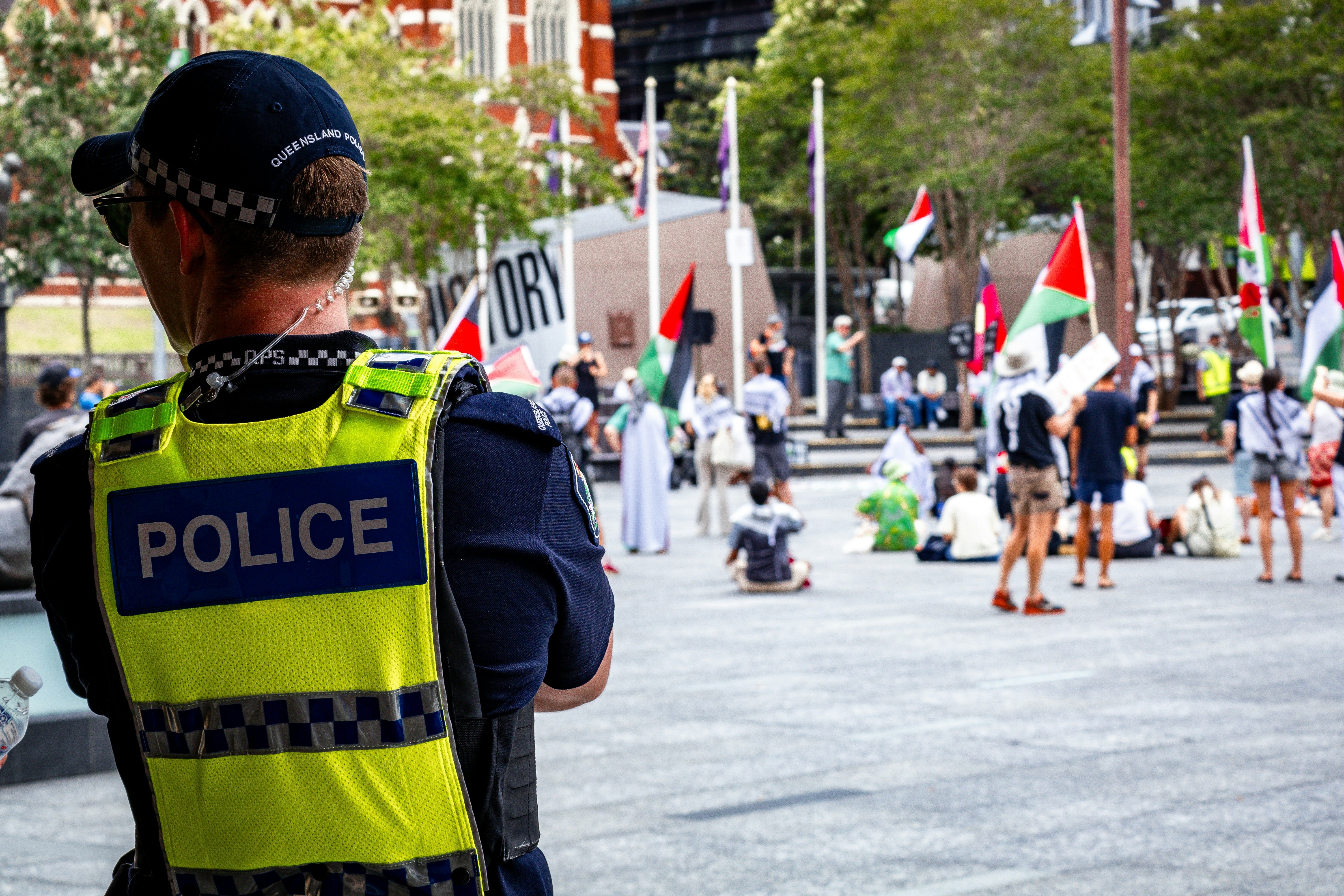
Since October 7, 2023, I have seen a troubling trend in Australia where individuals are being charged with offences that, from the outset, have no reasonable prospect of success.
These cases are based on often weak or politically motivated allegations, which are routinely withdrawn or struck out when they reach court. However, the victory is short lived. The real punishment begins when a withdrawn charge appears on a Nationally Coordinated Criminal History Check (NCCHC), a stain that can damage reputations and opportunities.
This bureaucratic weaponisation of the justice system inflicts a double injustice. First, public resources are wasted prosecuting cases designed more to intimidate and silence dissent than to legitimately pursue justice. Police resources, prosecution’s effort and precious court time are expended on matters doomed to fail.
Second, and more concerning, the state then uses its own flawed system of the NCCHC to continue punishing the individual. The police check, a tool meant to ensure safety, becomes punitive, branding a person for an allegation that was legally insufficient to proceed.

A troubling case
A recent case, involving an application to an institution whom I shall not name for privacy reasons, exemplifies this systemic abuse. A professional found her registration was delayed because an NCCHC result revealed a single entry: “BEHAVE IN OFFENSIVE MANNER PUBLIC PLACE – STRUCK OUT/WITHDRAWN”.
The institution’s subsequent letter to this professional, while acknowledging the withdrawal of the charge, stated that the mere fact of the charge raised concerns requiring a full explanation. The professional was asked to detail the alleged conduct, identify supposed victim(s) and reflect on her suitability for registration, which is an invasion of privacy and a demand to account for a legal nullity.
The reality, as outlined in a legal response to the institution, was wholly different. The prosecution had withdrawn the charge because the police brief of evidence was “legally defective” and there was no crime actually committed.
The brief was incomplete, materially inaccurate and had “fundamentally misidentified the true victim of the incident”. In fact, evidence presented to the prosecution, including media footage, demonstrated unequivocally that the professional was the victim of a criminal offence she had initially reported to police, but was ignored.
The prosecution’s case collapsed not on a technicality, but because she was being punished for speaking about the Gaza genocide.
Yet, the institution, bound by procedure, was compelled to treat the line on the police check as a red flag. This is the crux of the problem, a withdrawn charge is not a neutral administrative notation. It is loaded and screams “criminal allegation” to employers, licensing bodies and agencies.
The burden of proof shifts from the state to the individual, who must now explain why they are not guilty and were never convicted.
Unjust interpretation of withdrawn charges
A withdrawn or struck out charge is not a conviction. It is, in fact, a formal declaration that the case lacked the legal evidentiary merit to proceed. For this to then resurface as a life altering mark is unjust. It tells citizens that the police can charge first, ask questions later and you will bear the consequences, regardless of the outcome.
The effect is immense, potentially deterring individuals, particularly those in public facing professions, from engaging in lawful protests, advocating for human rights or dissenting against government policies.
The presumption of innocence must extend beyond the courtroom. It must be embedded in the bureaucratic systems that govern our lives. Withdrawn, struck out, or discontinued charges must be removed from police checks, to prevent their weaponisation by police and the political forces behind them. The integrity of our legal system depends on it.
Got a tip? Send an email to tips@deepcutnews.com or send an anonymous Signal to @deepcut.25.
We can therefore no longer pretend we live in a liberal democracy, and can no longer depend on the rights and protections owed to us. They must be fought for on a daily basis. But there are still more of us than there are of them.
Excellent article - we need this info to be known more widely - the over reach by police of the law