


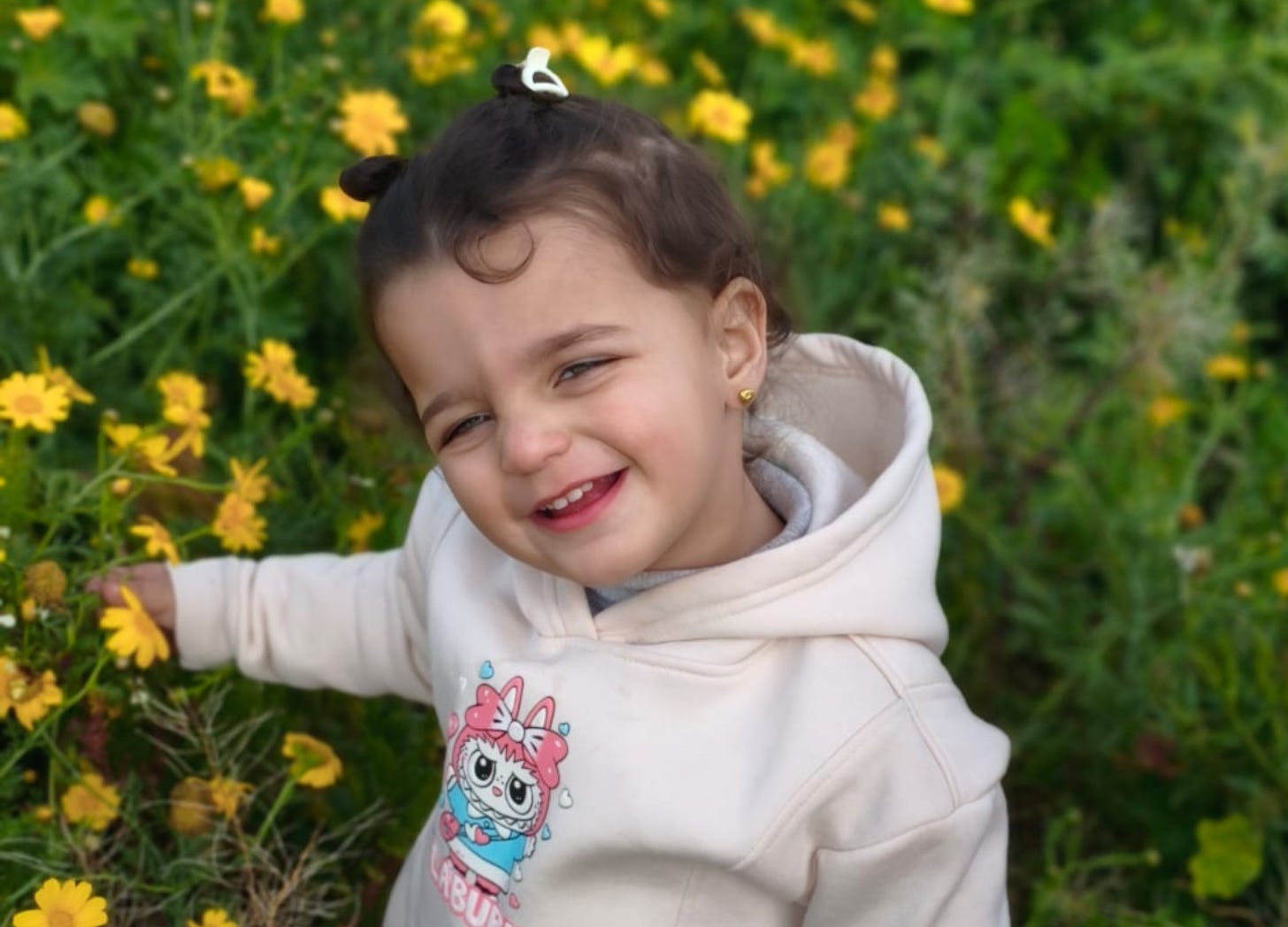
The birth of her second child is something Noor Hammad wishes she was hopeful for. Instead, she approaches her due date with increasing dread.
“I’m in the final months of my pregnancy, but I have no sense of purpose or clear vision for my children’s future,” Noor told Deepcut.
While a tentative ceasefire agreement signed between Israel and Hamas in October has allowed some medical and humanitarian aid into Gaza, the reality for expectant mothers like Noor remains dire. In May, the UN Office for the Coordination of Humanitarian Affairs reported that none of the Strip’s 37 hospitals are fully functional, and that 17 remain entirely unusable.
“Medical care keeps deteriorating. Ambulances still cannot reach many areas. All the hospitals are just tents with no resources,” Noor says.
“This is my biggest fear. I’m afraid for my son.”
Israel’s war on Palestinian babies
Earlier this month, Palestinians observed 1,000 days since the start of Israel’s genocidal war on the Gaza Strip – a campaign of destruction that the UN says has killed at least 73,110 Palestinians, including at least 21,638 children.
A separate UN report in June determined that Israel’s genocide has caused miscarriages, stillbirths, premature births, congenital defects and anomalies, and maternal deaths in childbirth to soar in Gaza. In March, one in three pregnancies in the Strip was classified as high-risk.
One emergency room and paediatric nurse told the UN’s independent commission of inquiry on the Occupied Palestinian Territory there was “a direct targeting by Israel to affect the long-term health outcomes of babies”.
“There is no reason why we cannot bring medications into Gaza to help pregnant women and babies,” the nurse said. “It makes no sense except to think that this particular group is being targeted due to which there is a higher mortality rate among newborns.”
Noor is one of thousands of mothers in Gaza who have suffered the consequences of Israel’s targeting first-hand. In January 2024, she gave birth to her first child, Hoor, in a plastic tent outside Khan Younis.
Life became a daily struggle to keep herself and Hoor alive. They both suffered from malnutrition, living off lentils and pasta and going without meat, fruit, vegetables and milk for five months. Hoor would have crying fits at the sound of bombs going off, and basic necessities like nappies became enormously expensive.
Food and medical supplies remain scarce in the Strip, making life an exhausting ordeal.
“Alhamdulillah, my daughter and I are alive, but we are not well,” Noor says. “We are surrounded by tents, destruction, insecurity, and a lack of clean water and electricity. There are no basic necessities for life.”
Dreams of ‘a warm home free of rodents’
Since the ceasefire came into effect in October, Israel has killed more than 1,000 Palestinians. The breach is consistent with a decades-long pattern of Israel systematically breaking ceasefires, truces and treaties to which it is party, including via invasion, bombing, and assassination.
“We are not in a real ceasefire,” Noor says. “Every day there are new attacks, injuries, and deaths.”
Since the ceasefire came into effect, however, Israel has slowly allowed small numbers of Palestinians to leave the Strip for medical and humanitarian reasons. Most crossings into the Strip remain closed, with only the Rafah crossing at the Egyptian border allowing the limited movement of people.
After more than two years of being trapped inside the Strip, Noor believes any future for her children lies beyond the Rafah checkpoint.
“We have goals and dreams that we have been waiting for years to achieve,” she says. “We have so many wishes we want to fulfil, but Gaza after the war is no longer suitable for living at all.”
A qualified clinical nutritionist, Noor is crowdfunding money and applying for academic scholarships that would allow her and her family to travel to a host country. There, she hopes, she can give her children a life they deserve.
“We will live safely in a small, warm home free of rodents and insects,” she says. “We will continue our studies and work hard to build the life we dream of for our children.
“When we leave Gaza, we will finally feel like human beings and not numbers.”
Listen to the latest episode of Deepthink – an hour-long talk with Palestinian scholar and author Tareq Baconi on the trauma of ethnic cleansing, growing up queer in Amman and why the Palestinian struggle is feminist.