


“Unlimited power is apt to corrupt the minds of those who possess it,” William Pitt, the 18th century British prime minister, once said.
It’s a line that precisely captures the spiralling behaviour of Benjamin Netanyahu and the war-mongering extremists surrounding him in the Israeli leadership.
For a political maverick that has managed to stay on top of Israeli politics for the better part of three decades, the recklessness in launching a war against Iran (and attempting to renew it this week) exposes a desperate leader running out of tricks.
The walls are closing in on Netanyahu. Israeli elections loom in October, and his brand of strength is convincing fewer Israelis as sirens continue to sound and missiles fall. In a fresh poll this week, a majority of Jewish Israelis (57%) said he should not run in the upcoming elections.
Should he lose, a corruption trial awaits. It’s a trial Netanyahu has successfully stalled courtesy of convenient wars acting as useful distractions.
Haaretz reported last month that since the April 8 ceasefire with Iran “none of Netanyahu’s testimony hearings have taken place as planned – they have all been shortened or cancelled”.
The reason?
“… security and political reasons that do not allow the Prime Minister to appear” – i.e. continued hostilities with Iran and Lebanon.
Outside of Israel, an ICC arrest warrant for his crimes in Gaza hangs over his head. Whether in Israel or The Hague, the prospect of Netanyahu ending up behind bars remains a possibility, which makes the October elections all the more crucial.
Without the power and protection of the prime minister’s office, western nations will have fewer reasons – such as falsely claiming Netanyahu enjoys ‘diplomatic immunity’ – to avoid arresting him. His ability to influence court proceedings in Israel will also diminish.
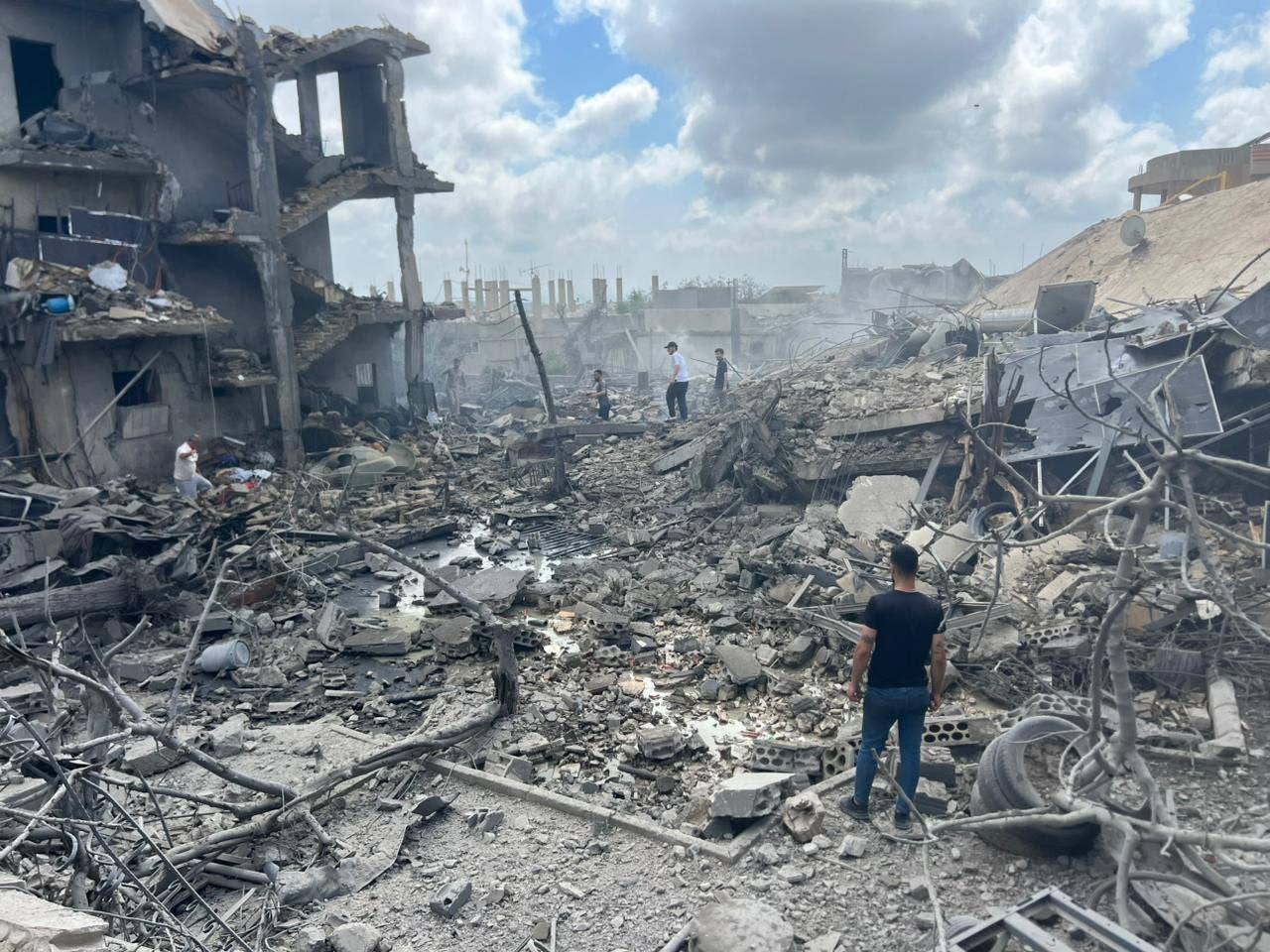
Netanyahu’s only remaining move is to bomb and keep bombing, even if – as we discovered this week – ongoing war is leaving Israel demonstrably weaker.
Israel loses its advantage
Israel kicked an own goal this week when it defied Iran’s red line and bombed Beirut, drawing an Iranian response. Just as it kicked an own goal on February 28 when it launched a war that has left Iran in a stronger position than where it was on February 27.
An addendum to Pitt’s line is that corrupted minds lose strategic focus. What we’ve witnessed in Israel’s behaviour is a state so drunk on military might and a sense of invincibility (understandable given the world has allowed it to commit a genocide for three years) that it can no longer read the state of play and make calculated decisions.
This week’s blunder was further proof of that. Iran made it clear that bombing Beirut was off limits — and yet, remarkably, IDF officials say they weren’t expecting an Iranian response. How could they have not anticipated a response given Iran’s demonstrated capability to hit Israel?
The cost has been Israel’s strategic advantage in Lebanon.
Prior to October 2023, Israel and Hezbollah maintained unspoken rules of engagement that were established after the 2006 war: ‘apart from the occasional tit-for-tat, you don’t hit me, I don’t hit you’. Both sides were happy to maintain mutual deterrence and limit skirmishes to a low intensity. As a result, south Lebanon and the Israeli settlements across the border saw relative peace for 17 years.
The war post-October 2023, however, gave Israel the upper hand – it decimated Hezbollah’s leadership and left many of its cadres wounded after the pager attacks in September 2024. The Israelis rewrote the rules of engagement to their advantage. They occupied five military posts inside Lebanese territory and, crucially, established a freedom to operate in Lebanon without reprisal.
From the November 2024 ceasefire in Lebanon to February 2026, Israel carried out almost 3,000 attacks and were killing 22 Lebanese a month without Hezbollah firing a single bullet. The deterrence Hezbollah established in 2006 was gone – until Israel bombed Beirut again this week and invited Iran into the equation.
Iran’s new check on Israel
Iran’s recent performance in the war with Israel and the US has given it greater confidence to strike Israel while absorbing the pain of airstrikes.
When it drew its red line over Beirut, it created a trap into which Israel’s reckless leadership fell. It did so knowing it had the ability to hurt Israel – by way of missiles and closing the Bab al-Mandeb strait to Israeli shipping – and handle whatever response Israel could muster.
For six decades, Israel has been able to operate militarily in Lebanon with relative impunity. This week marked the first occasion a regional power with a potent offensive capability has entered the Lebanese arena and directly tied a military consequence to Israel’s actions.
This is a spectacular fall in Israel’s strategic position vis-à-vis Lebanon, and the opposite result for a state intent on establishing regional hegemony.
And yet, beyond Netanyahu seeking to stall his own trial and revive his domestic image ahead of the October elections, Israel’s specific goals in Lebanon are unclear. It is suffering losses on the battlefield – at least 30 Israeli soldiers killed so far and dozens of tanks destroyed – without an obvious purpose. Its northern settlements are struggling under persistent rocket fire – the population of its largest settlement, Kiryat Shmona, has halved.
Israel knows it cannot disarm Hezbollah – IDF officials said as much in April – which means it knows Hezbollah will continue to kill and wound Israeli soldiers and fire at the northern settlements so long as they remain on Lebanese soil. And the inclusion of an Iranian response has only worsened its already difficult predicament.
What is clear is that endless war is weakening Israel, while Netanyahu scrambles to avoid his fate.
Upcoming book talks
If you’d like to jump off the screen and enjoy some warm, in-person community, the following book talks for my debut, Rebirth: A Love Story from the Depths of War, are taking place next week:
Thank you for this much needed broader contextual reporting and analysis. Please write more about Lebanon.