


We’ve been diving into data to examine the correlation between rising inequality amid the cost of living (or greed) crisis and One Nation’s surge.
The Victorian election this Saturday presents an opportunity to track the political ramifications of socioeconomic disparity, as we head into the NSW state elections in March and the federal elections in 2028.
Our last piece looked at six seats – four in the outer suburbs of Melbourne and two regional – that have seen growing support for One Nation. We previously looked at infrastructure and transport spending data and found all six seats have lagged significantly in state investment (compared to wealthier parts of the city) – worsening their living standards.
This week, we reviewed health data and the results tell a clear tale of a widening gap between the haves and have nots.
Victoria’s health system is under pressure, from overstretched emergency departments to GP shortages and a strained mental health system. However, that pressure is not felt evenly across the state, and those areas suffering the most are seeing a rise in populism.
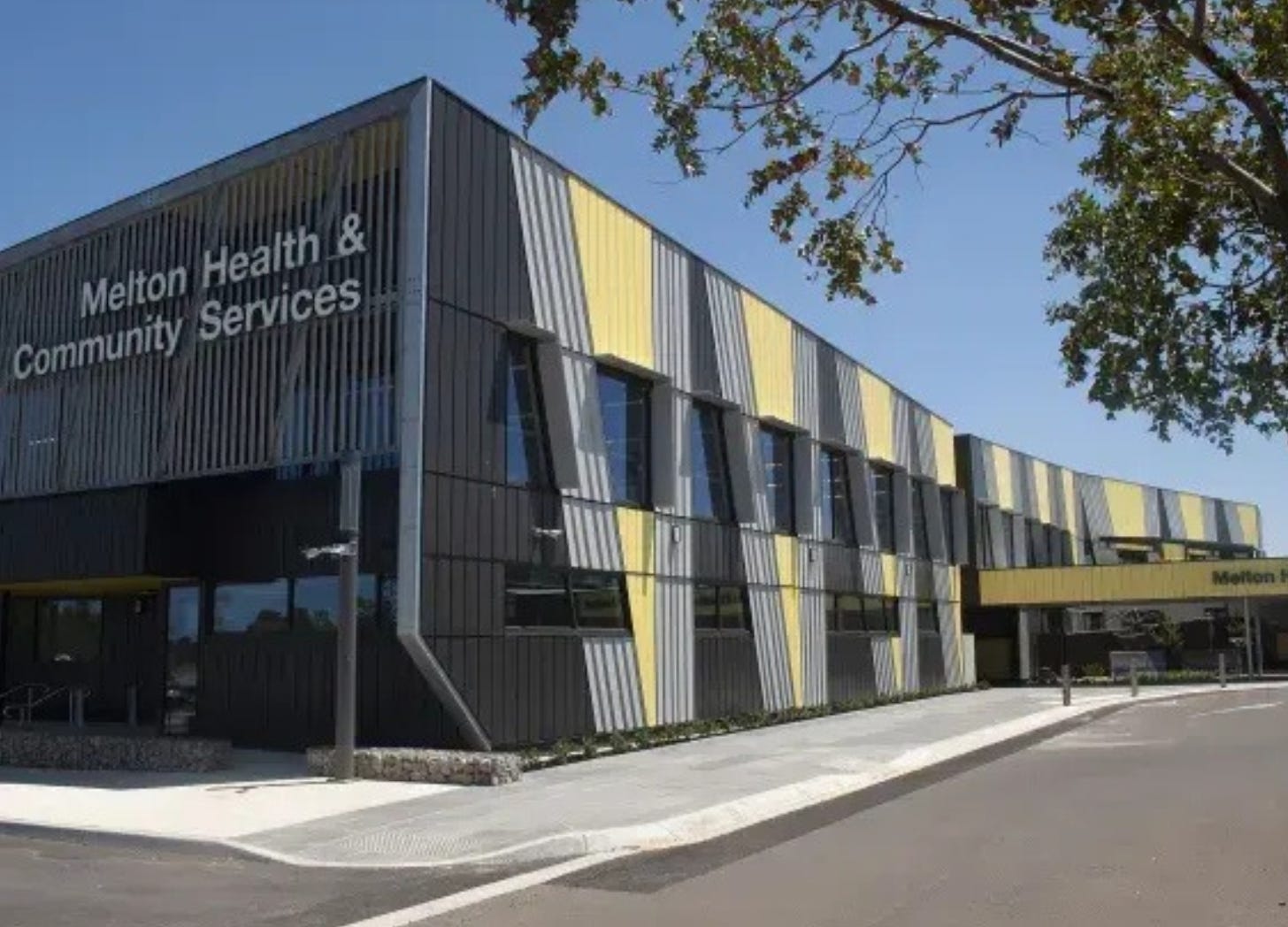
On average, Victoria has about 102 full-time equivalent (FTE) GPs for every 100,000 people. Melton in the city’s outer west – which has experienced a population boom of 71% in the last 10 years – has a paltry 57, and the other five seats are also significantly short of the state average. By contrast, wealthier Boroondara in Melbourne’s east has 149 FTE GPs for every 100,000 people.
And it’s getting worse. Since 2021, GP supply per resident has fallen in all six battleground seats – by 12% in Shepparton, 10% in Pakenham and 8% in Melton, compared with 4% across Victoria. Melton actually gained GPs over that period, but its population grew twice as fast.
Emergency care tells a similar story. The rapidly growing areas of Melton and Cardinia (which covers Pakenham in Melbourne’s outer southeast) are home to about 350,000 people. Neither has a dedicated public emergency department (ED), and there are just 27 public hospital beds between them. The Victorian rate is approximately 2.32 beds per 1,000 residents. This means about 800 beds would be needed in Melton and Cardinia just to be equal with the rest of Victoria.
Having enough beds is only half the story. Across Victoria, about 72% of ED patients are seen within the clinically recommended time. It’s a different story for most of the neglected six. Fewer than four in ten patients at the main hospital in Werribee in Melbourne’s outer southwest – the only public hospital for Wyndham’s 335,000 residents – are seen on time. This is less than half the rate of the main public ED in the City of Monash in Melbourne’s southeast (which covers Oakleigh).
All four seats with an ED of their own sit below the state average. By contrast, at the main EDs serving the two affluent comparator areas, around 80% of patients are seen within the clinically recommended time – comfortably above the state average.
The divide is starkest in mental health. It is well documented that Victoria’s mental health system is under significant strain, which culminated in a Royal Commission in 2021.
In the six seats combined, 517 FTE psychologists serve 1.08 million people, or about one for every 2,150 residents. Boroondara has nearly the same number of psychologists (501 FTE) for just 177,000 residents, about one for every 350 – or roughly six times the access.
Yan Yean has just 36 psychologists per 100,000 residents, Morwell 44 and Werribee 47. Oakleigh, at 150, has more than these three areas combined. All six seats fall well below half the state average of 124.
The outer suburbs and the regions have different structural health problems, but the divide is the same. In the outer suburbs, rapid population growth has not been matched with more health services. In the regions, there’s often a hospital in town, but few primary care around it. In all instances, these seats have less healthcare than their wealthier counterparts.
What compounds the lack of health services is the requirement for residents in outer suburbs and the regions to commute long distances to access care. Melton residents, for example, must travel 30km to their nearest hospital in Sunshine. A new hospital is in the works for Melton, but with a long wait. Victorian Labor promised a hospital in 2018, but it wasn’t until 2025 that main construction works began with it slated to open in 2029.
The overall health disparity, depending on where one lives in Victoria, is nevertheless feeding a narrative that – according to one Facebook campaign – the outer suburbs and regions “are never prioritised”.
One Nation runs it campaigns using the exact policies it opposes.
People are fearful of what will happen to them, so they are desperate to try anything that suggests ways to fix it.
One Nation also wants to slash migration, again using fear.
Except that without migrants, the health care system in Australia would collapse. It already struggles to provide the services it needs to.
"Big Australia" concept is a disaster.
AMA controls numbers of GPs.