


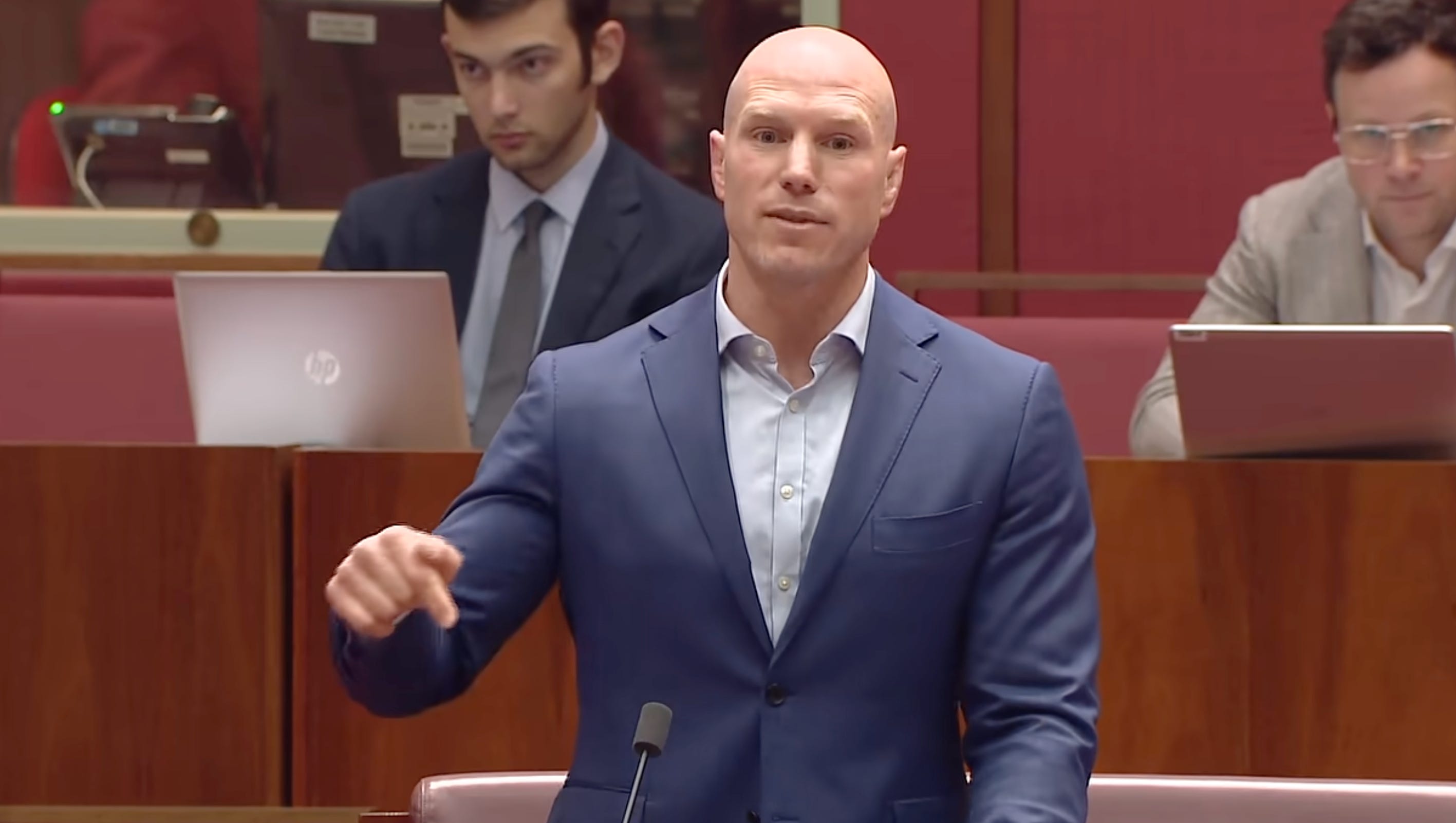
Independent senator David Pocock has warned of a reckoning for the major parties at the next election should they refuse to act on growing public outrage over draconian defence laws decried as “lazy and irresponsible” by a constitutional expert.
In a last ditch effort to add restraints on the Defence Legislation Amendment (Accelerating Capability and Protecting Bases) Bill 2026, Pocock has moved a motion demanding the Bill be delayed so it can be properly scrutinised.
The Bill, described as “heinous” by Pocock and a “betrayal” by Greens leader David Shoebridge, can jail individuals for up to seven years for taking a photo of a defence zone and gives private contractors the power to detain Australians, including with dogs.
It also grants the Department of Defence and the defence minister extraordinary powers to override state, territory and some Commonwealth laws, and provides a potential shield for foreign forces to conduct secret activities in Australia under the protection of a designated defence zone.
Pocock moves motion
Including weekends and non-sitting weeks, the Bill spent less time in parliament than reforms for the wine industry, and passed the Senate after only a 30-minute debate.
Despite attempts by crossbench MP Kate Chaney to have amendments in the House delayed until the Bill could be properly reviewed, Labor and the Coalition again combined to rush the law through.
Pocock will need the support of the Coalition and the Greens for his motion to pass, and has encouraged Australians to contact their senators to support the delay.
“This Bill has now passed the parliament, but that does not mean parliament should ignore the need to give it proper scrutiny,” he told Deepcut.
“I’ve put forward a motion that would send the Bill to a Senate committee to have a proper look at the really troubling aspects of the Bill and the powers it hands to the defence minister and defence officials.
“People from across the country are demanding that the parliament do its job and prevent the government from giving itself extraordinary powers. If the major parties aren’t up for that, we need to ensure that at the next election we elect more people who will come to Canberra and stand up for their communities.”
Labor on the defensive
After weeks of silence from the mainstream media, public pressure led by independent media, unions, civil libertarians and experts has put the government on the defensive, with Anthony Albanese accusing critics of “jumping at shadows” over the legislation.
Australia’s foremost constitutional expert, Professor Emerita at the University of Sydney, Anne Twomey, has also raised concerns over the Bill.
“The efforts taken to avoid scrutiny during the passage of the bill are enough to make one suspicious and rightly so,” Twomey wrote for Pearls and Irritations.
“But one only has to dip into this new law to realise how serious and concerning it really is … This is a very complex amending law, which involves significant departures from orthodoxy in how our system of government works. It reads as if it was an ambit claim from defence, which was intended to be negotiated down to something reasonable, but was just waved through, at the governmental and parliamentary level – nothing to see here.”
‘Nothing to see here’ is the line Labor has continued to take on its autocratic laws, which raise serious constitutional and civil liberty concerns, with the government taking aim at critics rather than the overreach it enshrined.
Labor MP accused of misinterpreting own Bill
Peter Khalil, the junior Labor minister who introduced the defence laws, wrote to Shoebridge, accusing the Greens leader of making “a number of inaccurate and misleading claims” and urging him to “engage with the Bill on its merits rather than engaging in a misinformation campaign”.
But Khalil’s points don’t align with the legislation he introduced.
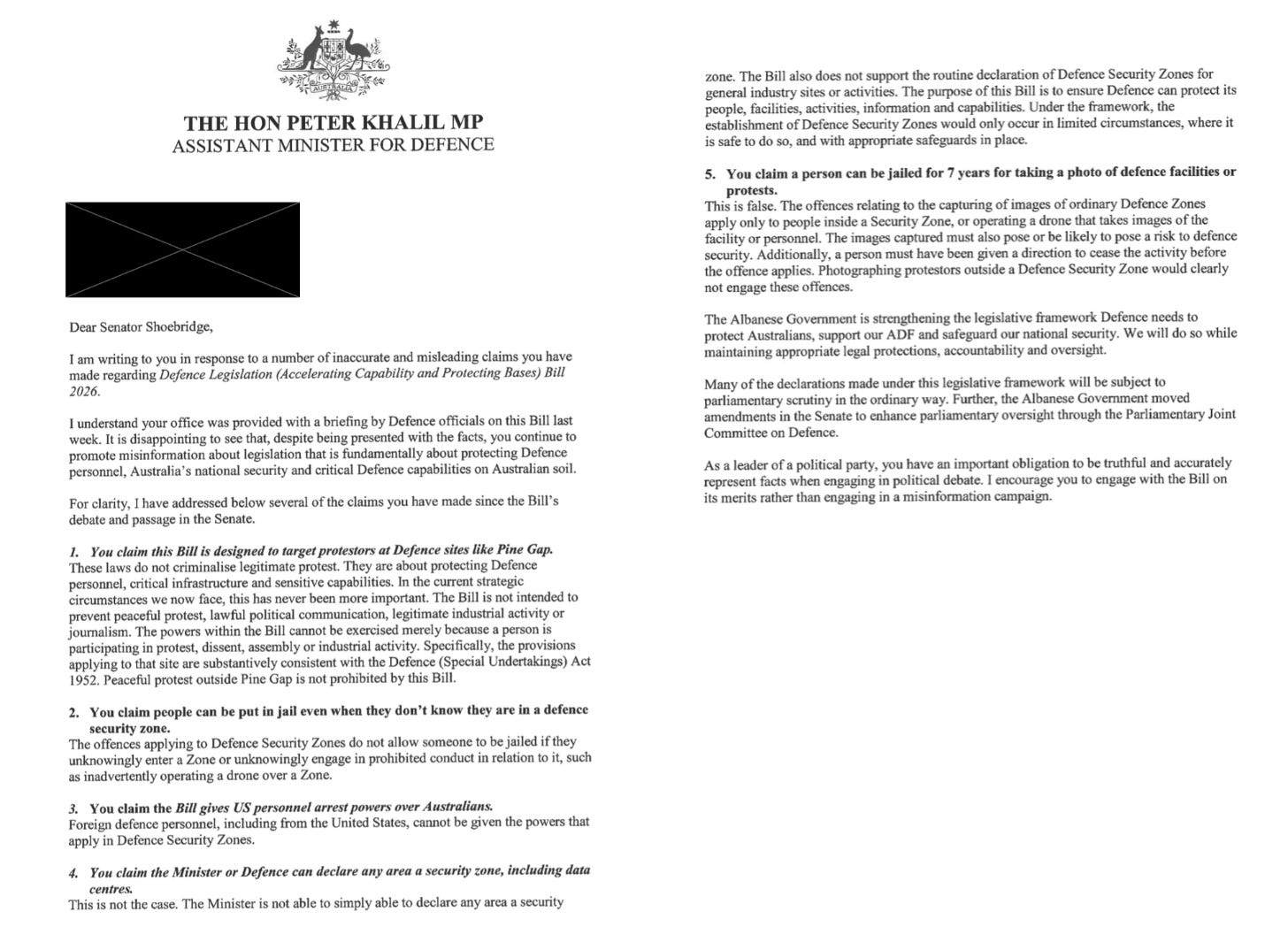
Khalil wrote that the offences “do not allow someone to be jailed if they unknowingly enter a Zone or unknowingly engage in prohibited conduct in relation to it”, which the parliamentary library, in its Bills Digest, disagrees with.
“As with many of the main offences, absolute liability applies to the element of the offence regarding the type of defence security zone involved. This means there is no fault element to this component of the offence and the defence of mistake of fact is unavailable,” it reads.
In layman’s terms, under absolute liability, committing the act is enough to be prosecuted, whether you knew it was against the law or not. The defence of ‘honest mistake’ isn’t available.
The Bill is so broad that walking into a defence zone, whether you knew it was a designated zone or not, is enough for prosecution.
Reports that an individual could be jailed for seven years for taking a photo were also “false”, according to Khalil, who claimed it would only apply to people inside a defence zone, or flying a drone, and where the images posed a security risk, and directions to stop were ignored.
Except, as noted in Deepcut’s analysis of the Bill, that doesn’t apply to special defence security zones – a designation that, under the new laws, would cover Pine Gap. The defence minister would also have the power to designate further special defence security zones, anywhere in Australia.
In response, Shoebridge pointed out numerous errors in Khalil’s interpretation of the Bill.
“I am concerned that the Department has failed to appropriately brief you on this matter and you have separately failed to undertake your own due diligence before you voted for it,” Shoebridge wrote.
Government spinning the details
The government is also trying to hose down legitimate concerns defence zones could be declared anywhere Defence deems necessary.
“The Minister is not able to simply able to declare any area a security zone. The Bill also does not support the routine declaration of Defence Security Zones for general industry sites or activities,” Khalil wrote, in reference to claims datacentres could be designated a defence zone.
But that is contradicted by the factsheet Defence created for industry, which says the legislation can be used, where necessary, to protect Defence activities at industry facilities.
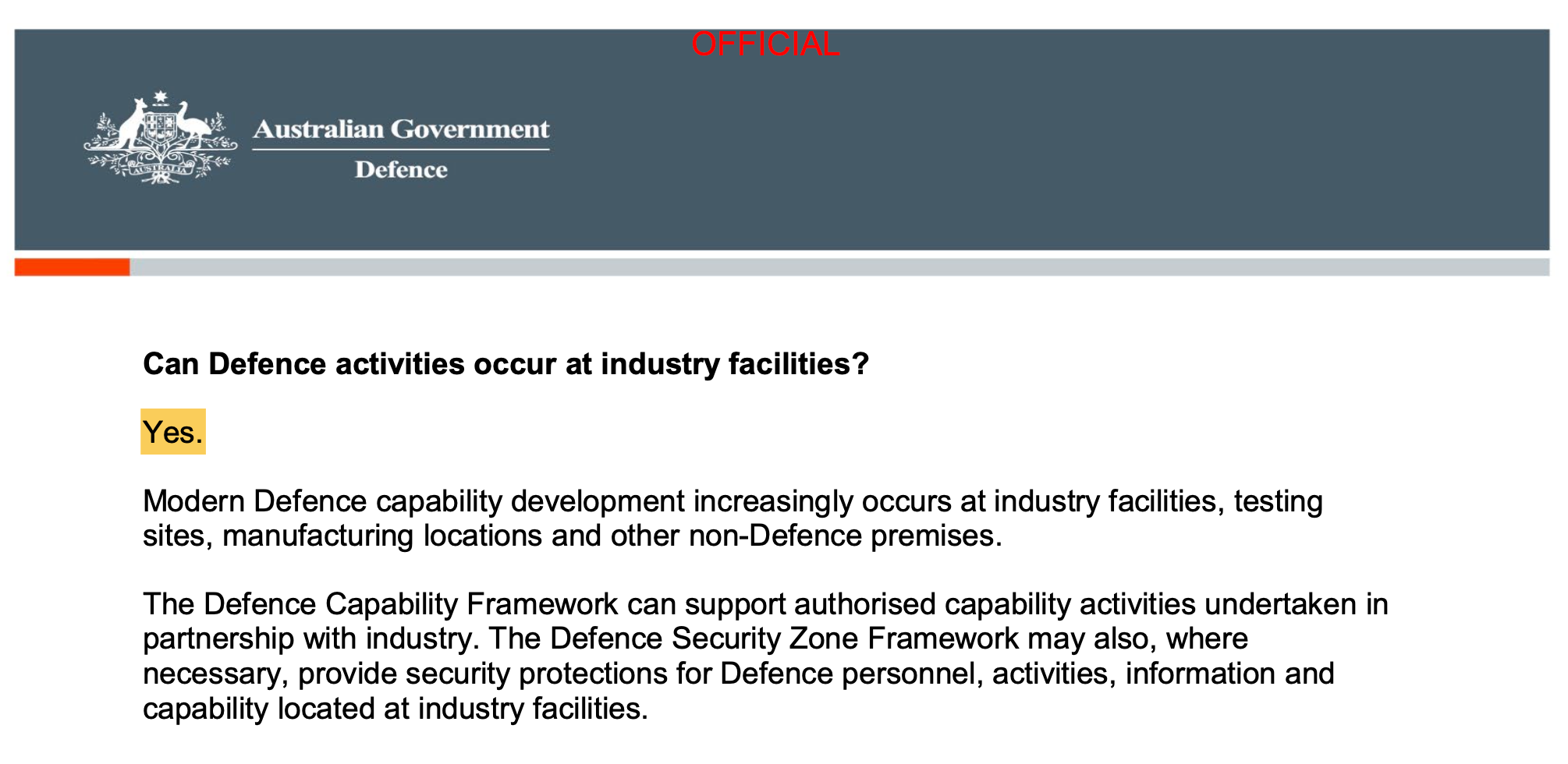
As Digital Rights Watch warned, datacentres could be covered under that provision. Others have warned the legislation is broad enough nuclear waste dumps could be created, all without Australians being told, consulted, or able to object.
While Khalil claims the laws “do not criminalise legitimate protest”, there is no such protection in the legislation. Indeed, the Bill makes it an offence to not only obstruct a defence activity, but also if there’s a reasonable likelihood of obstruction.
In response, Shoebridge offered Khalil a briefing on the concerns with the Bill.
“To some degree I am sympathetic with anyone who does not fully understand this Bill. Your Government allowed the public only three days to submit to an inquiry into this Bill, which had no independent voices and heard only from the Defence and Home Affairs Departments, arms companies, and lobby groups,” he wrote.
“To gain a deeper understanding of the Bill I encourage you to read the detailed submissions from some of the civil liberty organisations, legal experts and unions that submitted to the inquiry, where all these issues and more were raised.”
Thank you Pocock and Shoebridge of the Greens Party. Otherwise we wouldn't even know about this fasicst & draconian bill that Labor quietly tried to slip through at the behest of our US/Israeli masters. Not to mention how the USA wants to mine the Tasmanian rainforest to get the metals needed for their forever war bombs!
"The media is a PR firm for the ruling class. The news you hear is paid by, and tolerated at the whim of those is power. If they don't want you to know something, it won't be on the news. At the very least, it will be slanted to suit them, and rarely followed up."
George Carlin
Kahlil, CIA asset?