


The Queensland government’s controversial ban on two pro-Palestine phrases will be challenged in the High Court after seven plaintiffs lodged a writ of summons and statement of claim on Tuesday.
The court application – seen by Deepcut – seeks to strike out “s 52DA of the Criminal Code and the amendments to the Police Powers Act” on the grounds they “impermissibly burden the implied freedom of political communication and are thereby invalid”. The plaintiffs are represented by Marque Lawyers and led by Stephen Keim SC.
“The Queensland government is directly attacking the Palestine solidarity movement. Those who have been paying attention know that it is one front in a broader campaign to erase Palestinian voices from public life,” Remah Naji, the first plaintiff, told Deepcut.
Queensland’s ‘Orwellian’ laws
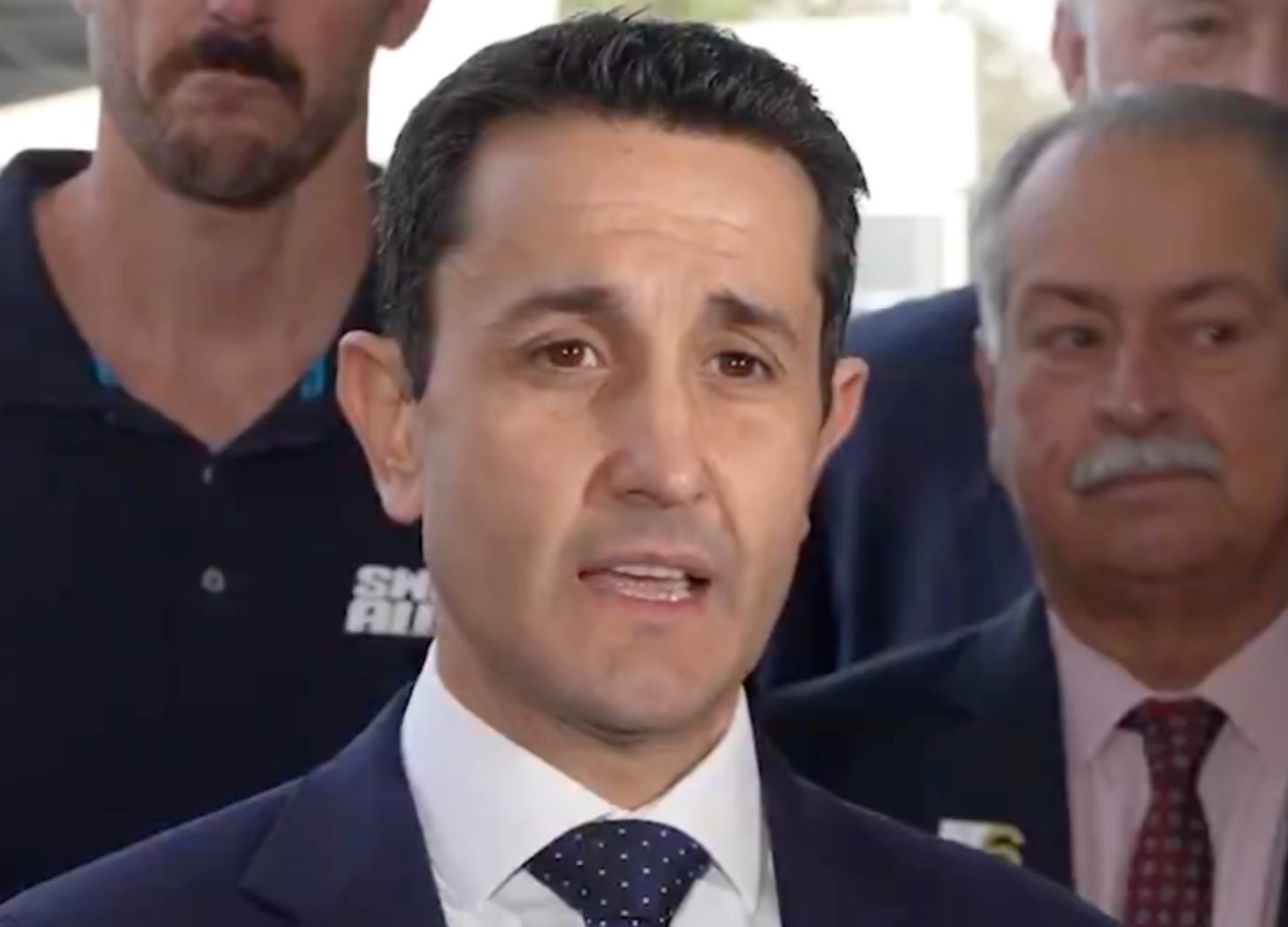
The state government, led by LNP premier and pro-Israel hawk David Crisafulli, banned two phrases on March 5 – ‘from the river to the sea’ and ‘globalise the intifada’ – both commonly chanted at pro-Palestine protests.
The LNP government couched the ban in the Fighting Antisemitism and Keeping Guns Out of the Hands of Terrorists and Criminals Amendment Bill, inserting into s 52DA of the Criminal Code a prohibition of the two phrases.
The ban has since provoked the arrest of several peaceful protesters, including four of the plaintiffs.
The laws were widely condemned at the time as “a dangerous threat to fundamental rights” by Amnesty International and “Orwellian” by the Greens.
The Human Rights Law Centre said “the selective prohibition of two Arabic and Palestinian political phrases … undermines the rights to freedom from discrimination, freedom of expression, and equality before the law”.
The laws passed with the support of Bob Katter’s Australian Party. Labor, the Greens and two independents voted against.
Palestinian, Jews, First Nations among plaintiffs
The plaintiffs, listed below, hail from a diversity of backgrounds, which Naji said was by design.
“It was intentional to demonstrate that people from a broad cross-section of society care about their ability to protest a genocide,” Naji said.
List of plaintiffs:
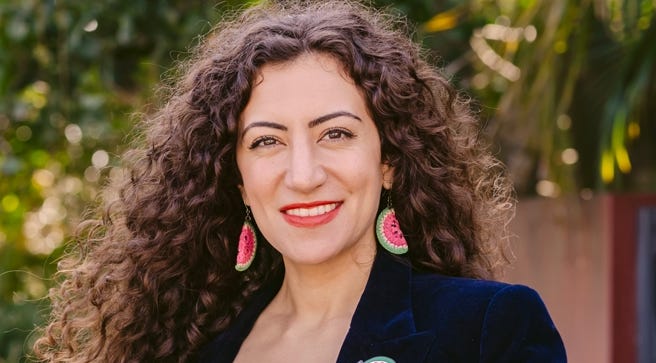
Remah Naji – Palestinian-Australian and former Greens candidate for the Brisbane seat of Moreton
Stephen Heydt – Jewish-Australian and retired psychologist, arrested for wearing a T-shirt with the prohibited phrase
Edward Carroll – Jewish-Australian, truck driver and manager, arrested for chanting and holding a sign with the prohibited phrase
Kathryn Dennehy – retiree and former journalist, arrested for chanting and wearing a T-shirt with the prohibited phrase
Philip George Monsour – songwriter of Lebanese descent
James Francis Hillier – visual artist, faced a police complaint over artwork containing the prohibited phrase
Samuel Woripa Watson – filmmaker and First Nations man, participated in the Global Sumud Flotilla and was arrested in June for speech containing the prohibited phrase
Pro-Israel lobby push to ‘tackle’ phrases
In submitting the Bill to state parliament in February, the Crisafulli government described the laws as “a suite of changes focused on terrorist symbols and phrases” and a bid “to stamp out antisemitism and terrorist extremism”.
The proscription of the two phrases – framed by the government as targeting ‘antisemitic’ and ‘terrorist’ slogans – falls in line with statements from pro-Israel groups in recent years, and is now being challenged by the plaintiffs.
In November 2023 – a month after Israel’s genocide in Gaza began – a policy analyst for the Australia/Israel Jewish Affairs Council (AIJAC) called the “river to the sea” chant “genocidal” and “globalise the intifada” an “incitement to genocidal violence”. The analyst also called for federal and state governments to act.
In April 2024, the Executive Council of Australian Jewry (ECAJ) – the nation’s most prominent pro-Israel lobby group, of which the antisemitism envoy Jillian Segal was previously president – labelled chants of ‘intifada’ “a terrorist campaign” and ‘from the river to the sea’ a call “to wipe out the modern state of Israel”.
In May 2024, the Zionist Federation of Australia referred to ‘from the river to the sea’ as “violent hate speech”.
In December 2025, following the Bondi shooting and two months before the Queensland government proposed its Bill, Segal put the “intifada language” in her sights, telling ABC radio “we need to tackle that”.
But the plaintiffs argue such framing is incorrect. The writ of summons contains more than two pages of explanation of the phrases, insisting neither has “an inherently antisemitic” or “violent meaning”.
“We are forcing the Queensland government to answer, on the record, why these specific words are considered criminal. We are forcing it to face a community that carries its history with pride, and that will not give up on human rights, including our right to speak out against Israel’s crimes and violations of international law,” Naji said.
Listen to the latest episode of Deepthink – an hour-long talk with Palestinian scholar and author Tareq Baconi on the trauma of ethnic cleansing, growing up queer in Amman and why the Palestinian struggle is feminist.
Wow, "violent speech." What does that mean again? How do those particular words cause injury, I wonder?