


Australia’s political class risks living in an echo chamber of power, where individuals shuffle between public office and major corporations, ensuring special interests are always top of mind in government decision-making.
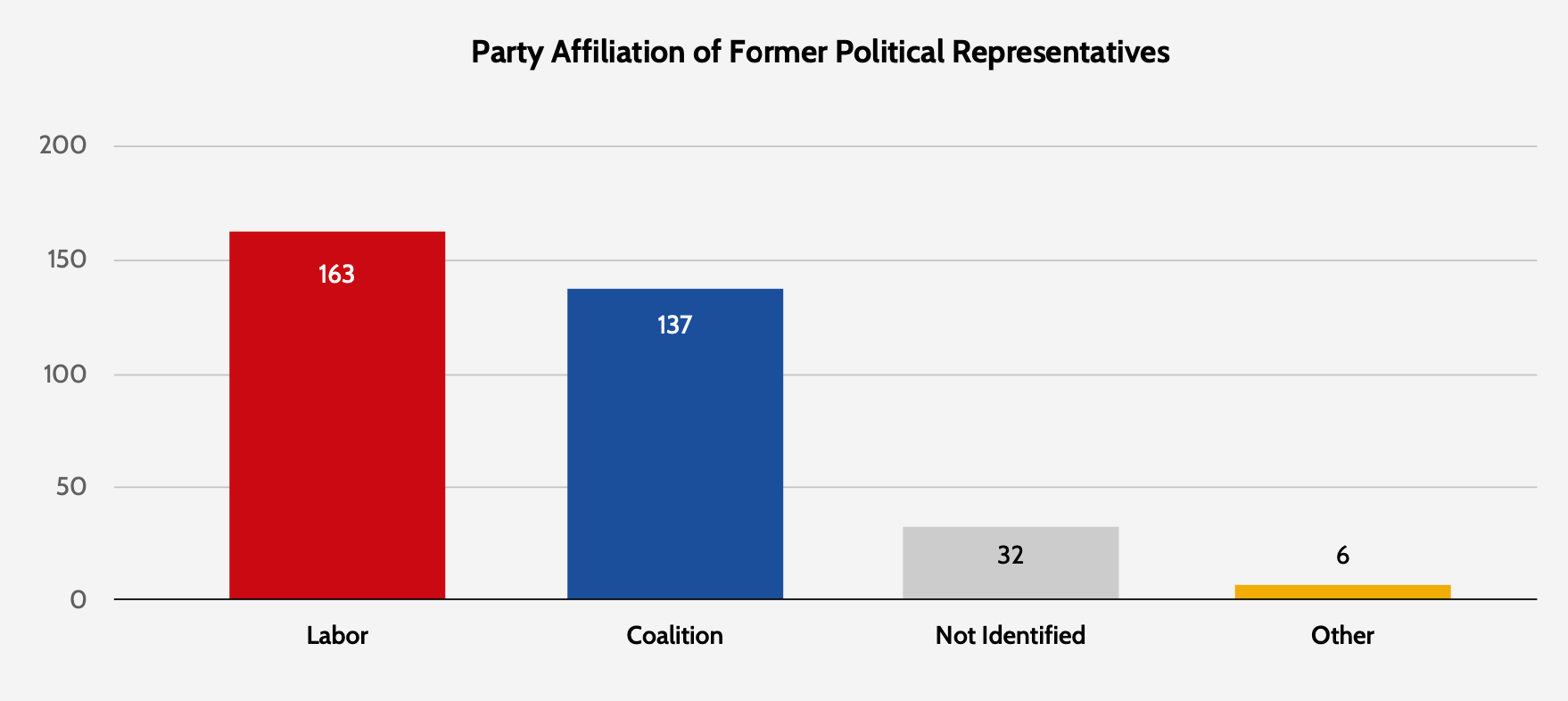
This is part of the findings of a new damning report by the Australian Democracy Network (AND), which revealed that almost two-thirds (64%) of the 714 registered lobbyists previously worked in government.
“There is clearly a well-oiled revolving door between political office and private sector lobbying roles,” Christian Slattery, senior campaigner for ADN, said.
“That revolving door is principally benefitting vested interests that can afford to hire that expertise, and is one of the reasons two in three Australians agree the political system is not working for ordinary people.”
From ministers to lobbyists
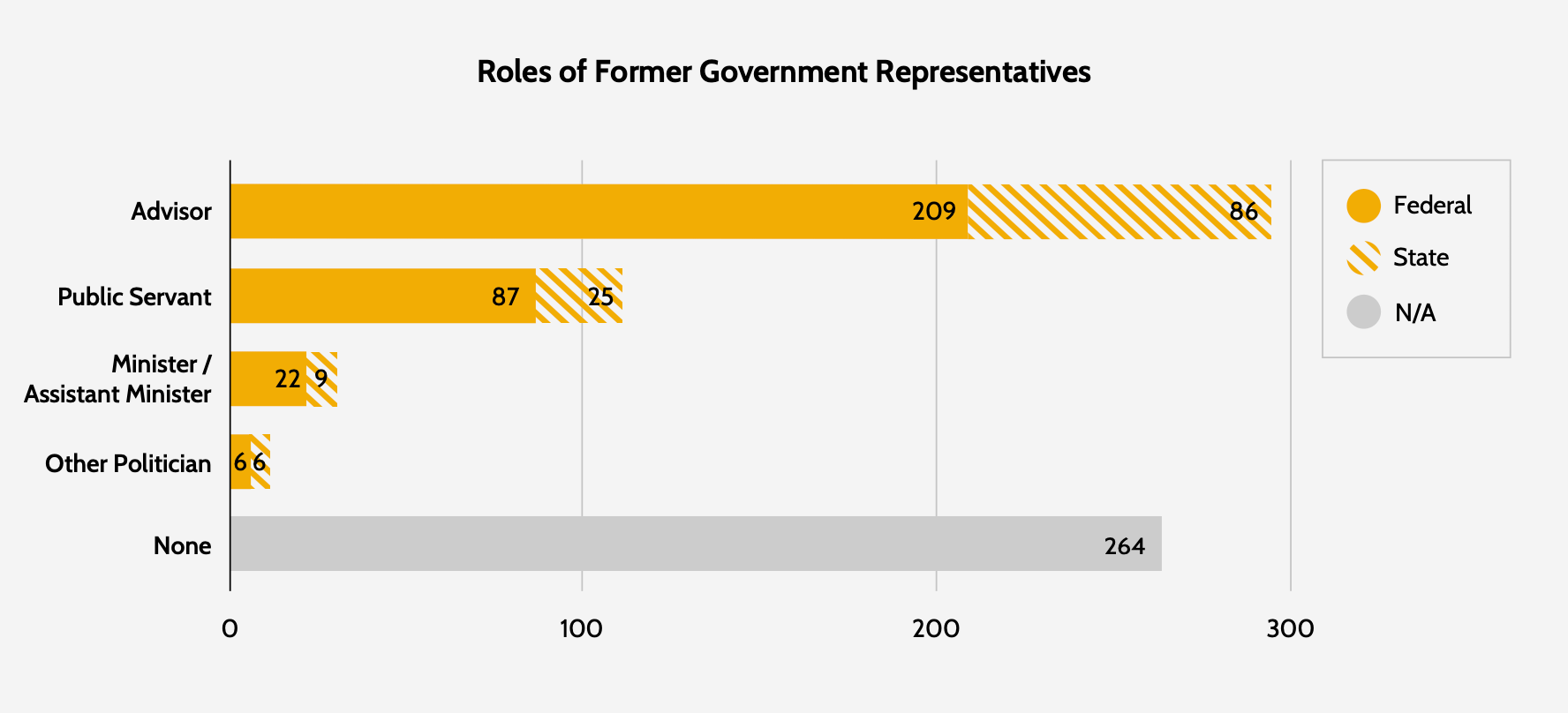
Of the ex-government cohort who jumped across to lobby for the private sector, 295 were former advisors – the largest segment. There are also 22 former federal ministers or assistant ministers from Labor and the Coalition now working in registered lobbying roles.
“This includes Christopher Pyne, Julie Bishop, Michael Keenan, Robert Hill and Zed Seselja (Coalition), and Gary Gray, Joel Fitzgibbon, Lindsay Tanner and Stephen Conroy (Labor). These persons all disclosed their former roles as required under the Lobbying Code,” the report read.
Another 21 former politicians were not required to disclose their lobbying activities according to existing rules, but were identified in the report, including Labor MPs Belinda Neal, Graham Perrett and Bernard Ripoll, as well as three former premiers Paul Lennon (Labor, Tasmania), Morris Iemma (Labor, NSW) and Robert Borbidge (Coalition, Queensland).
The report also identified high-profile party officials who went on to become lobbyists, including former Liberal Party Vice President Tom Harley, former Liberal Party Federal Director Sir Lynton Crosby AO and former Queensland Labor State Secretary Evan Moorhead.
Careerism in politics
The findings suggest a political culture where many politicians and staffers value their personal career pathways often at the expense of the public interest.
“It is no secret that lobbying can provide a lucrative career path for political insiders,” Slattery said.
“Fair or not, that feeds suspicion of perceived conflicts of interest, which in turn undermines confidence that decisions are being made solely in the public interest,” he said.
The added risk, the report noted, was that those politicians and staffers “may use the information and contacts collected during their time in parliament to advantage private-sector clients at the expense of public interest outcomes”.
This ultimately threatens the “actual and perceived integrity of government decisions by allowing individuals to leverage experience, knowledge, skills or contacts gained while serving the public interest to deliver private commercial gain”, the report read.
The findings reinforce a Deepcut analysis showing the Albanese government consistently backed lobbyists and corporate interests over public opinion on several key issues – from gambling to supermarkets, gas to Israel.
Potential echo chamber of power
A consequence of this constant revolving door is what Slattery describes as a “serious echo-chamber risk” of familiar faces prioritising corporate interests at the highest levels of government.
“In a healthy democracy, government should hear from a broad range of voices,” he told Deepcut.
“When paid influence is dominated by people drawn from the same political networks, those insiders can enjoy access and familiarity that most Australians – and many less powerful organisations – cannot match.”
Corporations and lobbying firms naturally seek to employ those with the strongest political networks, the report read, which makes former politicians and their staff obvious targets.
“This creates a very uneven playing field where wealthy corporations and individuals enjoy substantially more political representation than other interests,” Slattery said.
Current lobbying rules restrict ministers from taking on lobbying roles for 18 months after leaving office, and 12 months for advisors – a small window the report labelled “insufficient”.
The ADN are instead calling for a five-year cooling-off period to prevent former ministers from becoming lobbyists after leaving parliament, backed by an independently enforced National Lobbying Act.
“The purpose is not to prevent people from working; it is to protect public-interest decision-making from undue influence and perceived conflicts of interest,” Slattery said.
What blew me today was that A former KPMG partner, Chris Jordan appointed by Gilliard lead the Australian Taxation Office (ATO) for more than a decade. In 1998 this very same man Jordan and his mate Jones brokered a deal with TSB Lloyds and Rothschild Australia and negotiated a structuring fee of $1.2 million each which they decided to treat as personal income rather than returning it to KPMG
The man leading the ATO did all sorts of deals to avoid tax and represented such organisation as Rothschilds.
Surely this is a scandal in itself that this man was put in charge of the ATO
While watching 4 Corners last night, listening to Dr Monique Ryan and knowing that she regularly holds “town halls” in her electorate just as Robert Menzies did, surely, the way a politician gains insight into what the community’s needs are is by listening to their electorate. Communities are far more likely to be free of corporate graft and are definitely not out to line their own pockets. Rather their goals are for community and society betterment.