


One of Australia’s most senior bureaucrats is working alongside pro-Israel supporters to bring the selection of research grants into line with new controversial hate speech laws – a move researchers fear will have a “chilling effect” on their work.
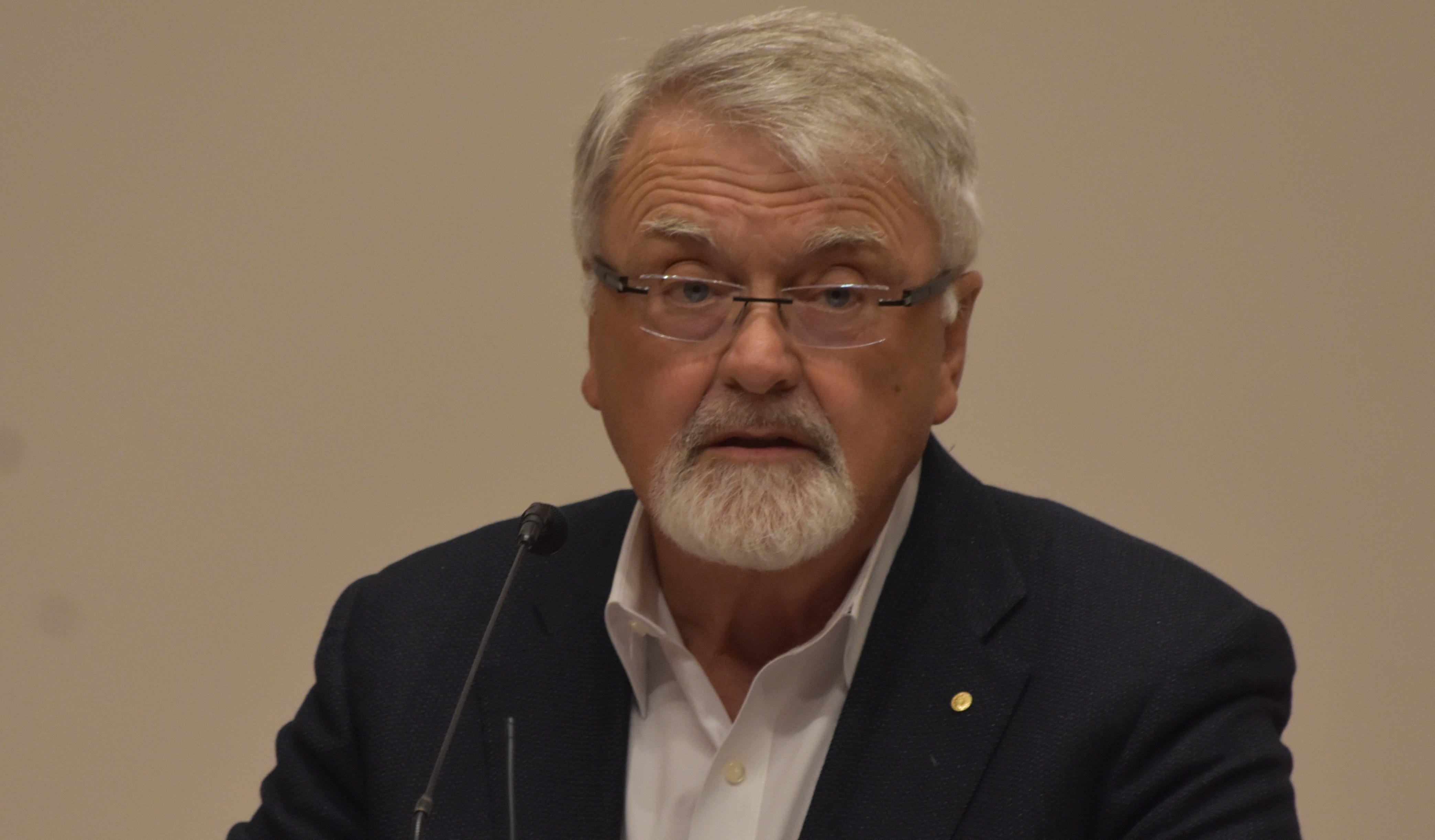
Professor Peter Shergold will chair the Commonwealth Research Grants Working Group, an initiative born out of the Education Antisemitism Taskforce.
The taskforce was created by the Albanese government only days after the Bondi shooting, and is chaired by prominent Israel supporter and businessman, David Gonski. Among its participants are antisemitism envoy Jillian Segal, a dedicated secretariat within the federal Department of Education, and representatives of peak bodies from the school sector, TAFEs and universities.
Shergold’s inclusion has raised eyebrows in higher education, given that he also chairs the board of the Australian Research Council (ARC). According to one senior university source, this is “self-evidently an anomalous arrangement”.
Targeting of Israel critics
In recent years, ARC grants to researchers critical of Israel have become the focus of pro-Israel supporters, in addition to intense and ongoing coverage by pro-Israel outlets such as the Australian newspaper and Sky News.
The most notable example was a request in 2024 by Liberal Senator Sarah Henderson – a pro-Israel hawk – to Education Minister Jason Clare that he intervene to rescind Dr Randa Abdel-Fattah’s ARC Future Fellowship, awarded in 2022.
In a letter written to the ARC Board on March 26, Clare departed from previous ministerial statements to say that he expected the ARC to make decisions on grant applications with “strong regard for relevant hate speech and anti-discrimination laws, including [an] applicant’s past compliance with these obligations”.
Hate speech laws rushed through parliament in January made it an offence to be a member of a proscribed hate group.
As Deepcut has previously reported, the laws fall in line with a years-long campaign by the pro-Israel lobby for lower thresholds to hate speech laws, which critics say encroaches on legitimate political expression.
According to meeting notes published by the Education Antisemitism Taskforce in April, Shergold’s working group has been tasked with creating “a clear framework” for grants providers such as the ARC and the National Health and Medical Research Council to make funding decisions that are “aligned” to the new laws.
Segal’s focus on competitive research grants comes alongside other measures designed to run a pro-Israel line in education. In the last federal budget, the Labor government awarded $10m to support her UNESCO-backed program to train teachers on antisemitism and $6m for an online hub with a similar focus, among other measures.
‘Political interference’ in research
Dr Jordana Silverstein, a historian and ARC Future Fellow in the University of Melbourne, told Deepcut she was concerned by the “vague and imprecise” language that Clare had used in his letter to the ARC Board.
“We know from recent examples, particularly the horrendous attacks on Dr Randa Abdel-Fattah, that Palestinians and Muslims who are recipients of ARC grants are placed under inordinate scrutiny and pressure due to inaccurate and targeted accusations of antisemitism,” she said.
“Our current grants will come under scrutiny and we are even less likely to be awarded grants in the future. This kind of political interference creates a very dangerous time in higher education and research.”
These sentiments were echoed by other researchers, including by a distinguished scholar who has previously sat on the ARC College of Experts and spoke to Deepcut on the condition of anonymity.
In their view, Clare’s letter “goes well beyond the kind of administrative guidance we’ve seen in previous statements of expectations”.
“That is a significant shift. When government begins attaching behavioural conditions to research grants, the chilling effect is not limited to the specific conduct targeted. Researchers self-censor. Institutions become risk-averse. That is not a healthy research culture.”
“Indigenous scholars and researchers from other minority communities have reason to be particularly alert here. We have long understood that the framing of what counts as acceptable speech is rarely applied neutrally.”
A ‘troubling’ appointment
Silverstein, who is Jewish, said it was “very troubling that the chair of the ARC Board has chosen to focus on this one form of racism, and to do so in this way”.
The historian noted that “the primary form of racism” is aimed at First Nations, with anti-Palestinian racism and Islamophobia “skyrocketing”.
“The ARC must be a fully independent body,” she continued. “This Taskforce, which forms part of the work led by the Special Envoy on Antisemitism, is a massive overreach.”
An ARC spokesperson said that while the ARC cooperates with the federal government, it maintains “the integrity and independence of the ARC grant assessment processes”.
Concerns of a conflict of interest in Shergold chairing the working group were dismissed by the Department of Education.
“Professor Shergold has been transparent with both the ARC and the Commonwealth Research Grants Working Group about his dual roles to actively manage any potential conflicts of interest that may arise,” a department spokesperson told Deepcut.
Comment was sought from Shergold. In response, an ARC spokesperson denied the working group was “directed at particular disciplines or research topics”.
“The Australian Government is undertaking work across portfolios to address hatred and discriminatory behaviour in the community, while continuing to support legitimate academic research and freedom of inquiry,” they said.
*Correction: Article amended on June 2, 2026, to note that hate speech laws passed in January made it an offence to be a member of a proscribed hate group.
Listen to the latest episode of Deepthink, where Antoun Issa discusses his new book, Rebirth: A Love Story from the Depths of War, with Readings Books. The wide-ranging conversation delves into Beirut’s history, enduring Arab resistance, and interpreting Kahlil Gibran and the purpose of life.

This is a totally unacceptable intrusion by partisan politics into academia. As for the "transperancy" assurances, they are not worth the coin of implicit biases carried by all. Peter Shergold should be acutely aware of the moral jeopardy he exposes himself to in accepting this role. A role which should not exist in fact.
Peter Shergold is a former bureaucrat who presided over the Howard government's dismantling of the independence of the Australian Public Service. He was well rewarded.