


Ivana Daskalovic contributed to this story.
A week before Anthony Albanese enthusiastically endorsed AI in a major speech in July, the Australian Federal Police (AFP) Commissioner travelled to the United States to meet with tech companies and security agencies.
On the agenda was “joint operations” and driving “capability development initiatives” – code for enhanced intelligence sharing and greater surveillance with the support of Big Tech.
Speaking at the UN Chiefs of Police Summit (UNCOPS) on July 8 in New York, AFP Commissioner Krissy Barrett framed the outreach to tech companies as “urgent because the scale and pace of crime will only become more acute because of artificial intelligence”.
Tech companies, Barrett said, “can be the digital penicillin of our time”.
Of key interest to the AFP is AI – not for its potential in promoting crime (a big uptick in crime in the past decade has been a 55% jump in sexual assault, and thus not related to AI). But for its potential use, in particular, dramatically enhancing the ability of security agencies to surveil Australians.
Help with the ‘deluge of data’
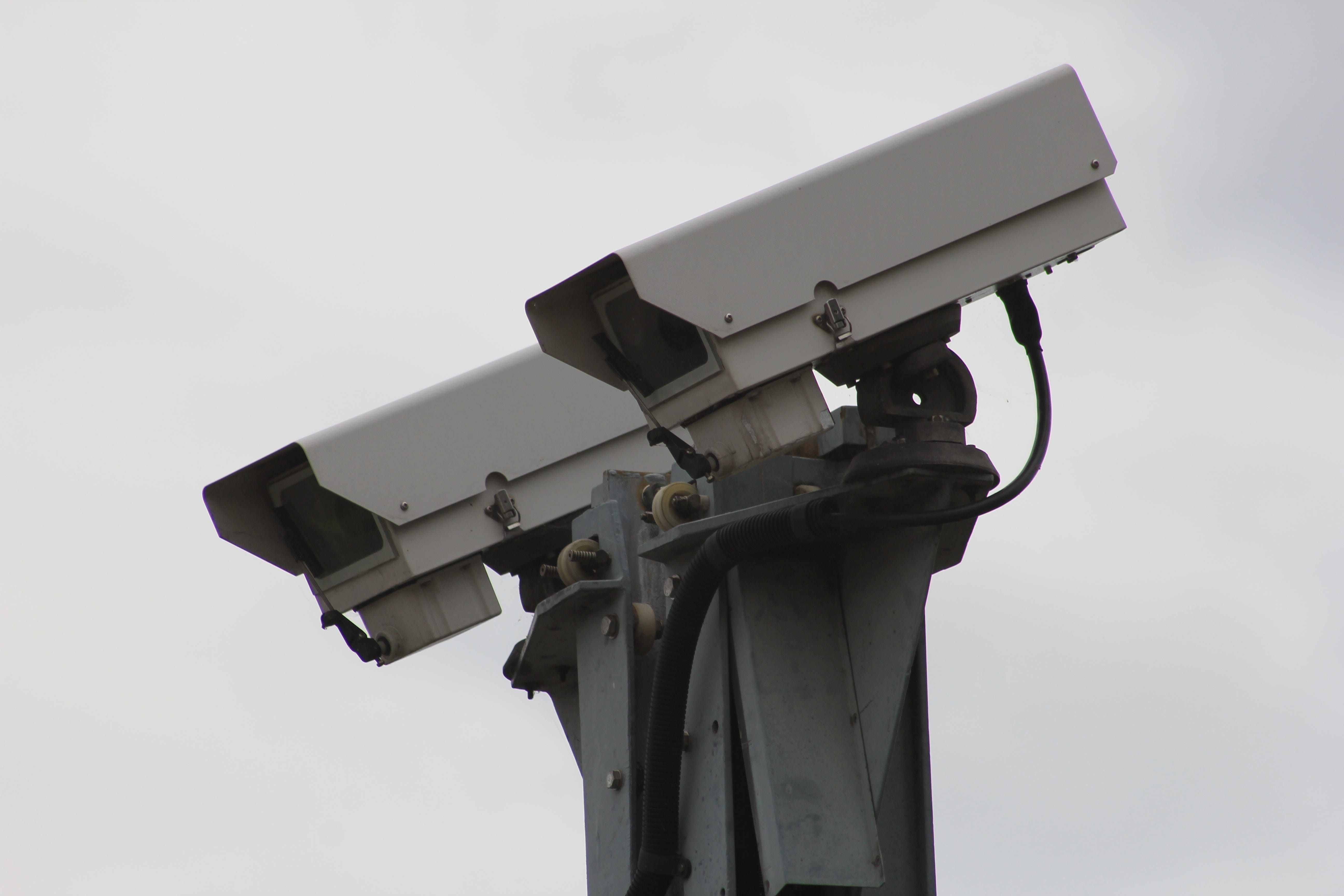
From supermarkets to public parks to Bunnings, the proliferation of cameras in common spaces in Australian cities and towns is unavoidable. No matter where one steps, it seems, there’s a camera watching.
In 2019, Sydney was already ranked the 15th-most surveilled city in the world, with 12.35 cameras per 1,000 people. Assuming that per capita rate has since increased, the physical architecture for mass state surveillance has effectively been put in place.
The challenge, as Barrett highlighted, was the “deluge of data”. The laborious task of security officers trawling through hours of footage.
“If there are 12 cameras recording 24 hours a day, that equates to 288 hours of video every day,” she told the Australian Information Industry Association in April. “Thirty days is the equivalent of 8,640 hours. Even with four police officers reviewing this footage at double speed, for eight hours a day, five days a week, it would take six months to review.”
Enter AI.
“We need to use a combination of human intelligence and artificial intelligence to disrupt and detect the extremist recruiters and inciters, while protecting and diverting those at risk,” she said in May, after the Albanese government announced $74m in funding for a Counter-Terrorism Online Centre.
A key part of the funding will go towards building “a specific artificial intelligence capacity”.
Surveillance targeting ‘hate’ groups
In tandem with growing surveillance capabilities are the legal weapons passed by Labor and the Coalition to effectively target dissent.
Deepcut has extensively covered the laws passed at federal and state levels over the past two decades that have cumulatively eroded political expression – often with the support of the pro-Israel lobby. Constant tweaking to counter-terrorism and hate speech laws have increasingly encroached on free speech, which has escalated in recent years amid mounting criticism of Israel’s genocide in Gaza.
The most recent – and arguably most controversial – was the Combatting Antisemitism, Hate and Extremism (Criminal and Migration Laws) Act 2026 passed in January this year, which gives the home affairs minister extraordinary power to proscribe local organisations as ‘hate groups’ without procedural fairness – meaning groups cannot appeal or provide evidence against the proscription.
The definition of ‘promoting hatred’ was also left vague, raising concerns the minister has broad scope to designate legitimate dissent as ‘hate’. The powers were condemned at the time as akin to a dictatorship.
ASIO head Mike Burgess hinted as to where their eyes are shifting, when in June he pointed to “far-left activists” as the culprits behind vandalism of Australian weapons companies supplying parts to Israel. In those remarks, Burgess conflated the anti-war protests with “violent antisemitism”.
The Counter-Terrorism Online Centre – a joint ASIO-AFP operation powered with AI capabilities – appears to be, in part, executing into practice the hate speech laws passed in January.
As Barrett described, AI will help “provide an early warning system for the nation’s Joint Counter Terrorism Teams about emerging hate groups and individuals who use social media, gaming platforms, online forums and our dark web to incite or commit violence”.
Dystopian future tested in WA
Western Australian police offered a taste of what AI mass surveillance could look like in Australia. In June, it trialled live AI facial recognition technology that scanned more than 130,000 people in Perth and Fremantle in its first week, comparing the faces to a police watchlist of 4,000 people.
The mass scan resulted in 18 arrests but was widely condemned by privacy and civil liberties groups, with concerns that First Nations will be disproportionately targeted.
It solved Barrett’s challenge – processing footage and data in seconds rather than “six months”.
In New South Wales, the hardline Minns government is proposing laws that will allow NSW Police to access photos of drivers and passengers – including children – taken by cameras at toll points.
Although AI was not explicitly mentioned in the Bill, NSW Police is adopting AI to help “existing police procedures and systems”.
In February, it was revealed that NSW Police was in the early stages of establishing an AI centre in Parramatta.
Among its tasks is exploring “ways of integrating generative artificial intelligence technologies into policing”.
Toll road cameras might be the start.
Nope. Don’t want it.
The application of technology by security forces is nothing unusual.
Farmers use rifles to shoot predators. SWAT teams are armed with rifles. Compute and data management is used by government to make social welfare payments and its used by security forces to manage criminal records.
Historically security forces have adopted technology as equally anti-social elements have utilised that same technology. The application of AI in any field is simply a measure of social change as the technology available changes.
Society is readily adopting AI consciously, but involuntarily. Passive dissent becomes consent.
Ultimately it is the pervasive morality of society that conditions the consequence of technology implementation. Surveillance by a state that is authoritarian and repressive is a different problem from when it is implemented by a state that is a liberal democracy.
You get the state and the society that you are willing to accept up until you no longer have that choice.